Mapping Business Processes
Introduction to Process Mapping
What is Process Mapping?
Every organization runs on processes. From onboarding a new employee to fulfilling a customer order, these sequences of tasks are the building blocks of how work gets done. Often, these processes are invisible, living only in people's heads or scattered across different documents.
Process mapping makes the invisible visible. It's the act of creating a visual diagram of a workflow, showing the series of steps and decisions involved in a task from beginning to end.
Process mapping, at its essence, is the visual representation of a workflow or series of activities.
The purpose is to create a clear, shared understanding of a process. By laying out all the steps, you can see how work actually flows, not just how you think it flows. This opens the door to asking critical questions: Where are the delays? What steps are redundant? Where is communication breaking down?
Why Bother Mapping?
Creating a process map is more than just an academic exercise. It’s a powerful tool for business improvement. When a team gathers to map a process, they develop a shared understanding of their work and can see how their individual contributions fit into the bigger picture.
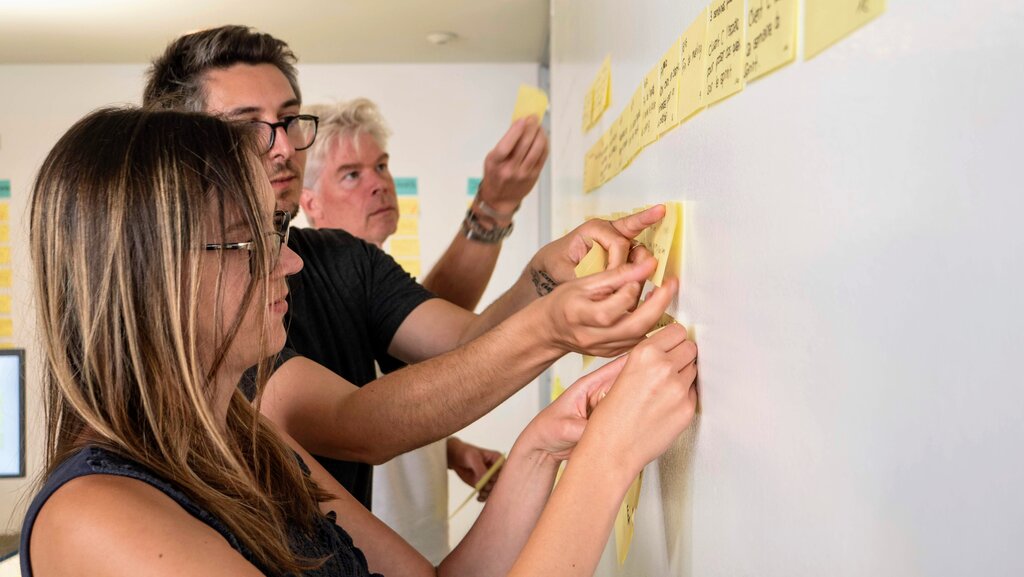
This visual clarity is the first step toward optimization. Once a process is mapped, inefficiencies that were previously hidden in the complexity of day-to-day work often become glaringly obvious.
Common problems uncovered by process mapping include bottlenecks (where work piles up), redundant tasks (doing the same thing twice), and unnecessary delays between steps.
By identifying these issues, teams can make targeted improvements that lead to greater efficiency, lower costs, and happier customers. A good process map also serves as an excellent training tool for new team members and a foundation for standardizing work.
Common Mapping Techniques
There are many ways to map a process, each with its own strengths. The technique you choose often depends on the complexity of the process and what you're trying to achieve. You don't need to be an expert in all of them, but it helps to know a few of the most common types.
| Technique | Primary Use |
|---|---|
| Basic Flowchart | Visualizing a simple sequence of steps and decisions. Great for clarity and communication. |
| Swimlane Diagram | Showing who does what in a process by organizing tasks into lanes for different people or departments. |
| Value Stream Map (VSM) | Analyzing and improving the flow of materials and information needed to bring a product or service to a customer. Focuses on reducing waste. |
| BPMN | A standardized notation for modeling complex business processes, often used for technical and automation projects. |
For now, we'll focus on the building blocks used in the most fundamental type: the basic flowchart.
The Language of Flowcharts
Process maps communicate through a standard set of symbols. While complex diagrams can have dozens of unique shapes, most simple flowcharts rely on just a handful of basics. Learning these core symbols will allow you to read and create most process maps.
Using these simple shapes, you can map out almost any workflow. The key is to keep it clear and simple. The goal isn't to create a complex work of art, but a functional tool that helps people understand and improve their work.
Ready to check your understanding?
What is the primary purpose of creating a process map?
By visualizing a workflow, previously hidden issues like redundancies and bottlenecks often become obvious.
Understanding these foundational concepts is the first step. By learning to visualize workflows, you gain a powerful perspective for making any business process better.