MAP4K4 Protein and Glaucoma
MAP4K4 Protein Function
A Cellular Director
Inside our cells, countless proteins work together in a complex communication network. One of the key players in this network is a protein called MAP4K4. Think of it as a cellular director or a switchboard operator, receiving signals and relaying them to trigger specific actions.
MAP4K4 is a type of enzyme known as a serine/threonine kinase. The job of a kinase is to add a phosphate group to other proteins, a process called phosphorylation. This simple chemical tag acts like an on or off switch, changing the target protein's activity and setting off a chain reaction of events within the cell. By controlling which proteins are switched on or off, MAP4K4 helps direct fundamental cellular processes.
The Protein's Blueprint
To understand how MAP4K4 works, it helps to look at its structure. Like a tool designed for specific tasks, the protein is organized into distinct regions called domains.
MAP4K4 has two main functional parts:
-
N-terminal Kinase Domain: This is the business end of the protein. It’s the part that actively transfers phosphate groups to other proteins, carrying out its primary function as a kinase.
-
C-terminal Citron Homology (CNH) Domain: This domain acts as a targeting and regulatory system. It helps MAP4K4 bind to other proteins and ensures it's in the right place at the right time within the cell to do its job effectively.
Relaying the Message
MAP4K4 sits near the top of several important communication routes, or signaling pathways. One of the most well-known is the c-Jun N-terminal kinase (JNK) pathway. This pathway is a primary way cells respond to stress, such as inflammation or exposure to toxins.
When a cell encounters stress, MAP4K4 can become activated. It then phosphorylates downstream proteins, initiating a cascade of signals that travel down the JNK pathway, ultimately telling the cell's nucleus which genes to turn on or off to manage the situation.
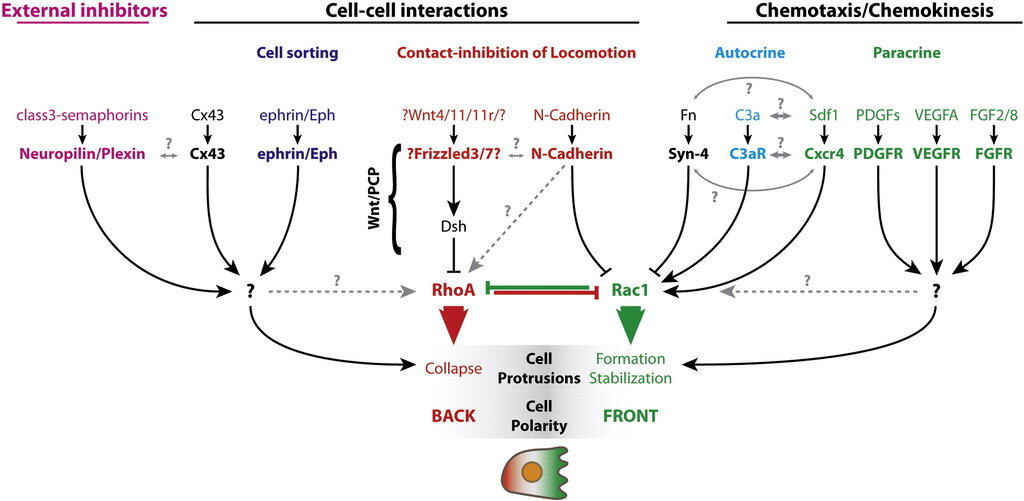
By activating this and other pathways, MAP4K4 influences a wide range of cellular behaviors. It plays a crucial role in managing the cell's internal scaffolding, known as the cytoskeleton. This control over the cytoskeleton is vital for processes like cell migration, where a cell needs to change shape and move from one place to another. This is essential for everything from embryonic development to wound healing.
A Double-Edged Sword
Because MAP4K4 is involved in such fundamental processes as cell migration, growth, and inflammation, it's no surprise that when its activity goes awry, it can contribute to disease. The same signaling that helps a normal cell heal a wound can be hijacked by a cancer cell to spread to new parts of the body.
In cancer, elevated MAP4K4 activity has been linked to increased tumor growth and metastasis in several types of cancer. By promoting cell migration and invasion, it can help cancer cells break away from the primary tumor and colonize distant organs.
MAP4K4 also plays a role in cardiovascular disease. Chronic inflammation is a key driver of conditions like atherosclerosis (the hardening of arteries). Since MAP4K4 is an important mediator of inflammatory signals, its overactivity can contribute to the inflammation that damages blood vessels over time. It's also involved in metabolic disorders, including insulin resistance, highlighting its broad impact on the body's health.
What is the primary enzymatic function of the MAP4K4 protein?
Which structural domain of MAP4K4 is responsible for its regulatory and targeting functions, ensuring it's in the right place at the right time?