Manufacturing Design Engineering Fundamentals
Introduction to Manufacturing Design Engineering
The Blueprint for Reality
Every product you use, from your phone to your chair, started as an idea. But how does an idea become a physical object that can be made millions of times, reliably and affordably? That's the work of manufacturing design engineering. It’s the crucial bridge between a creative concept and a real-world product.
Think of it as the difference between building a one-of-a-kind model ship in a bottle and designing a ship-in-a-bottle kit that anyone can buy and assemble successfully. The first is an art project; the second requires thinking about the materials, the process, the instructions, and the person on the other end. Manufacturing design engineering focuses on the 'how'. It ensures a product isn't just brilliant in theory, but practical to build.
From Sketch to Store Shelf
Products don't just appear. They go on a journey called the product lifecycle, which maps their path from a simple thought to a finished item in your hands, and eventually to its disposal or recycling.
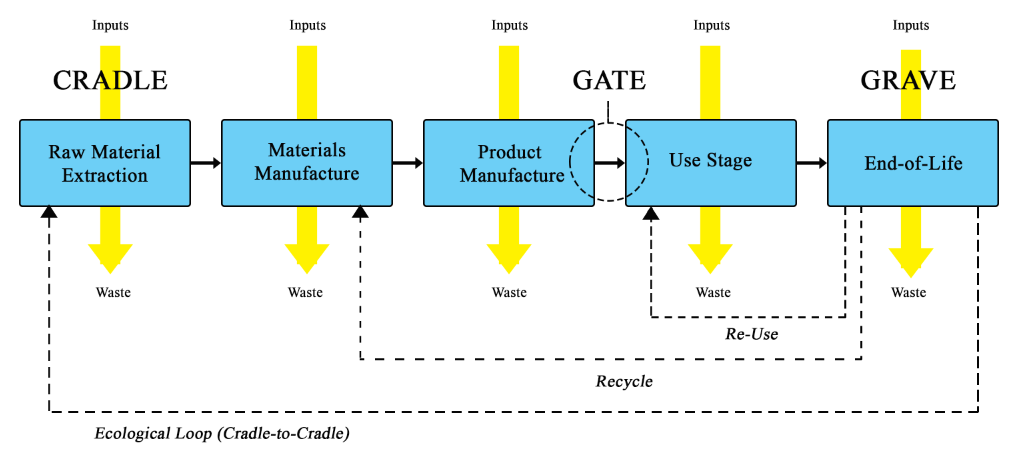
A manufacturing design engineer thinks about the entire lifecycle from the very beginning. They ask questions during the initial design phase like: Can we actually build this? What tools will we need? Can we make it without generating a lot of waste? Considering these questions early prevents costly problems down the road.
Designing for 'Making' and 'Assembling'
Two key principles guide this field: Design for Manufacturing (DFM) and Design for Assembly (DFA). They sound similar, but focus on slightly different things. They are often grouped together as DFMA.
DFM emphasizes designing products in a way that simplifies the manufacturing process.
DFM is about making the individual parts of a product easy to produce. This could mean:
- Using standard parts: Choosing common screw sizes instead of custom-made ones saves time and money.
- Simplifying the shape: Designing a part that can be made in one step instead of five reduces complexity and potential for errors.
- Choosing the right materials: Selecting materials that are easy to cut, mold, or shape with available machinery.
It’s easier to cut a shape from a single piece of wood than to glue five tiny, odd-shaped pieces together perfectly every time. That’s the core idea of DFM.
DFA, on the other hand, is about making the product easy to put together. A product might have simple parts (good DFM) but be a nightmare to assemble. DFA aims to minimize the number of steps and parts required for assembly.
Imagine a bookshelf where all the screws are the same size and the panels can't be installed backward. That’s good Design for Assembly.
Working Together from Day One
In the past, designers would finish a design and then 'throw it over the wall' to the manufacturing team, who would then have to figure out how to build it. This often led to delays and expensive redesigns when the manufacturing team discovered a problem. To solve this, a better approach called concurrent engineering was developed.
Concurrent engineering is a method where everyone involved in the product lifecycle—designers, engineers, manufacturing experts, and even marketing teams—works together from the very beginning. By collaborating, they can anticipate and solve manufacturing problems during the design phase, not after. This simple change in workflow saves an enormous amount of time and money, helping to get better products to market faster.
Ready to check your understanding of these core concepts?
What is the primary role of manufacturing design engineering?
Which of the following scenarios best illustrates a core principle of Design for Manufacturing (DFM)?
By bridging the gap between an idea and a finished product, manufacturing design engineering turns innovative concepts into tangible realities.