Manual Transmission Driving Techniques
Clutch Mechanics
The Engine's Disconnect Switch
At its core, a manual transmission's clutch is a mechanical switch. It engages or disengages the flow of power from your engine to your wheels. When the clutch pedal is up, the engine and transmission are locked together, spinning in unison. Press the pedal down, and you break that connection, allowing the engine to spin freely while the wheels and transmission slow down or stop.
This disconnect is crucial for two reasons: starting from a standstill and changing gears. Without it, the only way to stop the car would be to stall the engine. And changing gears would involve a symphony of grinding metal as you tried to force spinning gears to mesh with others moving at different speeds.
Anatomy of a Clutch
Inside the bellhousing, the metal casing between the engine and transmission, three key components work together. First is the engine's flywheel—a heavy metal disc bolted directly to the crankshaft. If the engine is running, the flywheel is spinning. It provides a large, flat surface for the clutch to connect to.
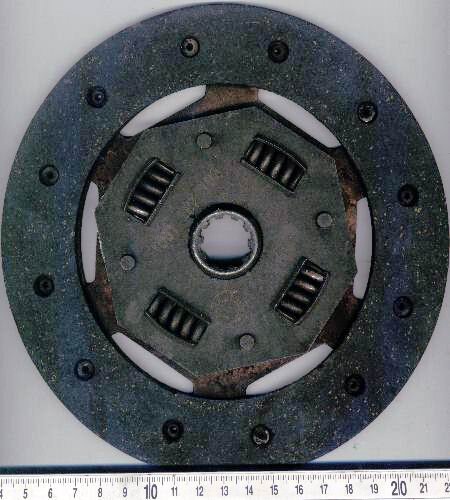
Pressed against the flywheel is the clutch plate, also known as the friction disc. This component is the bridge for power transfer. One side has a high-friction material, similar to brake pads, designed to grip the flywheel. Its splined central hub slides over the transmission's input shaft, meaning when the clutch plate spins, the transmission's input shaft spins with it.
The final piece is the pressure plate. Bolted over the clutch plate to the flywheel, its job is to act as a powerful, spring-loaded clamp. A set of strong diaphragm springs inside the pressure plate constantly pushes against the clutch plate, sandwiching it tightly against the flywheel. This is the default, “engaged” state when your foot is off the pedal.
When you press the clutch pedal, you're actuating a hydraulic or cable system that pushes against the center of the pressure plate's diaphragm spring. This action releases the clamping force, pulling the pressure plate away from the clutch disc. A small air gap, just millimeters wide, is created between the components. The flywheel continues to spin with the engine, but the clutch plate and transmission input shaft are now free, slowing to a stop. This is mechanical disengagement.
Finding the Sweet Spot
The travel of the clutch pedal isn't uniform in its effect. As you slowly lift your foot off a depressed pedal, most of the initial travel does nothing. Then you reach a narrow window where the pressure plate begins to make contact with the spinning clutch plate. This is the or friction zone.
The friction zone is the area of clutch lever travel where the engine power begins to connect with the rear wheel.
At the bite point, friction begins to transfer torque from the flywheel to the clutch plate, causing the car to creep forward. If you were to lift your foot too quickly, the sudden, full force of the pressure plate would clamp down, jolting the car and likely stalling the engine. But by pausing and modulating the pedal within this friction zone, you can achieve a smooth transfer of power, allowing the clutch plate to gradually match the speed of the flywheel.
This controlled slip is essential for a smooth start, but it’s also a source of wear. Holding the car on a hill using the clutch's bite point instead of the brakes is a classic way to burn through a clutch. The immense friction generates a huge amount of heat, which can glaze the clutch plate and even warp the metal surfaces of the flywheel and pressure plate, leading to a much shorter lifespan for these components.
To change gears without grinding, the pedal must be pressed all the way to the floor. This ensures a complete air gap between the flywheel and clutch plate, allowing the transmission's synchronizers to work effectively.
Understanding this mechanical dance between the plates and springs is the key to mastering a manual transmission. It transforms the act of driving from a series of steps into a fluid conversation between you and the machine.