Manitoba Government Deep Dive
Manitoba Government Structure
How Manitoba is Governed
Manitoba’s government, like Canada's federal system, is a parliamentary democracy. It's built around two main branches: the legislative branch, which makes the laws, and the executive branch, which puts those laws into action. However, Manitoba has a key difference in its structure.
Unlike the federal government with its two houses (the Senate and the House of Commons), Manitoba's legislature is unicameral. This means it has only one chamber.
The Legislative Assembly
The heart of Manitoba's legislative branch is the Legislative Assembly. This is where all the action happens when it comes to creating laws. The assembly is made up of 57 members, each known as a Member of the Legislative Assembly, or MLA.
Each MLA is elected by the people in one of Manitoba's 57 electoral districts, or constituencies, to represent their interests. During a session, MLAs from different political parties debate proposals, study issues, and vote on bills. If a bill gets enough votes to pass, it moves one step closer to becoming a law.
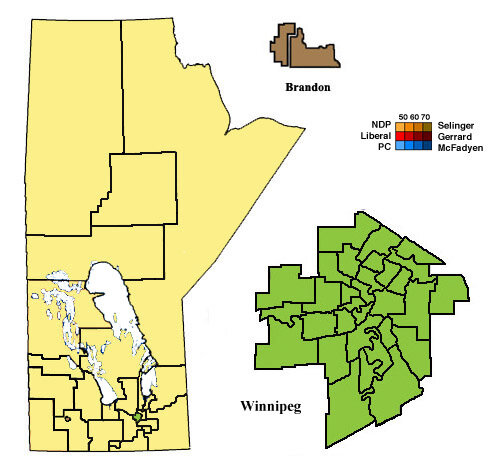
The Executive Branch
Once a law is passed, it's the job of the executive branch to implement and enforce it. This branch is led by the Premier and includes a group of advisors known as the Executive Council, or more commonly, the Cabinet.
Cabinet
noun
A body of senior ministers that is responsible for the executive branch of government. Members of the Cabinet are chosen by the Premier.
The Premier is the head of the Manitoba government. This person is typically the leader of the political party that holds the most seats in the Legislative Assembly. The Premier chooses several MLAs from their own party to become ministers. Each minister is put in charge of a specific government department, such as Health, Education, or Finance. Together, the Premier and these ministers form the Cabinet. The Cabinet sets government priorities and steers the direction of the province.
Finally, there is the Lieutenant Governor. This person is the Queen's representative in Manitoba. While the Lieutenant Governor’s role is mostly ceremonial, it is constitutionally important.
One of their key duties is granting Royal Assent to bills passed by the Legislative Assembly. A bill does not become law until it has received Royal Assent. They also formally open each new session of the legislature by reading the Speech from the Throne, which outlines the government's agenda.
So, while MLAs in the legislature debate and vote on laws, it's the Premier and the Cabinet who direct the government and see that those laws are carried out, with the Lieutenant Governor providing the final, formal approval.
What is the primary role of a Member of the Legislative Assembly (MLA) in Manitoba?
Who forms the Executive Council, more commonly known as the Cabinet?