Mandarin Chinese Language Fundamentals
Pinyin and Tones
Sounds and Tones
Learning to speak Mandarin is about mastering two key parts: sounds and tones. To tackle the sounds, we use a system called Pinyin. It uses the same letters as the Roman alphabet to spell out the sounds of Mandarin words. This makes it much easier for learners to get started with pronunciation without needing to know the characters first.
Think of Pinyin as the bridge between the Chinese characters you see and the sounds you need to make.
But Pinyin is only half the story. Mandarin is a tonal language. This means the pitch of your voice can completely change the meaning of a word, even if the Pinyin spelling is identical. Getting the tones right is essential for being understood.
The Four Main Tones
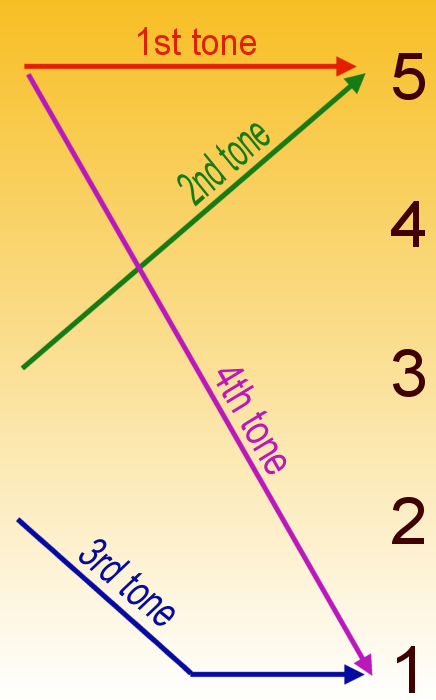
Mandarin has four main tones that give each syllable its unique pitch contour. Let's look at the syllable ma to see how this works. Depending on the tone, ma can mean four very different things.
| Pinyin | Tone Name | Character | Meaning |
|---|---|---|---|
| mā | 1st Tone | 妈 | mother |
| má | 2nd Tone | 麻 | hemp |
| mǎ | 3rd Tone | 马 | horse |
| mà | 4th Tone | 骂 | to scold |
Here's a simple way to think about each tone:
- First Tone (mā): High and flat. Imagine a doctor asking you to say "Ahhh" while holding a high, steady note.
- Second Tone (má): Starts mid-range and rises. It sounds like you're asking a question, like "Huh?"
- Third Tone (mǎ): Dips down, then comes back up. It's the lowest and longest of the four tones.
- Fourth Tone (mà): Starts high and drops sharply. It's like giving a quick, firm command, like "Stop!"
The Neutral Tone and Tone Changes
Besides the four main tones, there's also a fifth one: the neutral tone. It has no tone mark and is pronounced quickly and lightly. You'll often find it on the second syllable of a two-syllable word. For example, in the word for "mother," māma, the first syllable has the first tone, while the second is neutral.
mother
Tones can also change depending on the tones that come after them. This is called tone sandhi. The most common rule involves the third tone. When two third tones appear back-to-back, the first one changes to a second tone. It’s a mouthful to say, but makes speaking much smoother.
For example, the word for "hello," nǐ hǎo, is made of two third-tone words: nǐ (you) and hǎo (good). When you say them together, nǐ changes to a second tone, so it sounds like ní hǎo.
Rule: When two 3rd tones are together, the first one is pronounced as a 2nd tone. For example, nǐ hǎo (nǐ + hǎo) becomes ní hǎo.
Another important rule involves the word bù, which means "not" or "no." Normally, bù is a fourth tone. However, if it comes before another fourth tone, bù changes to a second tone.
So, bù shì (is not) is pronounced bú shì because shì is also a fourth tone.
Let's check your understanding of these core concepts.
What is the primary purpose of the Pinyin system in learning Mandarin?
Which tone is described as starting mid-range and rising, as if asking a question?
Mastering Pinyin and tones is the foundation for clear Mandarin pronunciation. It takes practice, but it's the most important first step.