Mandarin Chinese Essentials
Mandarin Pronunciation
The Music of Mandarin
Before diving into Chinese characters, you need to learn how to speak the language. The sounds of Mandarin might seem unfamiliar, but there's a helpful tool to guide you: Pinyin. Pinyin is the official system for writing Mandarin sounds using the Latin alphabet. It's your bridge from the letters you already know to the sounds you're about to learn.
Every single syllable in Mandarin is built from three parts: an Initial, a Final, and a Tone. The Initial is the starting consonant sound, and the Final is the combination of vowel sounds that follows. The Tone is the musical pitch you use when you say the syllable.
Initial + Final + Tone = A Mandarin Syllable
The Four Tones
Tones are the most important part of Mandarin pronunciation. Changing the tone of a syllable can completely change its meaning. There are four main tones, plus a fifth neutral tone.
Here's a breakdown of what each tone sounds like:
- First Tone (¯): High and flat. Imagine a singer holding a high note. It doesn't rise or fall.
- Second Tone (´): Rising. It starts in the middle of your vocal range and goes up, like when you ask a question, "Huh?"
- Third Tone (ˇ): Dipping. It starts mid-low, drops, and then rises again. It's the longest and most complex tone.
- Fourth Tone (`): Falling. It starts high and drops sharply, like a command, "Stop!"
There is also a Neutral Tone (written with no mark), which is short, light, and unstressed. It takes its pitch from the syllable before it.
Mastering these tones is crucial because incorrect pronunciation can lead to misunderstandings.
The same Pinyin syllable, like ma, can have completely different meanings depending on the tone.
| Pinyin | Tone | Chinese Character | Meaning |
|---|---|---|---|
| mā | 1st | 妈 | mother |
| má | 2nd | 麻 | hemp |
| mǎ | 3rd | 马 | horse |
| mà | 4th | 骂 | to scold |
Building Syllables
As we covered, syllables are made of Initials (consonants at the start) and Finals (the rest of the syllable, containing vowels). For example, in the syllable hǎo, h is the initial and ao is the final. Some syllables have no initial and are just a final, like ài (love).
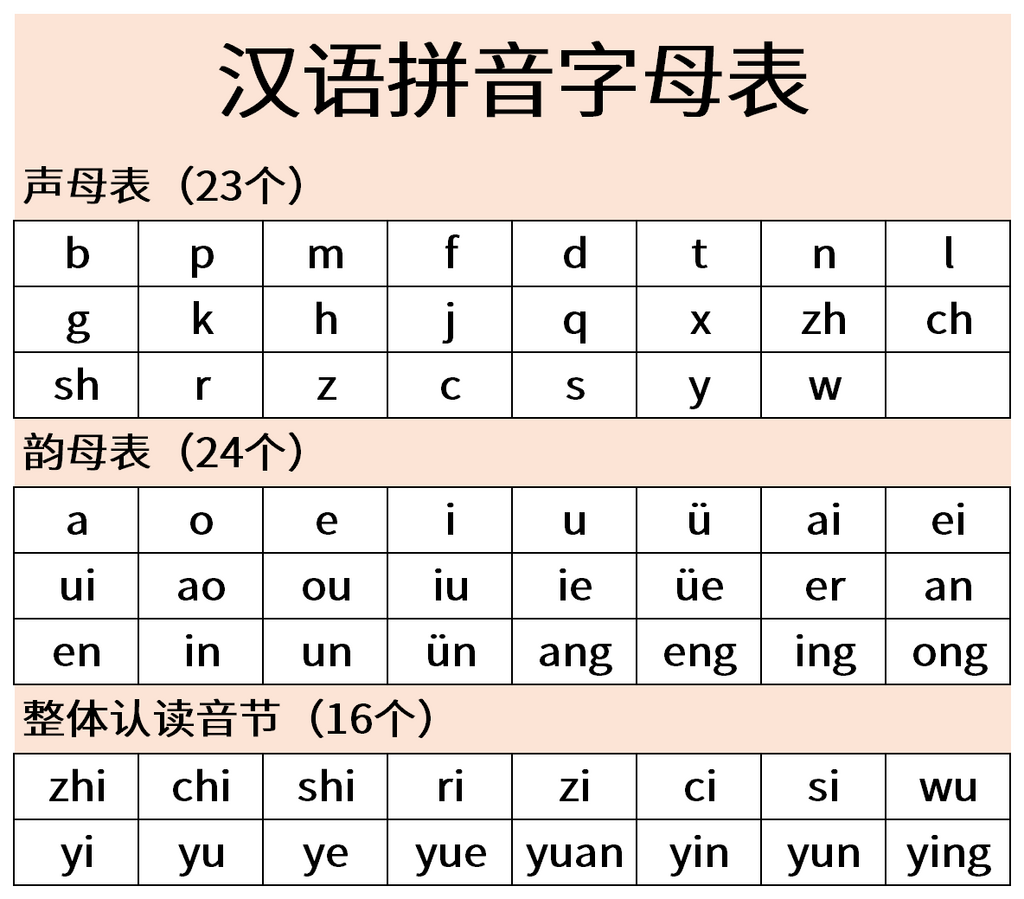
Getting familiar with these sounds is your first big step. Don't worry about memorizing them all at once. Practice listening to them and repeating them. Pay close attention to how your mouth, tongue, and lips move for each sound.
A Rule That Changes
Sometimes, tones change when they're next to each other. This is called tone sandhi. The most common and important rule involves the third tone.
When two third-tone syllables are back-to-back, the first one changes into a second tone. It's a natural way to make speaking smoother.
For example, the common greeting nǐ hǎo (hello) is made of two third tones: nǐ (ˇ) and hǎo (ˇ).
When you say it, it sounds like ní hǎo (´ ˇ).
You still write the Pinyin as nǐ hǎo, but you pronounce it with the tone change. This is a fundamental rule you'll use constantly. For now, just focus on this one change. Mastering it will make your Mandarin sound much more natural right from the start.
What is Pinyin?
Every syllable in Mandarin is composed of which three parts?
Getting these fundamentals down takes practice. Listen to native speakers, repeat the sounds, and don't be afraid to make mistakes.