Mandarin Chinese Basics
Pinyin and Tones
Reading Chinese with Pinyin
Before diving into Chinese characters, you need a way to pronounce them. That's where Pinyin comes in. It's the official system for writing Mandarin sounds using the familiar Roman alphabet. Think of it as a set of pronunciation instructions for a language that doesn't use an alphabet like English does.
Learning Pinyin is the first and most critical step for any Mandarin student. It builds the foundation for speaking clearly and understanding others.
Pinyin is the Romanization system for Chinese characters and is crucial for beginners to learn pronunciation and tones accurately.
Building Blocks of Sound
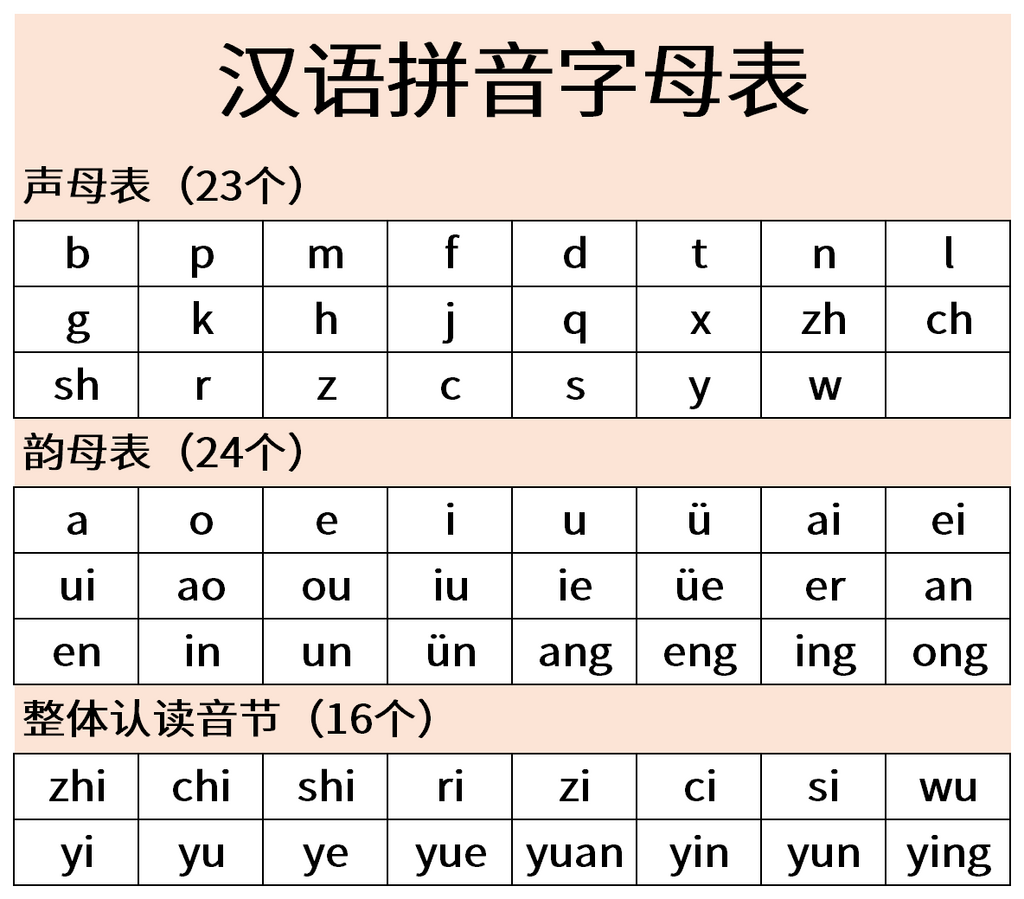
Every syllable in Mandarin is made from two simple parts: an initial and a final.
Initial
noun
The consonant sound that starts a syllable.
Initials are straightforward for English speakers. Sounds like b, p, m, and f are very similar to what you already know.
Final
noun
The vowel sound that follows the initial, sometimes ending with n or ng.
Finals can be simple vowels like a or o, or more complex combinations like ao, ian, or eng. By combining an initial and a final, you create the sound of a syllable.
Initial + Final = Syllable Sound
For example, the Pinyin syllable hǎo (好, good) is formed by combining the initial h with the final ao.
The Four Tones
Now for the part that makes Mandarin sound so musical: the tones. A tone is the pitch contour of your voice when you say a syllable. Changing the tone changes the meaning of the word completely, even if the initial and final stay the same.
This is why mastering tones is not optional. Saying a word with the wrong tone is like saying a different word altogether.
In Mandarin Chinese, there are four basic tones and a fifth neutral tone.
Let's look at the classic example using the syllable ma.
| Pinyin | Tone | Meaning |
|---|---|---|
| mā | First | mother (妈) |
| má | Second | hemp (麻) |
| mǎ | Third | horse (马) |
| mà | Fourth | to scold (骂) |
As you can see, asking for your horse when you meant to ask for your mother could get confusing! Let's break down how each tone sounds.
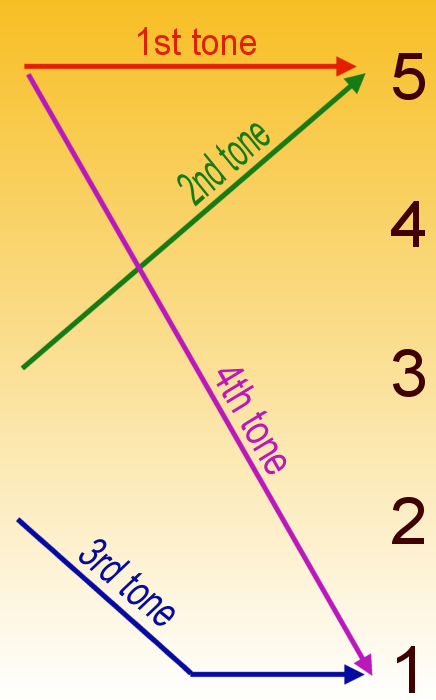
First Tone (High and Flat) Think of the sound a doctor asks you to make: "say ahhh." It's a high, sustained pitch. The tone mark is a flat line above the vowel, like in mā.
Second Tone (Rising) This sounds like you're asking a question: "Huh?" Your voice starts in the middle and rises in pitch. The tone mark is a rising accent, as in má.
Third Tone (Falling and Rising) This is the most complex tone. Your voice starts in the middle, dips down, and then rises again. It's a bit like saying "well..." when you're thinking. The tone mark is a dipping curve, like in mǎ.
Fourth Tone (Falling) This is a sharp, falling sound, like a command: "Stop!" Your voice starts high and drops quickly. The tone mark is a falling accent, as in mà.
Ready to test your understanding?
What is the primary purpose of Pinyin?
Every syllable in Mandarin is composed of an initial and a final.
Pinyin and tones are your entry point into speaking Mandarin. Practice them daily, listen to native speakers, and don't be afraid to make mistakes. With a solid grasp of these fundamentals, you'll be ready for the next step in your language journey.