Management Consulting Partner
Introduction to Management Consulting
What is Management Consulting?
At its core, management consulting is about helping organizations solve problems and improve how they work. Think of a consultant as an expert doctor for a business. A company might feel “sick”—maybe profits are down, or a new competitor is gaining ground. They hire a consulting firm to diagnose the problem, prescribe a solution, and sometimes, help administer the treatment.
Business consulting is the practice of providing independent and expert advice and support to organizations and decision-makers to improve their performance and efficiency.
Consultants bring a fresh, outside perspective. Because they work with many different companies across various industries, they can spot patterns and see solutions that people inside the organization might miss. They use data analysis, interviews, and established frameworks to understand the challenges and then build a roadmap for improvement. The ultimate goal is to leave the client stronger, more efficient, and better equipped for the future.
A Quick History
The consulting industry as we know it began in the late 19th and early 20th centuries. The first firms, like Arthur D. Little, were founded by university professors and focused on technical research and improving factory efficiency. This was the era of scientific management, where the goal was to make manufacturing processes as lean and productive as possible.
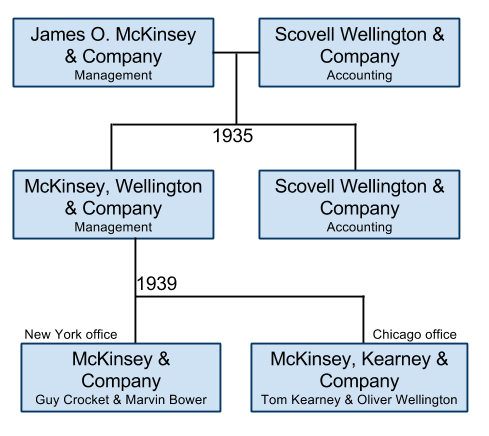
The industry grew significantly after World War II. Firms like McKinsey & Company, founded by James O. McKinsey, shifted the focus from the factory floor to the executive suite. They began advising top leaders on overall corporate strategy, organizational structure, and financial management. This move established consulting as a high-stakes profession that shaped the direction of major corporations.
Over the decades, consulting has continued to evolve. The rise of technology created a massive demand for IT consulting, while globalization pushed firms to develop expertise in international markets. Today, the field is broader than ever, addressing everything from digital transformation to corporate sustainability.
Types of Consulting
Not all consultants do the same thing. The industry is divided into several specializations, each focused on a different area of business. While there are many niches, most services fall into a few major categories.
Some of the most common types include:
-
Strategy Consulting: This is often seen as the most prestigious area. Strategy consultants help senior executives answer big-picture questions, like which markets to enter, how to respond to competitors, or where to invest for long-term growth.
-
Operations Consulting: These consultants focus on improving the efficiency of a company's internal processes. This could involve optimizing a supply chain, streamlining manufacturing, or redesigning how a customer service department operates.
-
Technology Consulting: With technology at the heart of modern business, these consultants help companies select, implement, and manage their IT systems. This ranges from large-scale software rollouts to developing cybersecurity strategies.
-
Financial Advisory Consulting: These firms advise on financial matters like mergers and acquisitions (M&A), managing financial risk, and corporate restructuring.
-
Human Resources Consulting: This area focuses on people. HR consultants help with talent management, organizational design, compensation and benefits, and improving company culture.
The Major Players
The consulting world is made up of thousands of firms, but they can be grouped into a few key categories. Understanding these distinctions helps clarify what different firms do and who they serve.
The main types of consulting firms are strategy firms, Big 4 consulting practices, Tier 2 firms, and boutique firms.
Here's a breakdown of the landscape:
| Firm Category | Examples | Primary Focus |
|---|---|---|
| Strategy Firms (MBB) | McKinsey & Co., Boston Consulting Group (BCG), Bain & Co. | High-level corporate strategy for Fortune 500 companies. |
| The Big Four | Deloitte, PwC, EY, KPMG | A very broad range of services, including audit, tax, and consulting in strategy, operations, and tech. |
| Technology-Focused | Accenture, IBM Consulting | Large-scale IT implementation, digital transformation, and systems integration. |
| Boutique Firms | Thousands of smaller firms | Deep expertise in a specific industry (e.g., healthcare) or function (e.g., pricing strategy). |
While the big names dominate headlines, boutique firms play a critical role. Their specialized knowledge often makes them the best choice for clients with very specific challenges. This diverse ecosystem ensures that companies of all sizes and with all types of problems can find the expert help they need.
Now that you have a foundational understanding of the consulting industry, let's test your knowledge.
What is the primary role of a management consultant?
A large retail company is struggling to make its shipping and warehouse processes more efficient. Which type of consulting would be most suitable to address this issue?