Male Sexual Health and Wellness Fundamentals
Anatomy and Measurement
The Internal Structures
Beneath the surface, the penis is composed of three cylindrical columns of erectile tissue. The two largest, running side by side along the top, are called the corpora cavernosa. The third cylinder, which runs along the bottom and contains the urethra, is the corpus spongiosum.
During an erection, these spongy tissues engorge with blood. The process is contained by a tough, fibrous sheath called the tunica albuginea, which surrounds the corpora cavernosa. This sheath traps the blood under high pressure, creating rigidity. The corpus spongiosum remains more pliable to keep the urethra open for ejaculation.
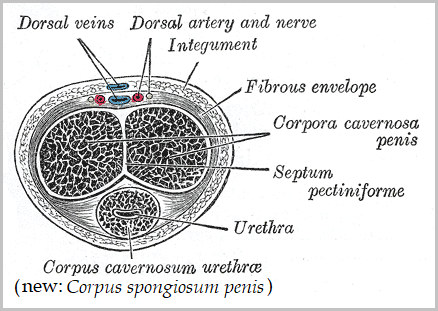
Finally, the entire structure is anchored to the pubic bone by the suspensory ligament. This ligament supports the penis and affects its external angle and length, especially in the flaccid state. While it provides crucial support, it also means a portion of the penis remains inside the body.
The Right Way to Measure
In clinical settings, measuring penile length follows a specific, standardized protocol to ensure accuracy and consistency. The accepted method is the Bone-Pressed Erect Length, or BPEL. This technique accounts for the fat pad that can obscure part of the penile shaft.
To perform a BPEL measurement, a ruler is pressed firmly into the pubic fat pad until it makes contact with the pubic bone. The measurement is then taken from the bone to the very tip of the glans. This provides the most accurate assessment of the penis's functional length.
Statistics vs. Perception
Concerns about penis size are common, but they are often based on perception rather than anatomical reality. Large-scale urological studies provide a clear picture of what is statistically normal.
When thousands of measurements are plotted on a graph, they form a classic bell curve. This distribution shows that most men fall near the middle, or the average, with very few at the extreme ends of being exceptionally small or large.
Major reviews of these studies confirm that the average Bone-Pressed Erect Length is between 5.1 and 5.5 inches (13 to 14 cm). The average erect circumference is around 4.6 inches (11.7 cm).
What many men perceive as a short penis actually falls into normal range size.
Another factor is the difference between flaccid and erect states. Some individuals, often called "growers," have a penis that is relatively small when flaccid but expands significantly when erect. Others, known as "showers," have a penis that is closer to its full size even when flaccid.
This variability is perfectly normal and relates to the elasticity of the tunica albuginea and the resting state of the erectile tissues. There is no functional difference between the two types.
Understanding these anatomical and statistical facts helps ground expectations in reality. It's time to test what you've learned.
What are the two largest cylindrical columns of erectile tissue that run side-by-side along the top of the penis?
Which structure is primarily responsible for trapping blood under high pressure to create rigidity during an erection?
This foundational knowledge provides a clear, fact-based perspective on male anatomy.