Making Real Connections
Non-Verbal Mastery
Your Body's Secret Language
Did you know you're always communicating, even when you're not speaking? Your body has its own language. The way you stand, sit, and look at people sends powerful messages. Learning to use this silent language helps you seem friendly and confident, making it easier to connect with friends and talk to adults.
Your actions can speak louder than your words. Understanding non-verbal cues is like having a social superpower.
The Friendliness Formula: S.O.L.E.R.
To show someone you're friendly and interested in what they're saying, you can use a simple trick called S.O.L.E.R. It's an acronym that stands for five easy steps to make your body language open and welcoming. Think of it as a recipe for a great first impression.
Let's break it down:
S is for Square up. Face the person directly. Point your toes, hips, and shoulders toward them. This shows they have your full attention.
O is for Open posture. Keep your arms and legs uncrossed. Crossing your arms can make you look closed off or defensive, even if you don't mean to.
L is for Lean in. Leaning forward just a little shows you're engaged and interested in what they have to say. Don't get too close, just enough to show you're listening.
E is for Eye contact. Look at the person while they're talking. You don't need to stare! Just let your eyes meet theirs naturally. Look away now and then, just like in a normal conversation.
R is for Relax. Try not to be stiff. Let your shoulders drop, breathe normally, and use a friendly facial expression. When you're relaxed, the other person will feel more comfortable too.
Reading Super-Fast Feelings
Have you ever seen a quick flash of emotion on someone's face that disappears almost instantly? That's called a micro-expression. It's a tiny, involuntary facial expression that reveals how someone is truly feeling, even if they're trying to hide it.
Micro-expression
noun
A very brief, involuntary facial expression that shows a person's true emotion.
Noticing these super-fast expressions can help you understand people better. For example, if you're telling a joke and you see a quick flash of a frown on your friend's face before they laugh, maybe the joke accidentally hurt their feelings. It’s not about being a mind reader, but about being a more observant and caring friend. Paying attention to these small clues helps you react with more empathy.
Your Personal Space Bubble
Everyone has an invisible bubble of space around them called personal space. The size of this bubble is different for everyone and can change depending on who you're with. You probably let your family and close friends get closer than you'd let a stranger or a classmate you don't know well.
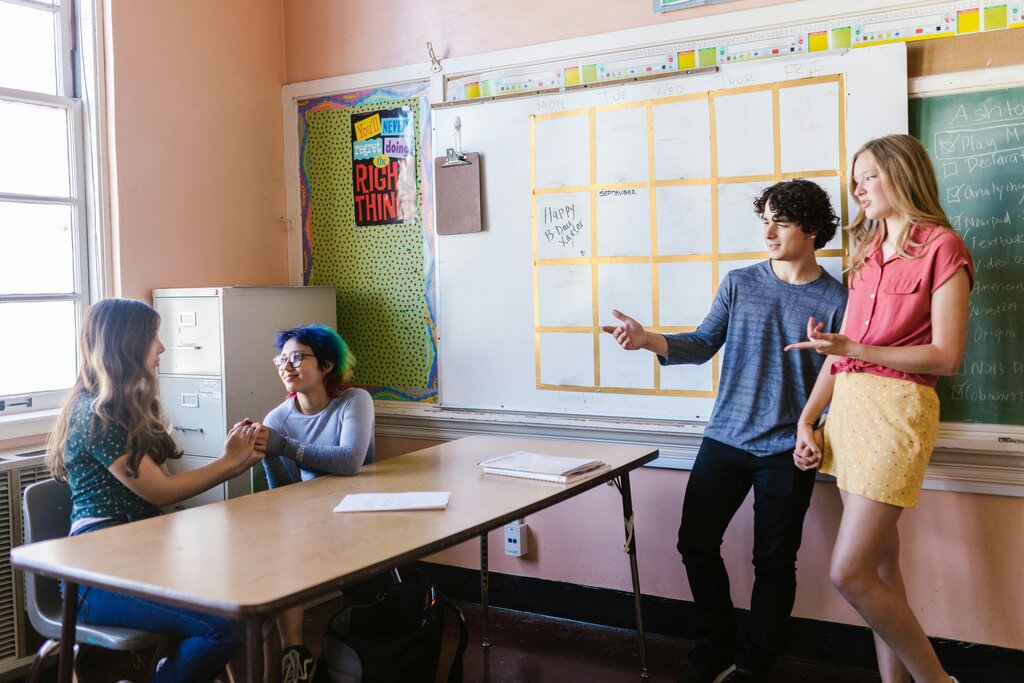
Respecting someone's bubble is important. If you stand too close, they might feel uncomfortable. If you notice someone leaning or stepping back as you get closer, that's a sign you've entered their bubble. Just take a small step back to give them more room. It's also okay to protect your own bubble. If someone is too close for your comfort, you can take a step back or politely say, "Could I have a little more space, please?"
Be Mindful of Body Language
A good way to build a connection with someone without even realizing it is to subtly mirror their body language. Mirroring means gently copying someone's posture or gestures. If they lean on one arm, you might do the same a few moments later. If they nod while listening, you can nod too.
This isn't about mimicking every single move they make. That would be weird! It's about creating a sense of similarity and ease. When you subtly mirror someone, their brain picks up on the familiar posture and it makes them feel more connected and understood. It's a quiet way of saying, "I'm on the same page as you."
What does the 'O' in the S.O.L.E.R. acronym for friendly body language stand for?
You are listening to a friend tell a story. Which of the following actions best demonstrates that you are engaged and interested?
Using these tools helps build your social toolkit. By paying attention to your own body language and noticing the cues others send, you can make your interactions smoother and build stronger friendships.