Maha Shivratri Essence and Rituals
Cosmic Union
Consciousness Meets Energy
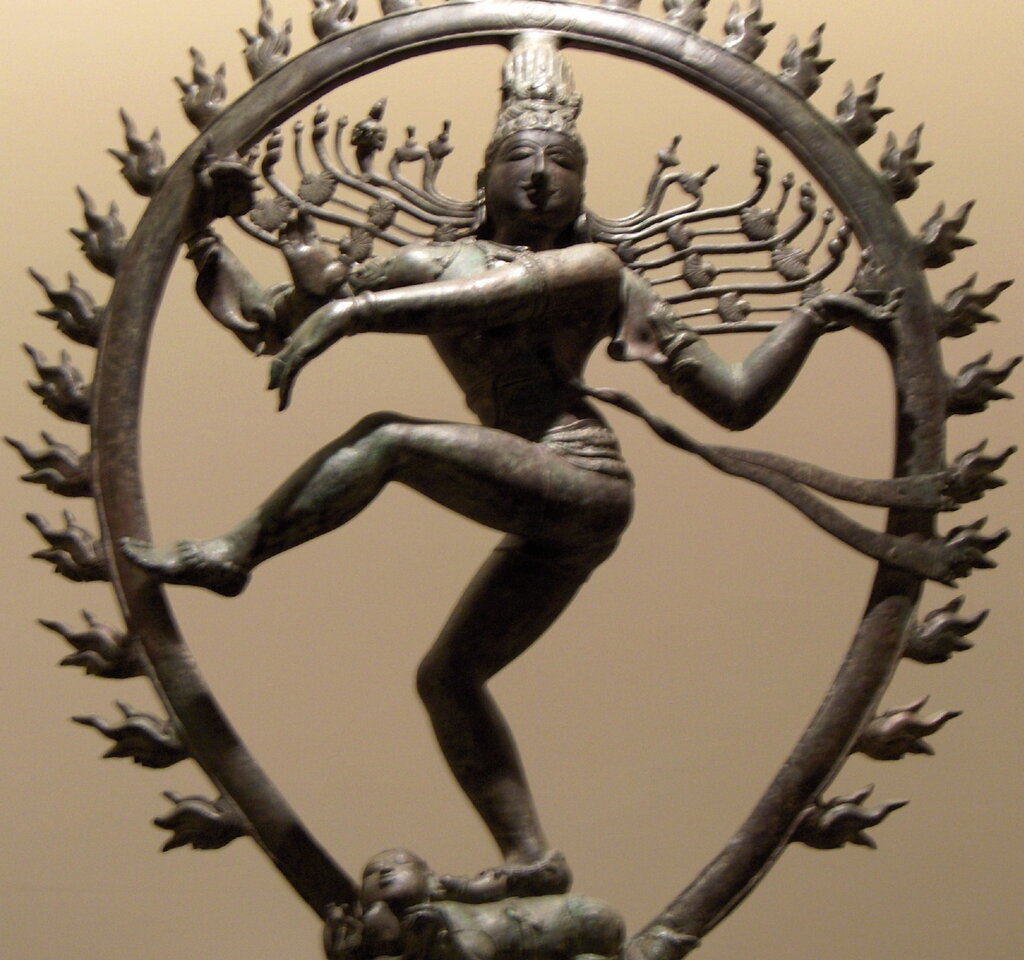
Maha Shivratri celebrates a moment of profound cosmic significance. It's often called the wedding night of Shiva and Shakti, but this description barely scratches the surface. The event symbolizes the fundamental union that underpins all of existence: the merging of pure, static consciousness with dynamic, creative energy.
In Hindu philosophy, these two principles are known as and Prakriti. Purusha is the unchanging, silent witness. It is the formless, masculine principle of pure awareness that simply is. Prakriti, on the other hand, is the feminine principle of nature and energy. She is the ever-changing, kinetic force that creates, sustains, and transforms the material universe. One cannot exist without the other. Prakriti is the dance, but Purusha is the space in which the dance happens.
Think of it this way: Purusha is the unmoving mountain, and Prakriti is the river that flows around it, carving canyons and nourishing life.
When we speak of Shiva in this context, we're referring to the universal principle of consciousness, often called the Shiva Tattva—the absolute, formless reality. Shakti is the power inherent within that consciousness. She is the force that brings the potential of the universe into actual manifestation. Before their union, consciousness is inert, and energy is aimless. Their marriage isn't just a mythological event; it's the symbolic moment the universe comes into being, when potential becomes kinetic.
The Union Within
This cosmic union isn't just an external phenomenon; it's a blueprint for our inner world. Every individual contains both the masculine principle of stillness (Shiva) and the feminine principle of energy (Shakti). Our capacity for quiet observation, awareness, and presence is our inner Shiva. Our ability to act, create, feel, and express is our inner Shakti.
The spiritual journey, in many traditions, is about balancing these two forces within ourselves. Too much undirected energy (Shakti) without the grounding of consciousness (Shiva) can lead to chaos and distraction. Conversely, consciousness without the energy to act upon it remains sterile and unexpressed. The goal is not for one to dominate the other, but for them to dance together in harmony.
This arousal and ascent of the latent kundalini energy and its merging in the Sahasrara is synonymous with the union of shakti (cosmic potency) with shiva (cosmic consciousness).
This internal marriage is the very essence of many yogic and tantric practices. The awakening of Kundalini energy at the base of the spine and its ascent to the crown chakra is a symbolic representation of Shakti rising to unite with Shiva. This is the ultimate goal: the realization that the individual self (Atman) is one with the universal consciousness (Brahman). Maha Shivratri is an annual reminder of this potential for unity that exists within each of us. It's a night to honor the silence from which all creation springs, and the energy that makes it all possible.
Ready to check your understanding of this cosmic dance?
What does the union of Shiva and Shakti, celebrated on Maha Shivratri, primarily symbolize?
In the context of Hindu philosophy described, the feminine principle of nature and kinetic energy is known as: