Magnetic Fields of Bar Magnets Beyond the Basics
Magnetic Field Basics
The Invisible Force
A magnetic field is an invisible area around a magnet or a moving electric charge where magnetic forces can be felt. You can't see the field itself, but you can definitely see its effects. Think of it like the heat from a campfire. You can't see the heat, but you feel it when you get close. In the same way, objects sensitive to magnetism will react when they enter a magnetic field.
Magnetic Field
noun
A region around a magnetic material or a moving electric charge within which the force of magnetism acts.
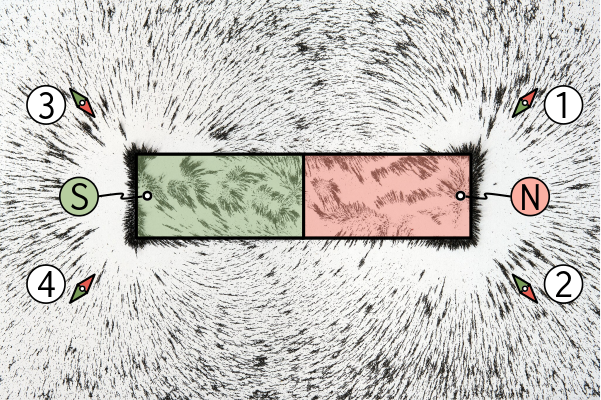
We can visualize these fields using iron filings or small compasses. When sprinkled around a magnet, tiny iron filings arrange themselves into a distinct pattern, tracing the lines of the magnetic force. The small compasses in the image below also point along these lines, revealing the direction of the field at any given point.
North and South Poles
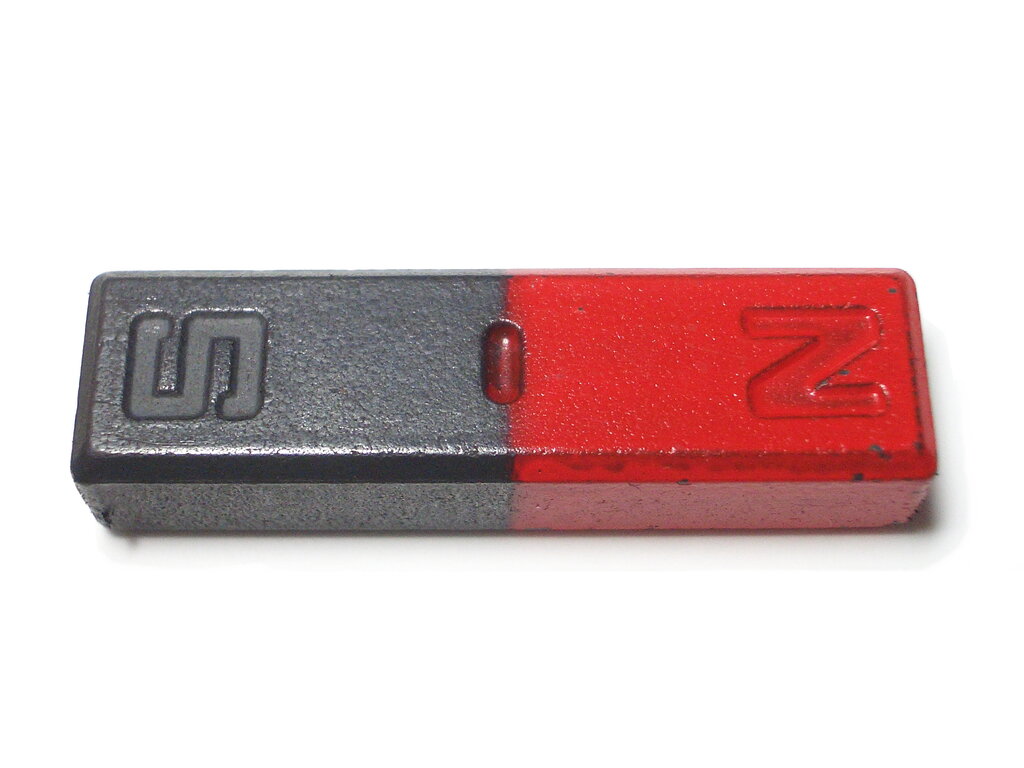
Every magnet has two ends, called poles. One is the North pole and the other is the South pole. This is true no matter how big or small the magnet is. Even if you cut a bar magnet in half, you don't get a separate North and South pole. Instead, you get two new, smaller magnets, each with its own North and South pole.
These poles govern how magnets interact with each other. The rule is simple and fundamental: opposite poles attract, while like poles repel. A North pole will pull a South pole toward it, but it will push another North pole away.
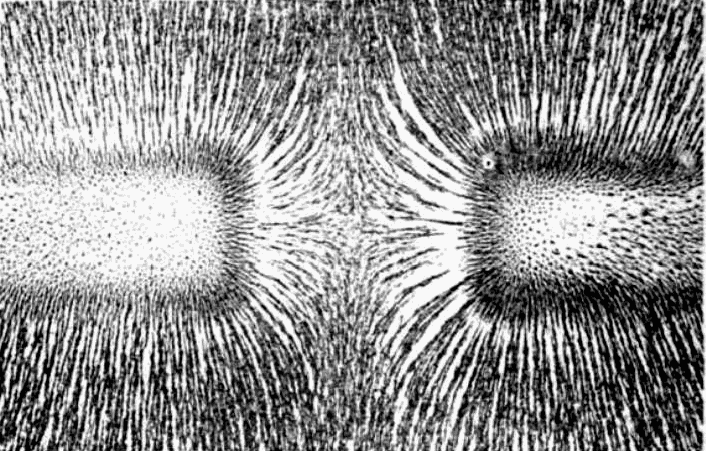
Opposite poles attract, and like poles repel.
Drawing the Field
Since we can't see magnetic fields, scientists use imaginary lines called magnetic field lines to map them. These lines show us two important things: the direction of the magnetic force and its relative strength.
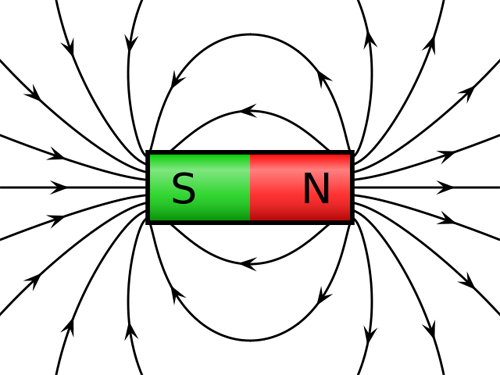
Magnetic field lines have a few key properties:
- They always point away from the North pole and toward the South pole outside the magnet.
- They form complete, closed loops. Inside the magnet, they run from the South pole back to the North pole.
- They never cross over one another.
- The density of the lines indicates the field's strength. Where the lines are packed closely together, like near the poles, the magnetic field is strongest. Where they are spread out, the field is weaker.
Magnetic Fields – Field Lines point from North to South – Strength decreases with distance from the magnet – Direction always points to south pole and away from north pole, at any point
Now that you understand the basics of magnetic fields, let's test your knowledge.
A magnetic field is best described as:
If you cut a bar magnet in half, what is the result?
Understanding these fundamental ideas about magnetic fields, poles, and field lines is the first step to exploring more complex and fascinating magnetic phenomena.