Macro Tech and Market Dynamics
Recap of Key Concepts
The Engine and the Road
Think of macro technology and market analysis as two sides of the same coin. Macro technology refers to the large-scale technological shifts that reshape industries and societies—things like the internet, artificial intelligence, or renewable energy. Market analysis is the process of understanding the forces at play in a given economic environment: who the customers are, what they want, and who the competitors are.
You can't fully understand one without the other. A groundbreaking technology might fail without a market ready to adopt it. A thriving market can be completely upended overnight by a new technological innovation. Their relationship is a constant, dynamic feedback loop.
This cycle is the engine of modern economic change. Let's look at each part of the loop more closely.
When Technology Drives
Technological advancements are a primary force of market disruption. They don't just improve existing products; they can create entirely new markets and render old ones obsolete. When a new technology dramatically lowers costs, improves performance, or enables a completely new capability, it changes the rules of the game.
Consider the advent of GPS technology in consumer devices. Initially a military tool, its integration into smartphones didn't just create a market for navigation apps. It fundamentally altered our relationship with the physical world and disrupted multiple industries. It impacted everything from taxi services (Uber, Lyft) and food delivery to dating apps and local advertising. The core technological advancement created ripples of change across the entire market.
A single technological shift can redefine consumer expectations, create new business models, and force established companies to either adapt or disappear.
When the Market Steers
Innovation doesn't happen in a vacuum. Market forces play a crucial role in guiding which technologies are developed and which ones gain traction. These forces act as a filter, signaling which ideas are commercially viable and which are not.
Key market forces include:
- Consumer Demand: Are people willing to pay for this new technology? A clever invention that solves no real-world problem will likely fail.
- Competitive Pressure: If one company develops a successful new technology, its rivals are forced to respond with their own innovations, accelerating the pace of development.
- Economic Conditions: A strong economy might encourage investment in speculative, long-term technologies, while a recession might favor innovations that offer immediate cost savings.
- Regulation: Government policies can either accelerate or hinder technology adoption. Subsidies for electric vehicles, for example, create a powerful market incentive for automotive and battery innovation.
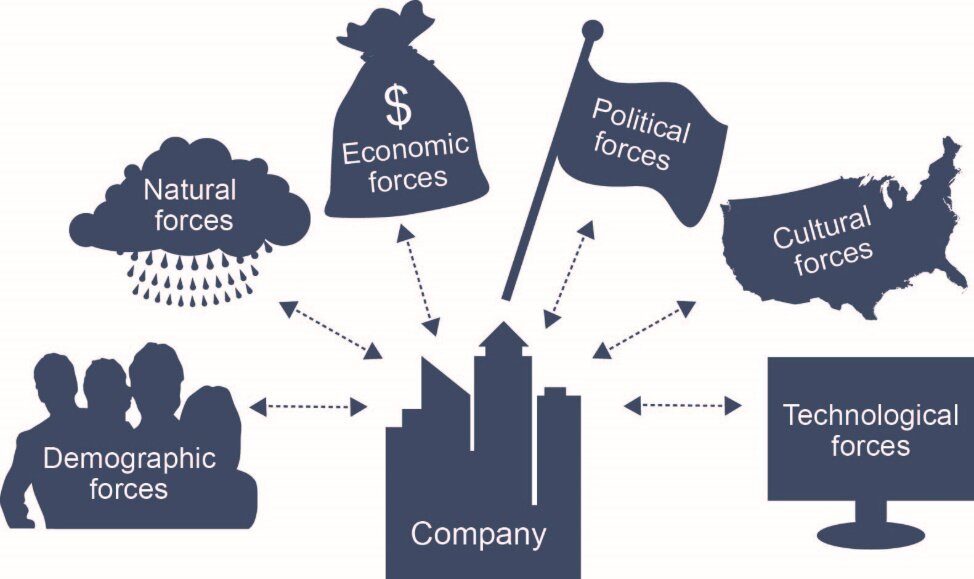
The push for sustainable energy is a perfect example of market pull. Growing consumer awareness of climate change, combined with government incentives and falling production costs, created a massive market demand. This demand, in turn, has funneled billions of dollars into R&D for solar, wind, and battery storage technologies, accelerating their development far beyond what would have occurred otherwise. The market sent a clear signal, and the technology developers responded.
Understanding this interplay is critical. Analyzing a new technology without considering the market is like admiring an engine without knowing if there are any roads to drive on. Similarly, analyzing a market without considering the technological horizon is like studying a map without realizing an earthquake is about to redraw it completely. Effective strategy requires seeing both.
What is the primary relationship between macro technology and market analysis?
The rise of ride-sharing apps like Uber and Lyft following the integration of GPS into smartphones is a prime example of: