Macro Finance of Land
Introduction to Macroeconomics
The Economy's Dashboard
Macroeconomics is the study of the entire economy, not just a single market or business. Think of it like checking the vital signs of a patient. Instead of looking at one part, a doctor checks temperature, blood pressure, and heart rate to see how the whole system is doing. Macroeconomists do the same for a country's economy, using key indicators to gauge its overall health.
These big-picture numbers help us understand why some years are prosperous and others are tough, and they influence everything from job availability to the cost of a gallon of milk.
We'll look at four of the most important vital signs: Gross Domestic Product (GDP), inflation, unemployment, and interest rates. Together, they paint a clear picture of an economy's performance.
Gross Domestic Product (GDP)
The most common measure of an economy's size is its Gross Domestic Product. GDP represents the total market value of all final goods and services produced within a country's borders in a specific time period, usually a year or a quarter. It's like putting a price tag on everything the country made.
Gross Domestic Product
noun
The total monetary or market value of all the finished goods and services produced within a country's borders in a specific time period.
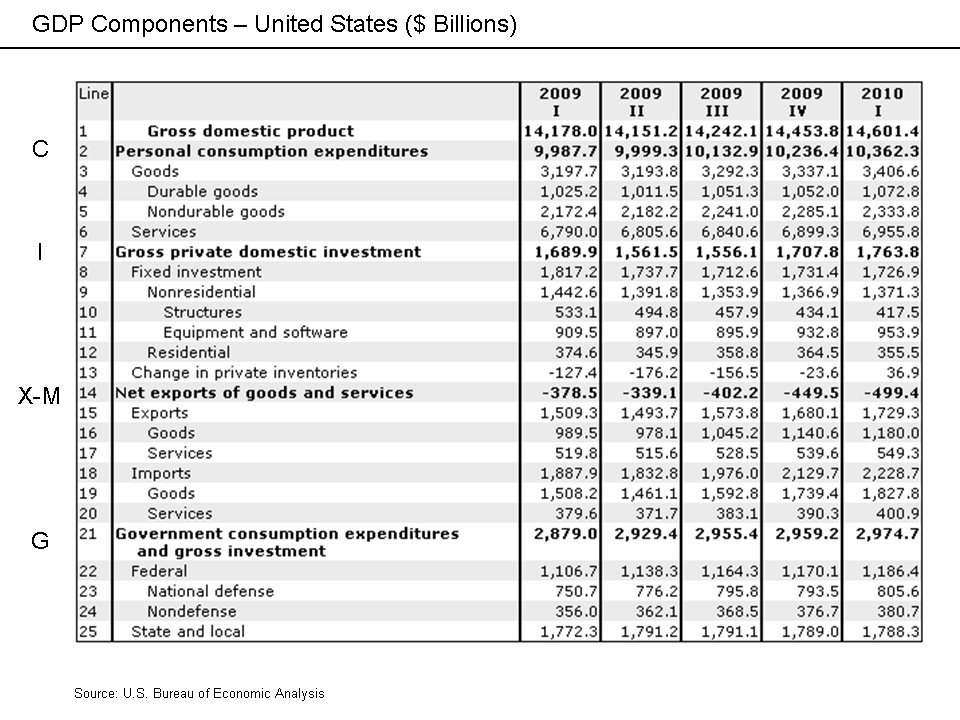
To calculate GDP, economists add up four main components:
- Consumption (C): This is the largest part of GDP and includes everything households spend on goods (like groceries and cars) and services (like haircuts and concert tickets).
- Investment (I): This isn't about stocks and bonds. It refers to spending by businesses on new equipment, factories, and buildings, plus household purchases of new homes.
- Government Spending (G): This includes all spending by the government on goods and services, from building roads and schools to paying public employees.
- Net Exports (NX): This is the value of a country's exports (goods sold to other countries) minus the value of its imports (goods bought from other countries). A positive number means the country sells more than it buys, while a negative number means the opposite.
Inflation and Unemployment
While GDP tells us about the size and growth of the economy, inflation and unemployment tell us about its stability and the well-being of its citizens.
Inflation
noun
The rate at which the general level of prices for goods and services is rising, and subsequently, purchasing power of currency is falling.
Inflation is why a candy bar that cost a nickel in the 1950s might cost over a dollar today. A small amount of inflation is generally considered healthy for an economy, as it encourages spending and investment. But when inflation is too high, it erodes the value of savings and can create economic uncertainty. Economists track it using price indexes, most commonly the Consumer Price Index (CPI), which measures the average change in prices paid by consumers for a basket of common goods and services.
Unemployment is another critical indicator. The unemployment rate is the percentage of the labor force that is currently without a job but is actively looking for one. It’s a key measure of the health of the job market.
A high unemployment rate means that a significant portion of the workforce is not contributing to production, which can slow down economic growth.
Interest Rates
An interest rate is the cost of borrowing money. When you take out a loan, the interest is the extra amount you pay back on top of the principal. On the flip side, it's also the reward you get for saving money in a bank account. You're essentially letting the bank borrow your money, and it pays you interest in return.
Interest Rate
noun
The proportion of a loan that is charged as interest to the borrower, typically expressed as an annual percentage of the loan outstanding.
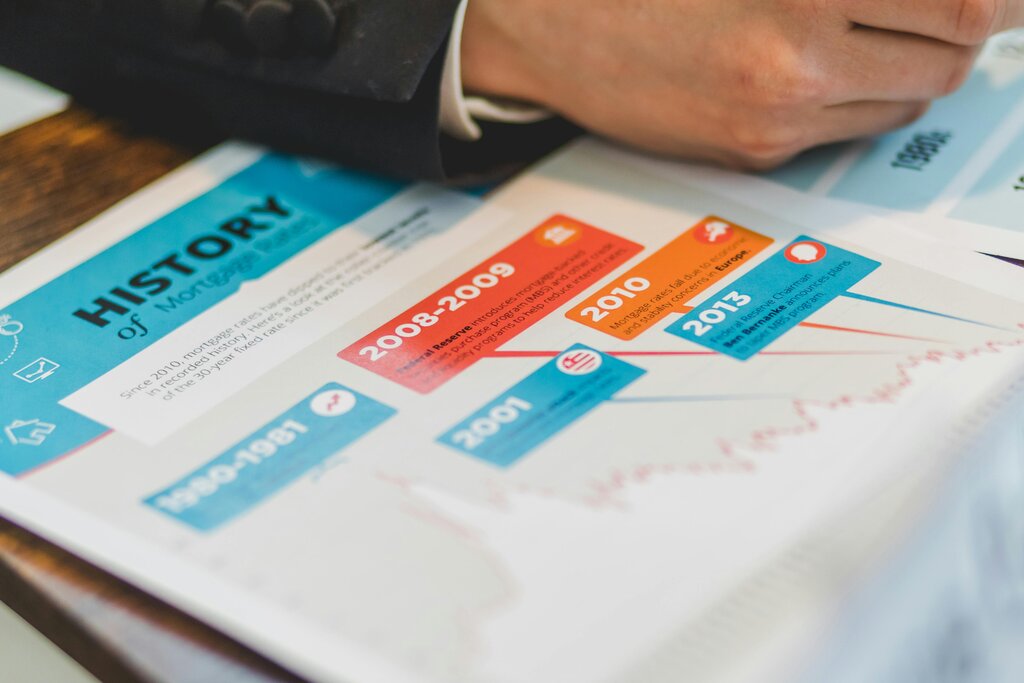
Central banks, like the Federal Reserve in the U.S., use their control over key interest rates as a powerful tool to manage the economy. If the economy is growing too slowly and unemployment is rising, the central bank might lower interest rates. This makes borrowing cheaper for businesses and consumers, which encourages spending and investment, hopefully boosting economic activity.
If prices are rising too quickly (high inflation), the central bank might raise interest rates. This makes borrowing more expensive, which can cool down spending and help bring inflation under control.
These four indicators—GDP, inflation, unemployment, and interest rates—are interconnected. A change in one often causes a change in the others, and understanding this dynamic is at the heart of macroeconomics.
Which of the following best defines Gross Domestic Product (GDP)?
Which of the following would be counted as 'Investment (I)' when calculating a country's GDP?