Machining Reducer Shafts
Reducer Shaft Basics
What Is a Reducer Shaft?
A reducer shaft is a component used in machines to transmit power and motion. Its key feature is its shape: it has multiple diameters along its length. Think of it as a stepped cylinder, with sections that are wider or narrower than others.
The main job of a reducer shaft is to connect parts that have different sized holes, or bores. For example, a motor might have a 1-inch output shaft, but the gear it needs to turn might have a 3/4-inch bore. A reducer shaft acts as the bridge, stepping down from one diameter to the other so the two components can be securely joined.
This design allows a single shaft to interact with different components like bearings, gears, and pulleys, each with its own specific mounting requirements. By changing diameters, the shaft can properly seat each component while efficiently transmitting torque from one end to the other.
Common Applications
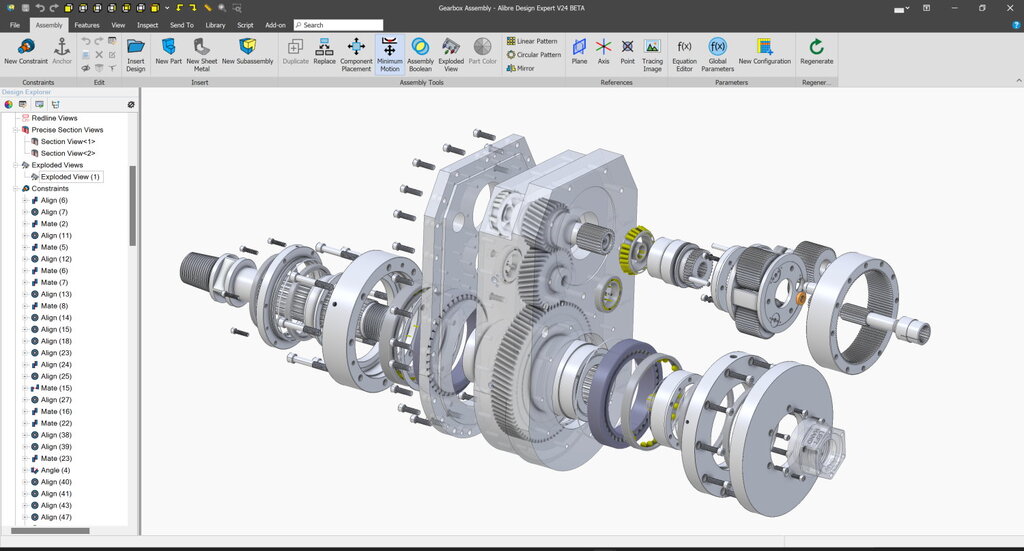
Reducer shafts are workhorses in mechanical systems. You'll find them anywhere power needs to be transmitted between mismatched components. Their most common home is inside a gearbox.
In a gearbox, different gears are used to change the speed and torque of a system. A reducer shaft might hold a large gear on its wide section and a smaller gear on its narrow section, transferring rotation from one to the other.
Other common applications include:
- Conveyor Systems: Connecting a motor to the roller that drives the conveyor belt.
- Automotive Transmissions: Linking various gear sets to manage the power from the engine to the wheels.
- Industrial Machinery: Driving pumps, mixers, and other equipment where a motor's standard shaft size doesn't match the machinery's input.
Essentially, if you need to connect two rotating parts with different-sized mounting holes, a reducer shaft is often the solution.
Key Design Features
Designing a reducer shaft isn't just about picking a few diameters. Several features are critical for its function and durability. Engineers consider these specifications carefully based on the shaft's intended use.
Journal
noun
The part of a shaft that rests on and is supported by a bearing.
The different diameters on the shaft are often journals, precisely sized to fit specific bearings. The transition between one diameter and the next is called a shoulder. This flat, circular face acts as a stop, preventing gears or bearings from sliding out of position along the shaft.
Another important feature is the fillet. This is a small, curved transition placed in the inside corner where a shaft's diameter changes at the shoulder. Instead of a sharp 90-degree corner, which creates a weak point where cracks can form, a fillet adds a rounded edge. This small curve distributes stress more evenly, making the shaft much stronger and more resistant to breaking under load.
Lastly, many shafts require a keyway. This is a slot or groove cut into the shaft. A small metal piece called a key fits into this slot and a matching slot in the gear or pulley, locking the two together. This ensures that when the shaft spins, the gear spins with it, without any slipping.
Understanding these basic elements is the first step toward working with reducer shafts in any capacity, from design to manufacturing.