Machine Learning Project Lifecycle
Problem Definition
Define the Problem First
Every successful machine learning project starts not with data or algorithms, but with a clear, well-defined problem. It's like building a house. You wouldn't start ordering lumber and mixing concrete without a detailed blueprint. Without that blueprint, you're just guessing, and the final structure is likely to be unstable and unfit for its purpose.
In machine learning, defining the problem is your blueprint. It guides every decision you make, from the data you collect to the model you choose and how you measure success. Getting this step right is more than half the battle.
Building machine learning products: a problem well-defined is a problem half-solved.
Start with Why
A machine learning model is a tool to achieve a goal, not the goal itself. Before you can build anything, you must understand the business objective. Why are we doing this? What outcome does the business need?
Forget about models for a moment and focus on the practical need. Are you trying to increase revenue? Reduce costs? Improve customer satisfaction? Make a process more efficient? The goal should be a clear, tangible business outcome.
Always ask: What is the specific business problem we are trying to solve?
For example, an e-commerce company might have a broad goal of increasing sales. A more specific business objective would be to increase the average order value by 15% within six months. This is a concrete target that a machine learning project can be built around.
Understanding the context is just as important. Who are the end-users of this system? What are the technical or budget constraints? How does the current process work, and where are its pain points? This deep understanding of the environment prevents you from building a technically perfect solution that nobody can use.
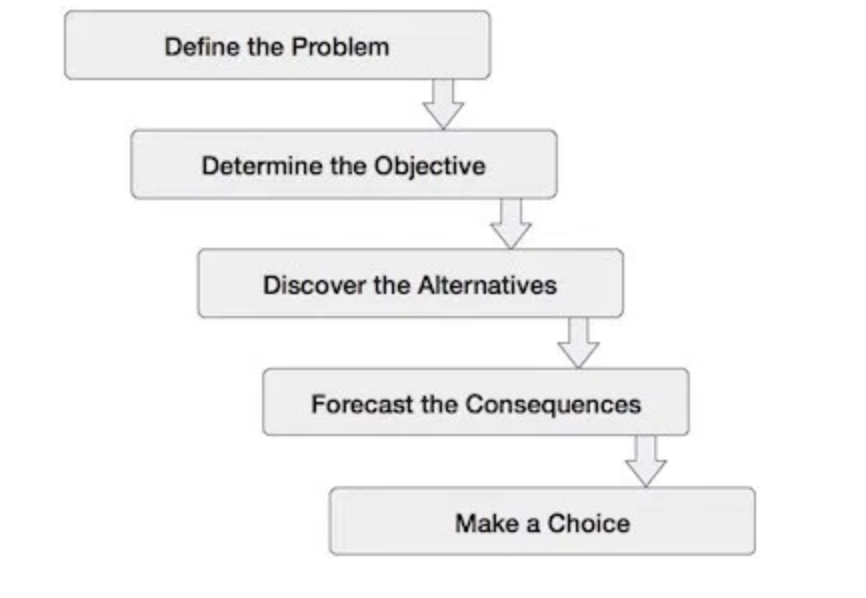
From Business Goal to ML Task
Once you have a clear business objective, the next step is to translate it into a machine learning task. This is where you reframe the business problem in the language of machine learning. The goal is to define a specific prediction or classification the model needs to make.
Let's take our e-commerce example. The business objective is to increase the average order value. How can machine learning help? We can translate this into an ML task: predict what products a user is likely to buy next. A model that does this well can power a product recommendation engine, encouraging customers to add more items to their cart.
This translation is a crucial bridge between the business world and the technical world.
| Business Objective | Machine Learning Task | Potential Model Type |
|---|---|---|
| Reduce customer churn | Predict which customers are at high risk of canceling their subscription | Classification |
| Improve ad targeting | Predict the click-through rate of an ad for a specific user | Regression |
| Automate support tickets | Categorize incoming support tickets by topic (e.g., billing, technical issue) | Classification |
| Detect credit card fraud | Identify if a transaction is likely to be fraudulent | Anomaly Detection |
How Do We Know We've Won?
Finally, you need to define the success criteria. How will you measure whether the project has succeeded? This involves setting clear, quantifiable metrics for both the model's performance and the business outcome.
There are two types of metrics to consider:
-
Model Metrics: These are technical measures of how well the model is performing its task. For a classification model, this might be accuracy, precision, or recall. For a regression model, it could be Mean Absolute Error.
-
Business Metrics: These measure the project's impact on the original business objective. For our e-commerce recommendation engine, a key business metric would be the increase in average order value. Other metrics could include the click-through rate on recommended products or the overall conversion rate.
A model can have high technical accuracy but fail to impact the business metric. For instance, a recommendation engine might be 99% accurate at predicting products a user has already seen, which doesn't help increase sales. That's why it's vital to define and track both types of metrics. Success is only achieved when the model performs well and moves the needle on the business goal.
What is the most crucial first step in any successful machine learning project?
A company wants to reduce customer churn. Which of the following is the most appropriate translation of this business objective into a machine learning task?
With a clearly defined problem, objective, and success criteria, you now have a solid foundation. This blueprint will guide you through the rest of the machine learning lifecycle, ensuring your efforts are always aimed at solving the right problem.