Machine Learning Made Easy
Introduction to Machine Learning
What Is Machine Learning?
Traditionally, we tell computers exactly what to do. A programmer writes explicit, step-by-step instructions, and the computer follows them. If you want a computer to sort a list of names, you write code that tells it precisely how to compare and reorder them.
Machine learning flips this around. Instead of giving the computer instructions, you give it data and an outcome you want. The computer then figures out the rules on its own. It learns from patterns in the data, much like how a child learns to identify a dog by seeing many different dogs, not by being given a long list of rules about fur, tails, and barks.
Machine learning is the science of getting computers to act without being explicitly programmed. It's about recognizing patterns and making predictions from data.
Algorithm
noun
A process or set of rules to be followed in calculations or other problem-solving operations, especially by a computer.
In short, machine learning models use algorithms to analyze huge amounts of data, find the patterns within it, and then use those learned patterns to make predictions about new, unseen data.
AI, Machine Learning, and Deep Learning
You'll often hear the terms Artificial Intelligence (AI), Machine Learning (ML), and Deep Learning (DL) used together. They're related, but they aren't the same thing. The easiest way to think about them is like a set of Russian nesting dolls.
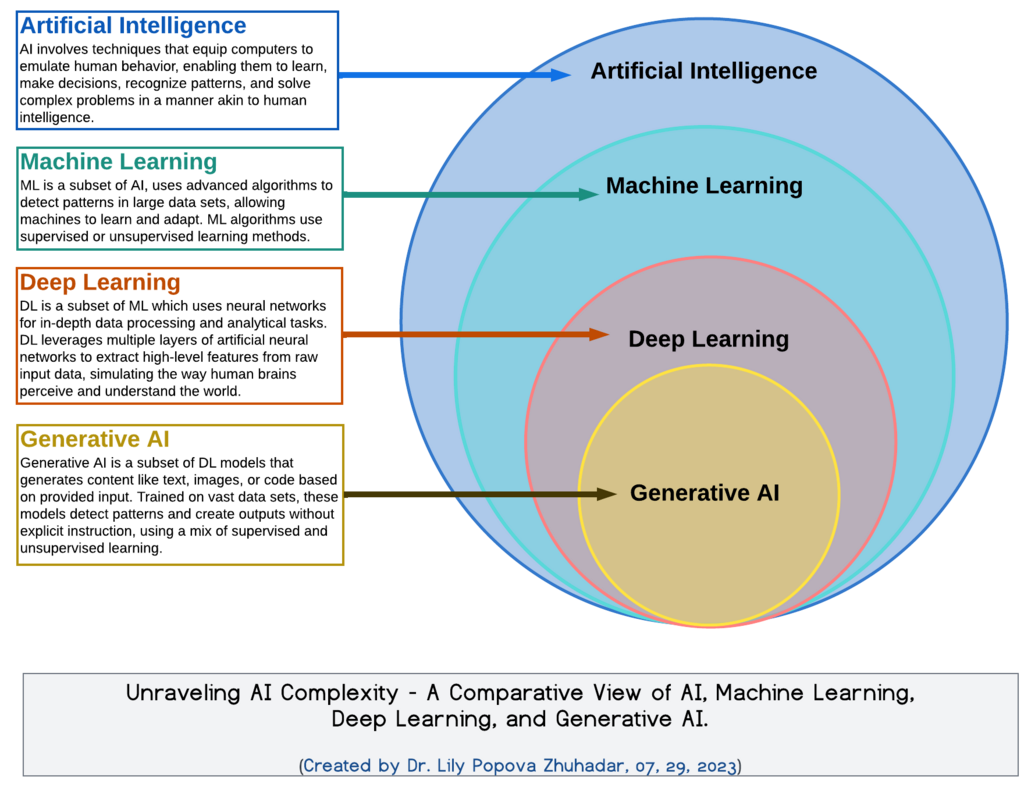
Artificial Intelligence (AI) is the biggest doll. It's the broad, all-encompassing concept of creating machines that can simulate human intelligence in any way.
Machine Learning (ML) is the next doll inside. It's a specific approach to achieving AI. Instead of programming a machine with intelligent behaviors, you let it learn for itself from data. Most of the AI you interact with today is powered by machine learning.
Deep Learning (DL) is the smallest doll. It’s a specialized, more advanced type of machine learning. Deep learning uses complex structures called neural networks, which are loosely inspired by the human brain, to find intricate patterns in very large datasets. This is the technology behind self-driving cars recognizing pedestrians and voice assistants understanding your commands.
Machine Learning in the Real World
Machine learning isn't just a futuristic concept; it's already a part of your daily life. It works behind the scenes in many of the services you use every day, making them smarter and more useful.
| Industry | Application | How it Works |
|---|---|---|
| Retail | Product Recommendations | Analyzes your past purchases and browsing history to suggest items you might like. |
| Finance | Fraud Detection | Identifies unusual patterns in your spending to flag potentially fraudulent charges. |
| Healthcare | Medical Image Analysis | Helps doctors detect diseases like cancer in X-rays and MRIs with greater accuracy. |
| Entertainment | Content Suggestions (e.g., Netflix, Spotify) | Learns your viewing or listening habits to recommend new movies, shows, or songs. |
| Spam Filtering | Learns what kinds of emails are junk and automatically moves them out of your inbox. |
From navigating rush hour traffic with real-time map updates to getting a personalized news feed, machine learning is constantly working to make sense of the world's data and turn it into helpful actions and predictions.
What is the primary difference between machine learning and traditional programming?
Which statement accurately describes the relationship between Artificial Intelligence (AI), Machine Learning (ML), and Deep Learning (DL)?
These examples are just the beginning. As you continue, you'll see how these powerful ideas are put into practice to solve all sorts of interesting problems.