Machine Learning Fundamentals
Introduction to Machine Learning
What Is Machine Learning?
Think about how you learned to identify a dog. You weren't given a long list of rules like "if it has four legs, fur, and a tail, it's a dog." Instead, you saw many examples of dogs—big ones, small ones, fluffy ones, loud ones. Over time, your brain learned the general pattern of what a "dog" is.
Machine learning (ML) works in a similar way. It's a field of artificial intelligence where we don't write explicit, step-by-step instructions for a computer. Instead, we give it a large amount of data and let it learn patterns and make decisions on its own. It's about teaching computers to learn from experience.
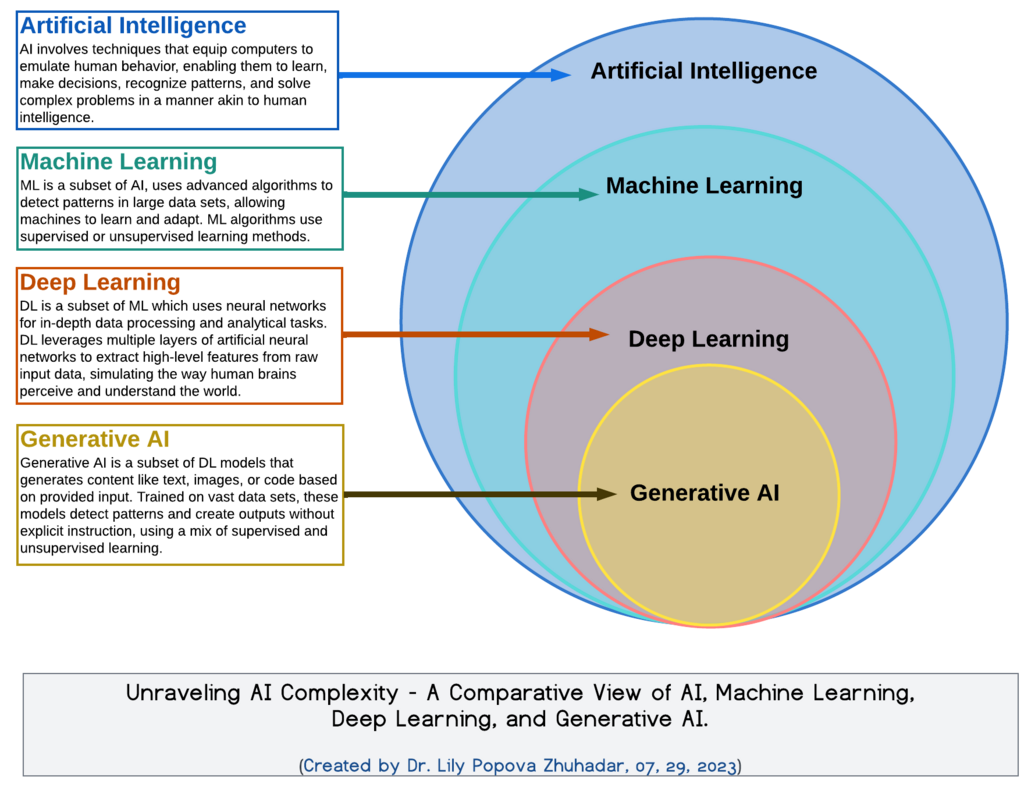
Traditional programming is all about rules. A developer writes code that tells the computer exactly what to do. For example, IF user_email ENDS WITH '@spam.com' THEN move_to_junk_folder. This works, but it's rigid. What if a spammer uses a different email address?
Machine learning flips this around. Instead of giving the computer rules, we give it data. We'd show it thousands of emails that have already been marked as spam and thousands that are not spam. The ML model then learns the characteristics of spam on its own, like certain keywords, strange formatting, or suspicious links. It creates its own internal rules, which are often far more complex and effective than what a human could write.
Why It Matters
Machine learning is the engine behind many of the technologies you use every day. It's what allows services to personalize your experience and solve problems on a massive scale.
Some common applications include:
- Recommendation Engines: When Netflix suggests a movie or Spotify creates a playlist for you, it's using machine learning to predict what you'll enjoy based on your past activity.
- Spam Filters: Your email service learns to identify and block junk mail by analyzing vast numbers of emails.
- Fraud Detection: Banks use ML to spot unusual transaction patterns that might indicate a stolen credit card, often in real-time.
- Medical Diagnosis: Machine learning models can be trained to analyze medical images like X-rays or MRIs to help doctors detect diseases like cancer earlier and more accurately.
- Self-Driving Cars: These vehicles use a complex suite of ML models to interpret data from cameras and sensors, allowing them to identify pedestrians, other cars, and traffic signs to navigate safely.
Three Ways Machines Learn
Machine learning isn't a single technique; it's a broad field with several different approaches. The three main types are supervised, unsupervised, and reinforcement learning. Think of them as three different ways a student might be taught a new subject.
- Supervised Learning: Learning with an Answer Key
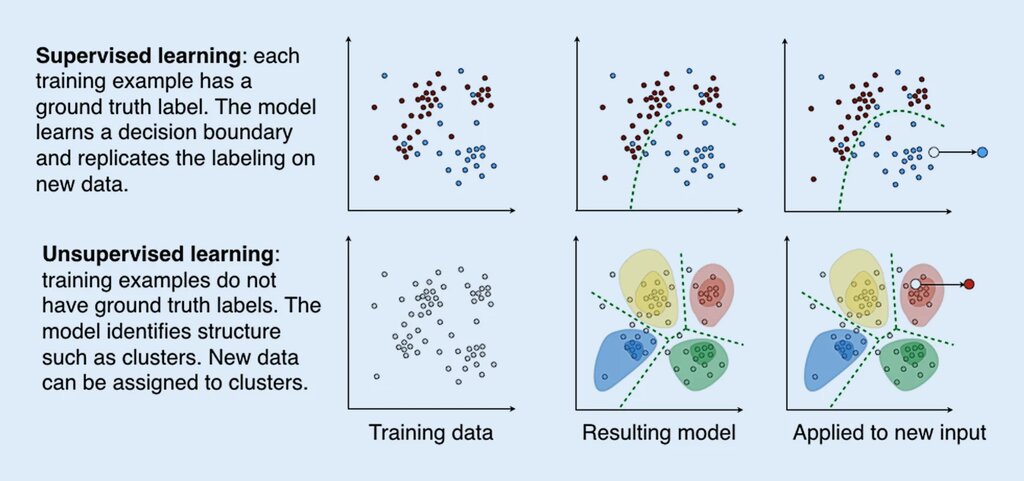
In supervised learning, the machine learning model is trained on a dataset that is labeled. This means each piece of data already has the correct answer, or "label," attached. The model's job is to learn the relationship between the input data and the output label so it can make accurate predictions on new, unlabeled data.
Imagine giving a student a stack of flashcards with animal pictures on one side and the animal's name on the other. After studying them, the student should be able to identify animals in new pictures. The labeled dataset is like the flashcards, and the model is the student.
- Unsupervised Learning: Finding Patterns on Its Own
With unsupervised learning, the model is given a dataset without any labels. There is no "answer key." The goal is for the model to explore the data and find hidden patterns or structures on its own.
This is like giving someone a box of assorted Lego bricks and asking them to sort them into groups. They might group them by color, by shape, or by size. They are discovering the underlying structure of the data without being told what the categories are. In the business world, this is often used for customer segmentation, where a company might group customers based on their purchasing behavior to better target marketing efforts.
- Reinforcement Learning: Learning from Trial and Error
Reinforcement learning is about learning to make decisions through trial and error. An algorithm, called an "agent," learns by interacting with an environment. The agent receives rewards for taking good actions and penalties for bad ones. Its goal is to maximize its total reward over time.
This is very similar to how you might train a dog. When the dog sits on command, it gets a treat (a reward). When it chews on the furniture, it gets a scolding (a penalty). Over time, the dog learns which actions lead to treats. Reinforcement learning powers everything from game-playing AI that can beat the world's best human players to robotic systems that learn to perform complex tasks in a factory.
Now that you understand the basic types of machine learning, let's test your knowledge.
What is the primary difference between machine learning and traditional programming?
A bank wants to identify groups of customers with similar purchasing habits to send them targeted marketing campaigns. The bank has a large dataset of customer transactions but no pre-existing labels for customer groups. Which type of machine learning would be most suitable for this task?
Understanding these core concepts is the first step into the fascinating world of machine learning. Each type of learning has its own strengths and is suited for different kinds of problems.