Machine Learning Fundamentals
Introduction to Machine Learning
What Is Machine Learning?
Machine learning is a way of teaching computers to find patterns in data. Instead of writing explicit, step-by-step instructions for every possible scenario, we give the computer examples and let it figure out the rules for itself.
Think about how you learned to recognize a cat. You weren't given a long list of rules like "if it has pointy ears AND whiskers AND a long tail, it's a cat." Instead, you saw many different cats over time. Your brain automatically learned the general patterns. Machine learning works in a similar way. It ingests data, identifies underlying patterns, and uses those patterns to make predictions about new, unseen data.
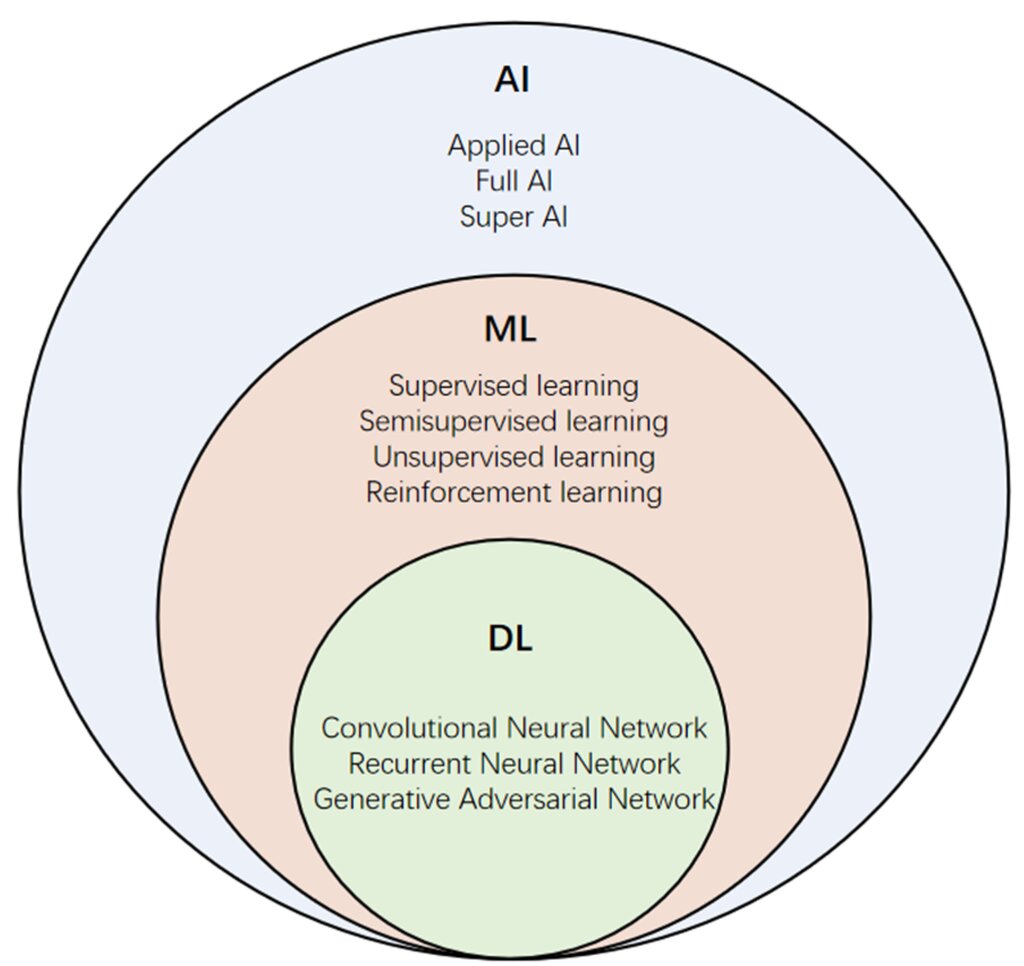
Machine learning enables a system to learn from data rather than through explicit programming.
It's a subfield of Artificial Intelligence (AI). While AI is the broad concept of creating intelligent machines, machine learning is one of the primary methods we use to achieve that goal.
Why Does It Matter?
Machine learning is powerful because it can tackle problems that are too complex or large-scale for a human programmer to solve with traditional methods. Imagine trying to write rules to identify a single face in a crowd of thousands, or to predict the stock market. The number of variables is overwhelming.
Instead, machine learning algorithms can sift through massive datasets to find subtle correlations that a person might miss. This ability makes it incredibly useful in almost every industry.
Your daily life is already filled with its applications:
- Recommendation Engines: When a streaming service suggests a movie you might like, it's using machine learning to analyze your viewing history and compare it to millions of other users.
- Spam Filters: Your email service learns to distinguish junk mail from important messages by looking at patterns in emails you've marked as spam.
- Medical Diagnosis: Doctors use machine learning models to analyze medical images, like X-rays and MRIs, to spot early signs of disease that might be difficult for the human eye to detect.
- Navigation Apps: Real-time traffic predictions are made by analyzing current and historical traffic data from thousands of users.
Three Ways to Learn
Machine learning isn't a single technique. It's a broad field with several different approaches. The three most common types are distinguished by how the algorithm learns from the data.
Supervised Learning is like learning with a teacher. The algorithm is given a dataset where the "right answers" are already known. For example, you might give it thousands of pictures of animals, each one labeled as either a "cat" or a "dog." The model's job is to learn the relationship between the input (the image) and the output (the label). The goal is to get so good at this that it can correctly label a new, unlabeled picture of a cat or dog.
Unsupervised Learning is about finding hidden structures in data without any labels or a "teacher." The algorithm is simply given a dataset and asked to find patterns or groupings on its own. A common use is customer segmentation, where a model might group customers based on their purchasing behavior, even if we don't know what those groups represent beforehand. It’s a form of discovery.
Reinforcement Learning is based on trial and error. An algorithm, often called an "agent," learns to make decisions by performing actions in an environment to achieve a goal. When it takes an action that gets it closer to the goal, it receives a reward. When it takes a wrong turn, it gets a penalty. Over time, the agent learns a strategy to maximize its total reward. This is the approach used to train computers to play complex games like chess or Go, and it's also used in robotics and navigation.
Time to check your understanding of these core concepts.
Which statement best describes the core principle of machine learning?
A marketing team wants to group its customers into distinct segments based on their purchasing habits, but they don't have any predefined categories for these groups. Which type of machine learning would be most suitable for this task?
These foundational ideas are the starting point for a vast and rapidly evolving field. Understanding them is the first step toward seeing how modern AI works.