Machine Learning Fundamentals and Video Resources
Introduction to Machine Learning
What Is Machine Learning?
Machine learning is a way of teaching computers to find patterns. Instead of writing step-by-step instructions for every possible situation, we give the computer a lot of data and let it figure out the rules on its own. It's like how you learned to recognize a dog: you saw many different dogs—big, small, fluffy, short-haired—and eventually, your brain learned the general 'dog' pattern without anyone giving you a strict set of rules.
This ability to learn from experience is incredibly powerful. It allows computers to tackle complex problems that are too messy for traditional programming. Think about recommending your next favorite song, detecting credit card fraud, or even helping doctors spot diseases in medical scans. These are tasks where the patterns are too subtle and complex for a human to write explicit rules for. Machine learning lets us build systems that can handle this complexity and get smarter over time.
Machine learning systems identify patterns and make decisions with minimal human intervention.
AI, Machine Learning, and Deep Learning
You've probably heard the terms artificial intelligence (AI), machine learning (ML), and deep learning used together. They are related, but they don't mean the same thing. They fit together like nesting dolls.
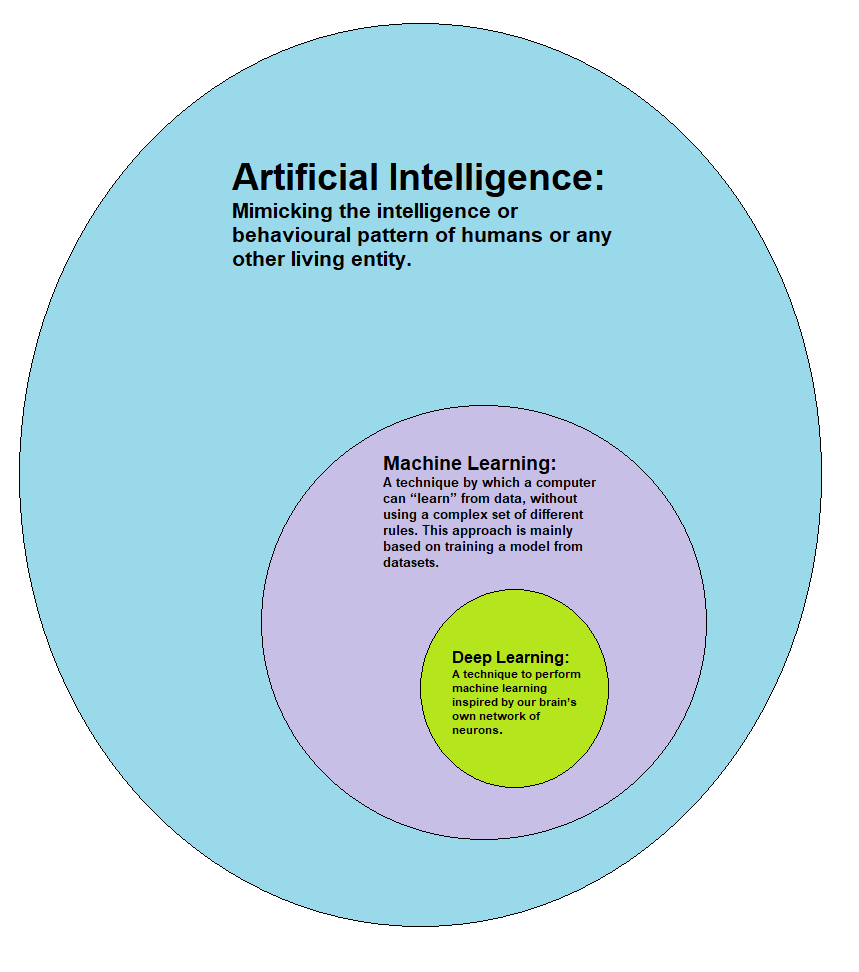
Artificial Intelligence (AI) is the broadest concept. It's the big dream of creating machines that can simulate human intelligence—reasoning, problem-solving, and learning.
Machine Learning (ML) is a subset of AI. It's the most common and practical approach to AI today. ML is focused specifically on creating systems that can learn from data.
Deep Learning is a subset of machine learning. It uses complex, multi-layered structures called neural networks, which are loosely inspired by the human brain. Deep learning is the powerhouse behind some of the most impressive AI achievements, like language translation and self-driving cars.
Three Ways Machines Learn
Machine learning models learn in a few different ways, depending on the type of data they're given and the goal of the task. The three main types are supervised, unsupervised, and reinforcement learning.
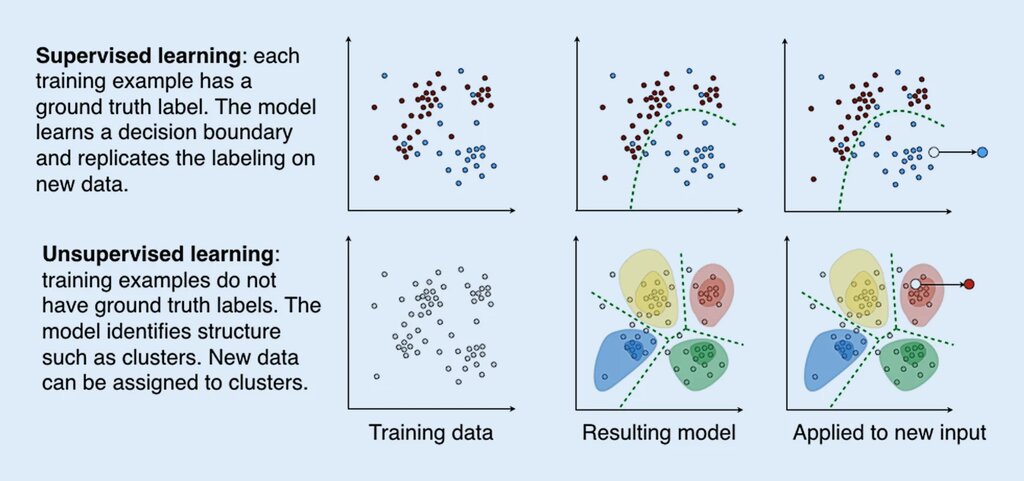
Supervised Learning is like studying with flashcards. The computer is given data that is already labeled with the correct answer. For example, it might be shown thousands of emails labeled as 'spam' or 'not spam.' The model's job is to learn the relationship between the email content and its label, so it can eventually classify new, unlabeled emails correctly. This is useful for tasks like predicting house prices or identifying objects in photos.
Unsupervised Learning is like being thrown into a room full of jumbled items and being asked to sort them into groups without any prior instructions. The data has no labels. The model's goal is to find hidden structures or patterns on its own. For instance, an e-commerce site might use unsupervised learning to group customers with similar shopping habits, even if the company doesn't know what those habits are ahead of time. This helps with tasks like market segmentation and anomaly detection.
Reinforcement Learning is how you might train a pet. The model, often called an 'agent,' learns by trial and error in an environment. It gets rewards for good actions and penalties for bad ones. Over time, it learns a strategy—called a policy—to maximize its total reward. This is the same technique used to train AIs to play complex games like Chess or Go, and it's also used in robotics and optimizing supply chains.
Machine Learning in the Wild
Machine learning isn't just a futuristic concept; it's already a part of your daily life. Here are a few examples:
- Recommendation Engines: When Netflix suggests a movie or Spotify creates a playlist for you, it's using machine learning to predict what you'll enjoy based on your past behavior.
- Spam Filters: Your email service uses ML to analyze incoming messages and filter out junk mail with remarkable accuracy.
- Voice Assistants: Siri, Alexa, and Google Assistant use machine learning to understand your spoken commands and respond appropriately.
- Navigation Apps: Apps like Google Maps use ML to analyze traffic conditions in real-time and predict your arrival time, rerouting you to avoid delays.
Now that you have a handle on the basic concepts, you're ready to explore how these models are built and trained.