Machine Learning Fundamentals
Introduction to Machine Learning
What Is Machine Learning?
Traditional computer programs follow explicit instructions. To determine if an email is spam, a programmer might write a rule: if the email contains the phrase "you've won a prize," mark it as spam. This works, but it's brittle. What if the spammer changes the phrase? You'd need a new rule.
Machine learning (ML) takes a different approach. Instead of writing rules, we feed the computer data—thousands of emails, each labeled as "spam" or "not spam." The computer then learns the patterns that distinguish one from the other. It builds its own rules, which are often far more complex and effective than what a human could write by hand.
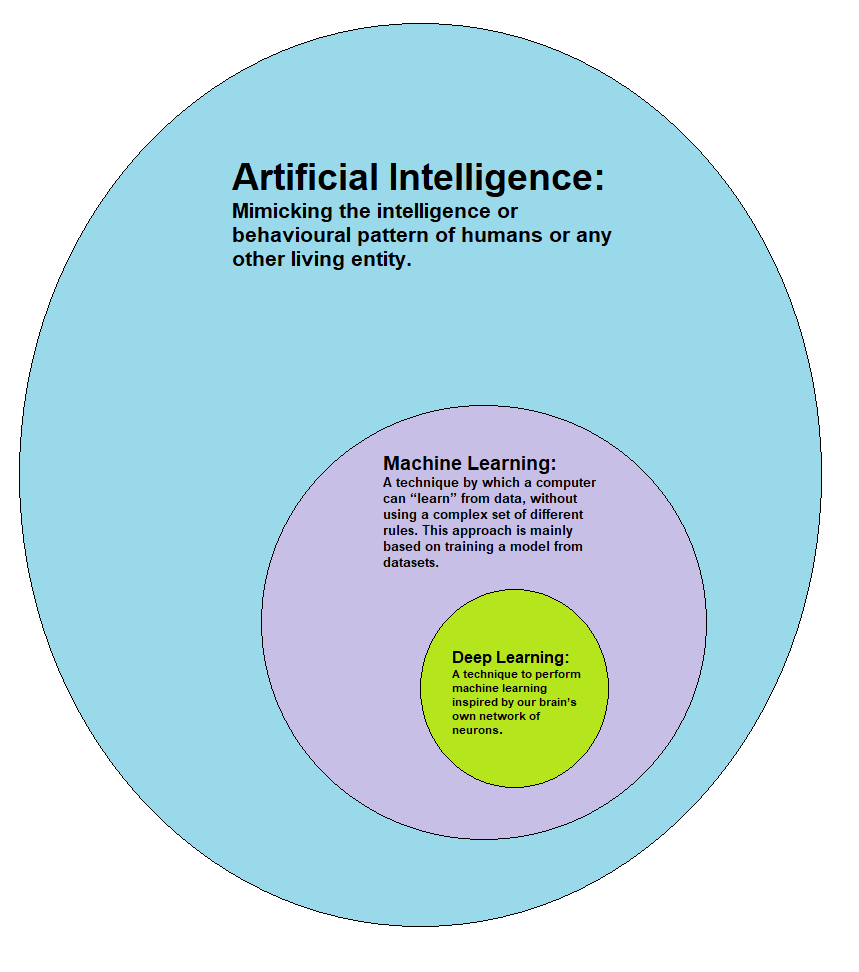
In short, machine learning is the science of getting computers to learn and act without being explicitly programmed. It's about recognizing patterns in data and using those patterns to make predictions or decisions.
Types of Machine Learning
Machine learning isn't a single technique. It's a broad field with several distinct approaches. The three main types are supervised, unsupervised, and reinforcement learning.
Supervised Learning: Learning with an Answer Key
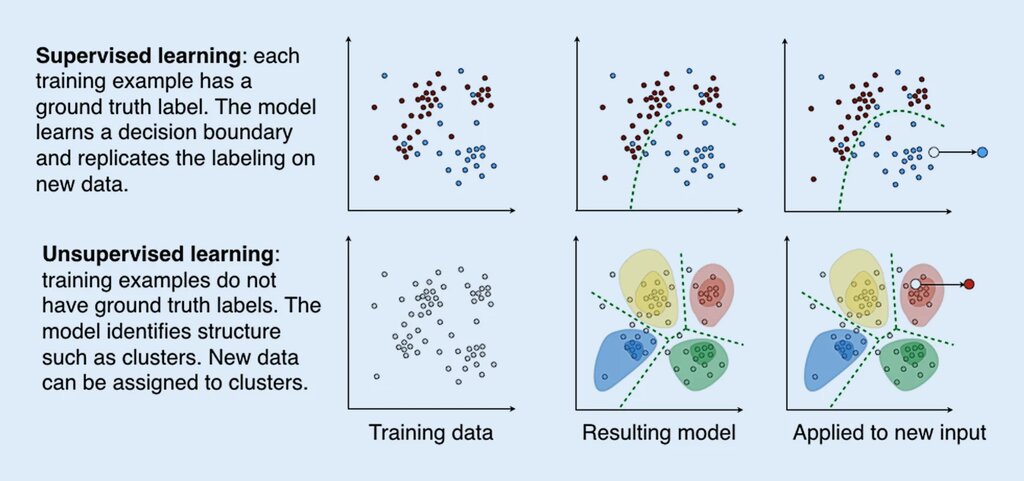
Supervised learning uses labeled data to train a model. Imagine giving a student a stack of flashcards with pictures of animals. On the back of each card is the animal's name. After studying, the student can identify animals in new pictures.
That's supervised learning. The labeled data—the animal pictures with their names—acts as the answer key. The model learns the relationship between the inputs (the image) and the outputs (the label).
Real-world examples include:
- Spam detection: An email is the input, and the label is "spam" or "not spam."
- Price prediction: The inputs are features of a house (square footage, number of bedrooms), and the output is its sale price.
Unsupervised Learning: Finding Hidden Patterns
What if you don't have an answer key? With unsupervised learning, you give the model a dataset without any labels and ask it to find patterns on its own. It's like handing someone a jumbled box of Legos and asking them to sort them by color and shape.
The algorithm examines the data and groups similar items together. This is useful for:
- Customer segmentation: Grouping customers with similar purchasing habits for targeted marketing campaigns.
- Topic modeling: Identifying the main themes in a collection of news articles.
Reinforcement Learning: Learning from Experience
Reinforcement learning is about learning through trial and error. An algorithm, called an "agent," learns to achieve a goal by interacting with an environment. It receives rewards for actions that get it closer to the goal and penalties for actions that don't.
Think of teaching a dog to fetch. You reward it with a treat (positive reinforcement) when it brings the ball back. Over time, the dog learns that bringing the ball back is the desired behavior. Reinforcement learning is used for:
- Game playing: AI like AlphaGo learned to master the game of Go by playing against itself millions of times.
- Robotics: Training a robot to walk or a self-driving car to navigate traffic.
The Machine Learning Workflow
Developing a machine learning model isn't a single event. It's a cyclical process with several key stages. While the details can vary, the general workflow is consistent.
Here’s a breakdown of each step:
- Data Collection: This is where it all begins. Data is gathered from various sources, such as databases, files, or sensors. The quality and quantity of this data are crucial for the model's success.
- Data Preparation: Raw data is often messy. This step involves cleaning the data by handling missing values, removing duplicates, and transforming it into a format suitable for the model.
- Model Training: This is the core learning phase. The prepared data is fed into a chosen algorithm, which learns the underlying patterns. For supervised learning, this means learning the mapping from inputs to outputs.
- Model Evaluation: Once the model is trained, we need to check how well it performs on new, unseen data. This step helps us understand if the model is accurate and reliable.
- Deployment: If the model's performance is satisfactory, it's deployed into a real-world application. This could be integrating a recommendation engine into a website or a fraud detection model into a banking system. The process doesn't end here; models are continuously monitored and retrained as new data becomes available.
Ready to check your understanding?
What is the primary difference between machine learning and traditional programming?
A bank wants to build a system to predict whether a credit card transaction is fraudulent. They have a massive dataset of past transactions, each labeled as 'fraudulent' or 'legitimate'. Which type of machine learning is most suitable for this task?
You now have a solid foundation in the core concepts of machine learning. You understand what it is, the main ways it works, and the general process for building an ML model.