Machine Learning Fundamentals
Introduction to Machine Learning
What Is Machine Learning?
Machine learning is a way to teach computers to find patterns. Instead of writing explicit, step-by-step instructions for every possible scenario, you give the computer data and let it figure out the rules on its own. It's like learning from experience, but for a machine.
Think about how you learned to recognize a cat. No one gave you a strict set of rules, like "if it has pointy ears, whiskers, and a long tail, it's a cat." You just saw many examples of cats, and eventually, your brain learned the pattern. Machine learning works in a similar way. You show a computer thousands of cat pictures, and it learns to identify the features that make something a cat.
The goal is for the computer to make accurate predictions or decisions when it sees new, unfamiliar data.
This ability is transforming industries. It powers everything from your email's spam filter and Netflix's recommendation engine to medical diagnostic tools that can spot diseases earlier than a human doctor.
AI, Machine Learning, and Deep Learning
People often use the terms artificial intelligence (AI), machine learning (ML), and deep learning interchangeably, but they have distinct meanings. They're related, but one is a subset of the other.
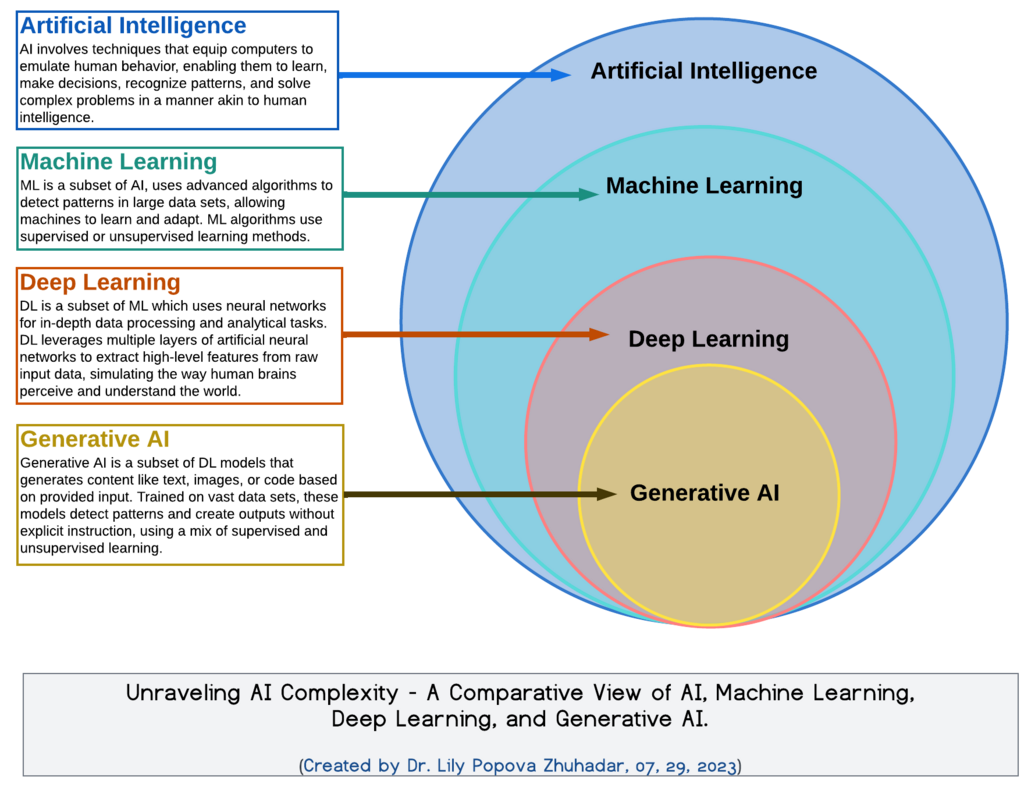
Artificial Intelligence (AI) is the big umbrella. It's the broad concept of creating machines that can simulate human intelligence in any way. This could be anything from a simple rule-based chatbot to a sophisticated robot.
Machine Learning (ML) is a subset of AI. It's one of the most common and powerful ways to achieve AI. Instead of programming rules, ML systems learn from data.
Deep Learning is a specialized subset of machine learning. It uses complex, multi-layered structures called neural networks, which are loosely inspired by the human brain. Deep learning is behind some of the most impressive AI advancements, like realistic image generation and natural language translation.
Three Flavors of Learning
Machine learning isn't a single technique. It's a field with several different approaches. The three main types are supervised, unsupervised, and reinforcement learning. The right one to use depends on the problem you're trying to solve and the kind of data you have.
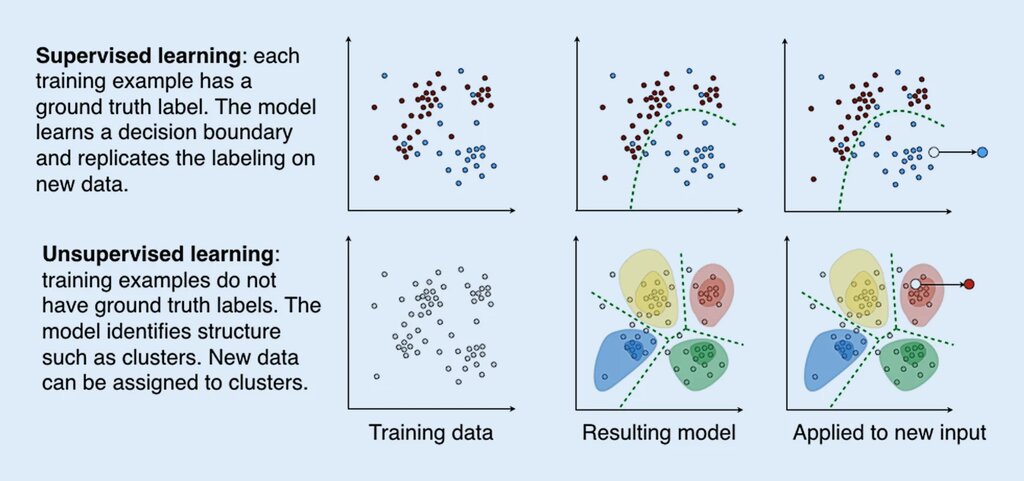
1. Supervised Learning This is like learning with a teacher. The computer is given a dataset where the "right answers" are already labeled. For example, you might give it a million emails, each labeled as either "spam" or "not spam." The algorithm's job is to learn the relationship between the content of the emails and their labels. After training, it can look at a new, unlabeled email and predict whether it's spam.
Real-world examples include predicting house prices based on features like square footage and location, or identifying cancerous tumors in medical images.
2. Unsupervised Learning Here, there's no teacher and no right answers. The data is unlabeled. The goal is for the algorithm to explore the data and find interesting structures or patterns on its own. Imagine giving a computer a massive collection of news articles and asking it to group them by topic. It doesn't know what "sports" or "politics" are, but it can cluster articles together based on the words they share.
This is used for tasks like customer segmentation (grouping shoppers with similar behaviors) and anomaly detection (finding unusual credit card transactions that could be fraudulent).
3. Reinforcement Learning This type of learning is all about trial and error. An algorithm, often called an "agent," learns to make decisions by performing actions in an environment to achieve a goal. When it takes an action that gets it closer to the goal, it receives a reward. When it takes a wrong action, it gets a penalty. Over time, it learns the best strategy to maximize its total reward.
Think of training a dog. You reward it with a treat for good behavior. Reinforcement learning is the driving force behind self-driving cars learning to navigate traffic, and AI systems that can defeat human champions in complex games like Chess or Go.
How a Model Is Built
Creating a machine learning model isn't a one-shot deal. It's a cyclical process that involves several key stages. While the details can get complex, the overall workflow is straightforward.
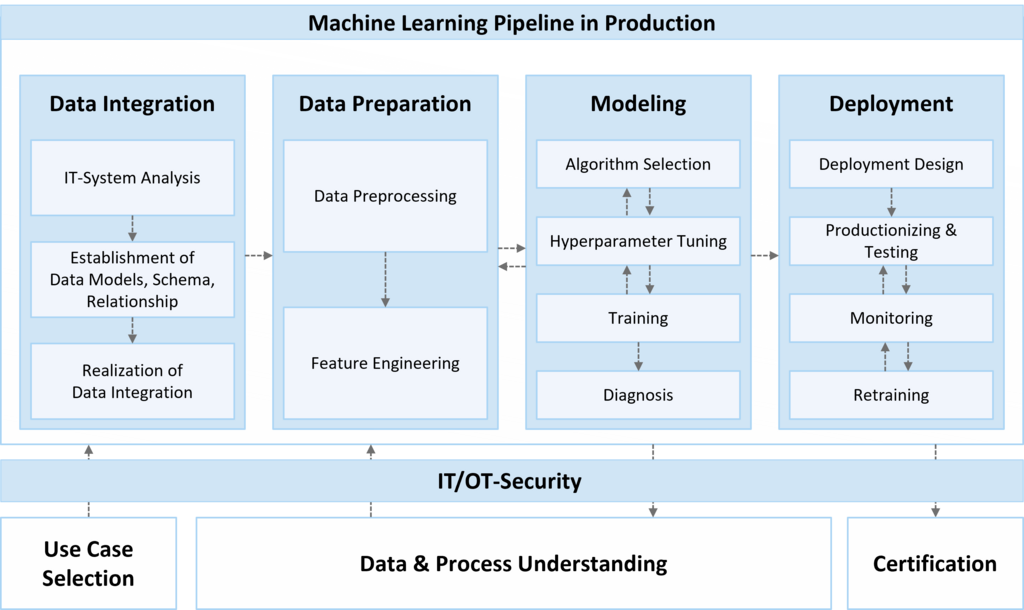
1. Data Collection: First, you need data. Lots of it. This could be anything from customer purchase histories and sensor readings to images and text documents. The quality and quantity of your data are critical to the success of the model.
2. Data Preprocessing: Real-world data is messy. It has missing values, errors, and inconsistencies. This step involves cleaning the data, formatting it correctly, and preparing it for the model. It's often the most time-consuming part of the process.
3. Model Training: This is where the learning happens. You feed the prepared data into your chosen algorithm. The algorithm adjusts its internal parameters to find patterns in the data. For supervised learning, this means learning to map inputs to outputs.
4. Evaluation: Once the model is trained, you need to check how well it performs. You test it on a separate set of data that it has never seen before. This tells you how well the model generalizes to new, real-world situations.
5. Deployment: If the model's performance is good enough, you put it into production. This means integrating it into a real application, like a mobile app or a website, where it can start making predictions on live data.
Often, you'll need to circle back. The model's performance might reveal issues with the data, or you might need to try a different algorithm. It's an iterative process of refinement.
Which statement best describes the relationship between Artificial Intelligence (AI), Machine Learning (ML), and Deep Learning?
A bank wants to develop a system to identify fraudulent credit card transactions. The system is given millions of past transactions but is not told which ones are fraudulent. It must find unusual patterns on its own. Which type of machine learning is most suitable for this task?
Machine learning is a powerful tool that allows us to find insights and make predictions from data in ways that were never before possible. Understanding these core concepts is the first step toward harnessing its potential.