Machine Learning Fundamentals
Introduction to Machine Learning
What Is Machine Learning?
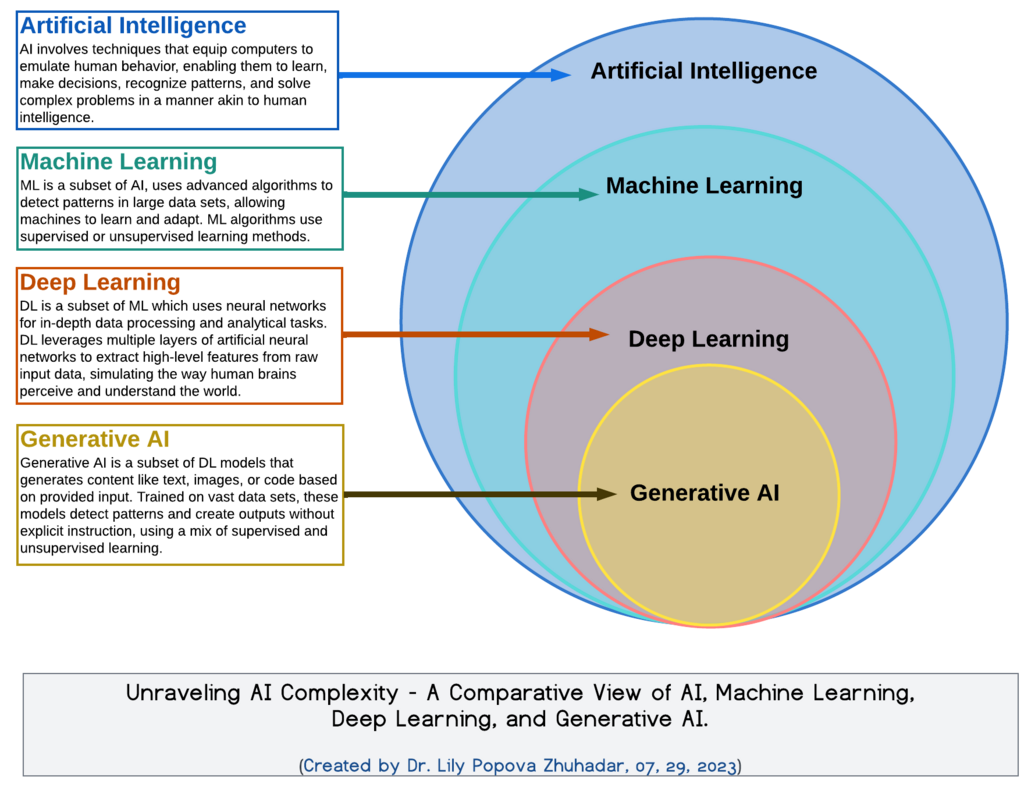
Machine learning is the science of getting computers to act without being explicitly programmed. Instead of writing a long list of rules for every possible situation, we give the computer data and let it figure out the patterns on its own.
Think about telling a computer how to recognize a cat. In traditional programming, you might try to write rules: "If it has pointy ears, whiskers, and a tail, it's a cat." But what about a cat with folded ears? Or one facing away from the camera? The rules quickly become impossibly complex.
Machine learning takes a different approach. We show the computer thousands of pictures labeled "cat" and thousands labeled "not a cat." The machine then learns the underlying features that define a cat on its own. It builds its own understanding from experience, much like a human does. This ability to learn from data is what makes it so powerful. It can find insights and make predictions in areas far too complex for humans to write rules for.
Three Ways Machines Learn
Machine learning isn't just one single technique. It's a broad field with several different approaches. The three most common types are supervised, unsupervised, and reinforcement learning. Each is suited for different kinds of problems.
Supervised Learning: Learning with an Answer Key
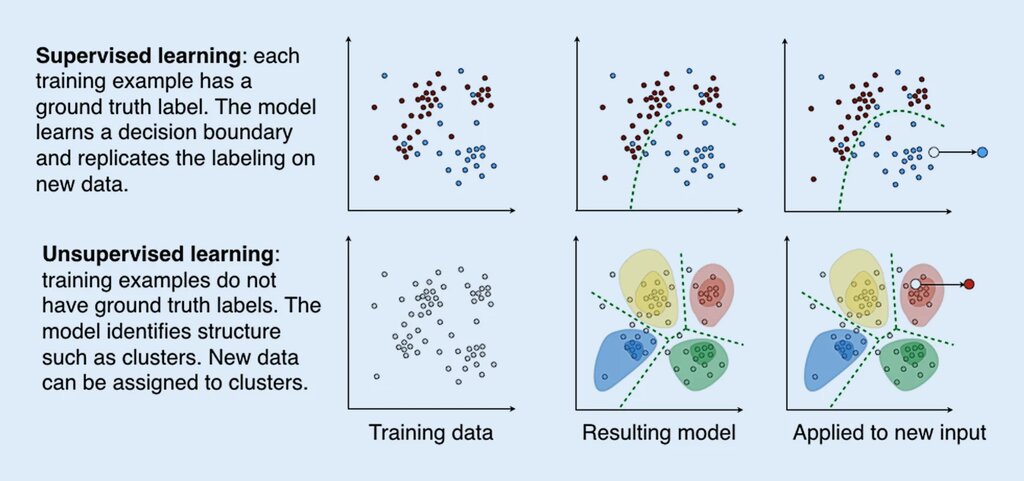
In supervised learning, the machine learns from data that has already been labeled with the correct answers. It's like a student studying with flashcards. One side has the question (the input data), and the other has the answer (the label).
The goal is for the model to learn the relationship between the inputs and outputs so it can predict the answer for new, unseen data. For example, by analyzing thousands of labeled emails, a model can learn to predict whether a new email is spam or not.
Unsupervised Learning: Finding Patterns on Its Own
What if you don't have an answer key? That's where unsupervised learning comes in. Here, the machine is given unlabeled data and tasked with finding hidden structures or patterns all by itself. It's like being handed a box of mixed Lego bricks and asked to sort them into groups by shape and color without any instructions.
This method is great for exploring data. A common use is customer segmentation, where a business might group customers with similar purchasing habits to better understand its market. Another example is clustering news articles by topic automatically.
Reinforcement Learning: Learning from Trial and Error
Reinforcement learning is about learning to make decisions. The machine, or "agent," learns by interacting with an environment. It tries different actions and receives rewards or penalties based on the outcomes. It’s similar to how you might train a pet. When the dog sits, it gets a treat (a reward). When it chews the furniture, it gets a scolding (a penalty). Over time, the dog learns which actions lead to rewards.
This approach is powerful for creating systems that can master a task. Self-driving cars use reinforcement learning to learn how to navigate roads safely, and AI models have used it to defeat the world's best players in complex games like Go and chess.
A Quick History
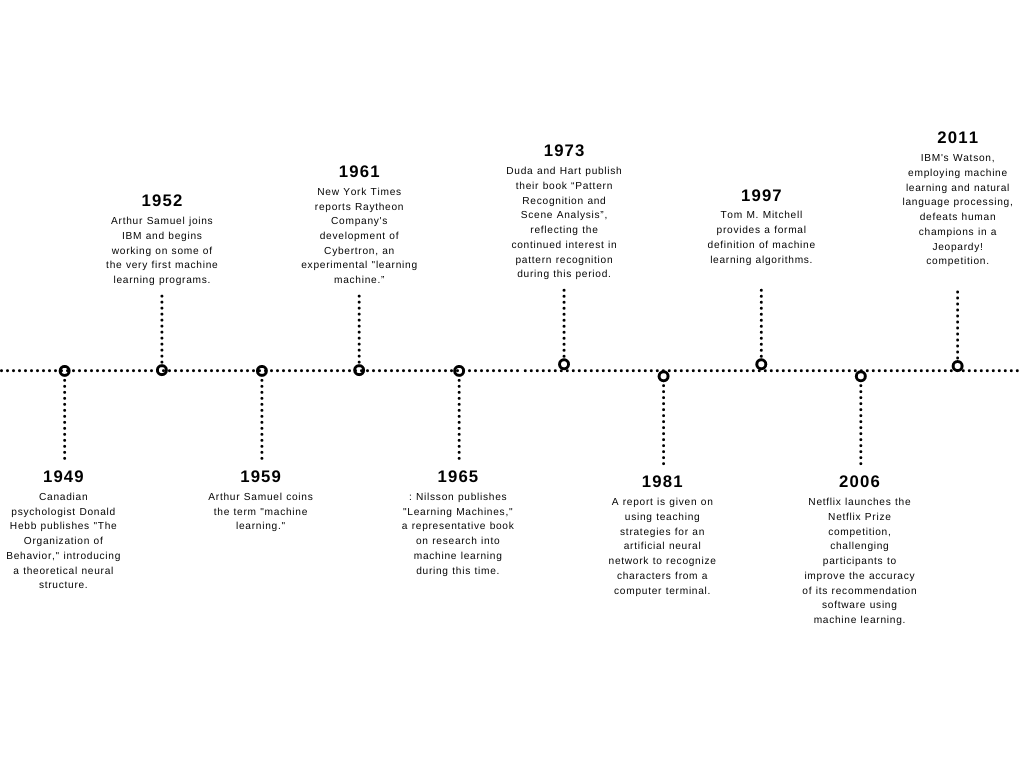
The ideas behind machine learning have been around for decades. In the 1950s, pioneers like Arthur Samuel created a checkers-playing program that could learn from its mistakes and improve its game over time. It was one of the first demonstrations of a computer learning without being explicitly told what to do.
For a long time, progress was slow. Computers weren't powerful enough, and there wasn't enough data to train complex models. That all changed in the 21st century. The rise of the internet created massive datasets, and advancements in computing power (especially from graphics cards) made it possible to train much more sophisticated models.
This combination of big data and powerful hardware has fueled the incredible progress we see today, turning machine learning from a niche academic field into a technology that shapes our world.
Machine Learning in Your Daily Life
You probably interact with machine learning systems every day without even realizing it. These powerful tools are working behind the scenes in many of the services you use.
-
Entertainment: When Netflix suggests a movie or Spotify creates a personalized playlist for you, that's machine learning at work. These systems analyze your viewing and listening history to predict what you'll enjoy next.
-
Online Shopping: E-commerce sites use machine learning to recommend products. By looking at what you've browsed and purchased, they can show you other items you might like.
-
Finance: Banks use machine learning to detect fraudulent transactions in real time. By learning the patterns of your normal spending, the system can flag suspicious activity that deviates from your typical behavior.
-
Healthcare: Machine learning is helping doctors analyze medical images like X-rays and MRIs to spot signs of disease earlier and more accurately than the human eye alone.
What is the fundamental difference between machine learning and traditional programming?
A business wants to group its customers into different market segments based on their purchasing habits, but it doesn't have any pre-defined labels for these groups. Which type of machine learning would be most suitable for this task?
From personalized recommendations to scientific breakthroughs, machine learning is a foundational technology that's just getting started. Understanding these core concepts is the first step to seeing its potential.