Machine Learning Fundamentals
Introduction to Machine Learning
What Is Machine Learning?
Machine learning gives computers the ability to learn without being explicitly programmed. Instead of writing step-by-step rules, developers create algorithms that allow a computer to learn from data, identify patterns, and make decisions on its own.
Think about how a child learns to recognize a cat. You don't give them a long list of rules like "if it has pointy ears, whiskers, and a long tail, it's a cat." Instead, you show them examples. "Look, a cat!" After seeing a few different cats, the child starts to recognize the pattern. Machine learning works in a similar way. We feed a computer examples, and it learns the underlying patterns by itself.
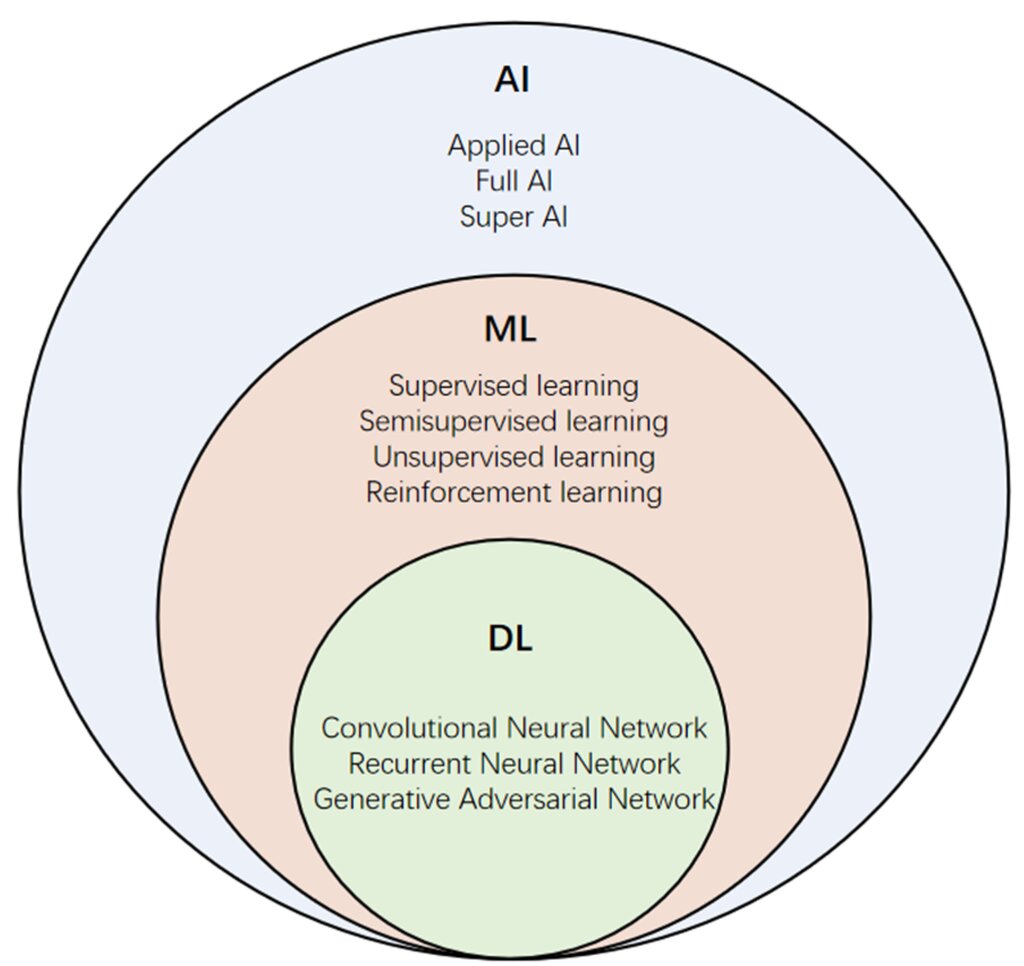
The terms artificial intelligence (AI), machine learning (ML), and deep learning (DL) are often used interchangeably, but they represent different concepts. AI is the broadest field, covering any technique that enables computers to mimic human intelligence. Machine learning is a subset of AI that focuses on learning from data. Deep learning is a specialized subset of machine learning that uses complex, multi-layered neural networks—structures inspired by the human brain—to learn from vast amounts of data.
Why It Matters
Machine learning is all around us, powering many of the services we use every day. When Netflix recommends a movie, Spotify creates a custom playlist, or your email provider filters out spam, machine learning is at work.
Its significance extends far beyond entertainment and convenience. In medicine, ML algorithms can analyze medical images to detect diseases like cancer earlier and more accurately than a human. In finance, they identify fraudulent transactions in real time. Car manufacturers use it to develop self-driving vehicles that can perceive their environment and navigate safely. By automating complex tasks and finding insights in data that humans might miss, machine learning is solving problems across nearly every industry.
How Machines Learn
Machine learning models learn in several different ways, which can be grouped into three main categories: supervised, unsupervised, and reinforcement learning.
Supervised Learning: Learning with Labels
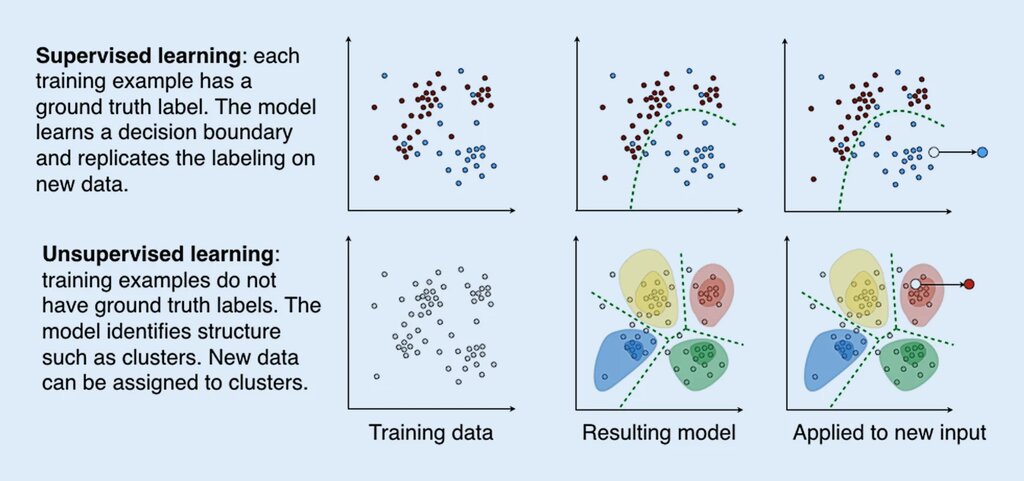
In supervised learning, the machine learns from data that has already been labeled with the correct answers. It's like studying for a test with a complete answer key. The algorithm is given a dataset where each piece of data is tagged with a correct output. Its goal is to learn the mapping function between the input data and the output labels.
For example, to train a model to identify spam emails, you'd feed it thousands of emails that have been pre-labeled as either "spam" or "not spam." The model learns the patterns associated with each label, such as certain keywords or sender addresses, so it can later classify new, unlabeled emails.
Unsupervised Learning: Finding Hidden Patterns
Unsupervised learning is used when you have data without any predefined labels. The goal here is for the algorithm to explore the data and find a structure or pattern on its own. It’s like being given a box of mixed-up photos and asked to sort them into piles without any instructions.
The algorithm might group photos by the people in them, the location, or the time of day. A common business application is customer segmentation, where an algorithm groups customers into different clusters based on their purchasing behavior, helping a company tailor its marketing strategies.
Reinforcement Learning: Learning from Experience
Reinforcement learning is about learning through trial and error. The algorithm, often called an "agent," learns to make decisions by performing actions in an environment and receiving feedback in the form of rewards or penalties. The agent's goal is to maximize its total reward over time.
This is similar to how you might train a dog. You reward it with a treat for good behavior (like sitting) and withhold treats for unwanted behavior. Reinforcement learning is commonly used to train AIs to play games like chess or Go, where an agent learns to make strategic moves by being rewarded for winning the game.
| Learning Type | How It Works | Example |
|---|---|---|
| Supervised | Learns from labeled data. | Classifying emails as spam or not spam. |
| Unsupervised | Finds patterns in unlabeled data. | Grouping customers into market segments. |
| Reinforcement | Learns via trial and error with rewards. | Training an AI to play a video game. |
Now that you understand the basic concepts, let's test your knowledge.
What is the primary characteristic of machine learning?
Which statement accurately describes the relationship between Artificial Intelligence (AI), Machine Learning (ML), and Deep Learning (DL)?
Understanding these fundamental ideas—what machine learning is, how it relates to AI, and the primary ways it works—is the first step toward appreciating its power and potential.