Machine Learning Fundamentals
Introduction to Machine Learning
What Is Machine Learning?
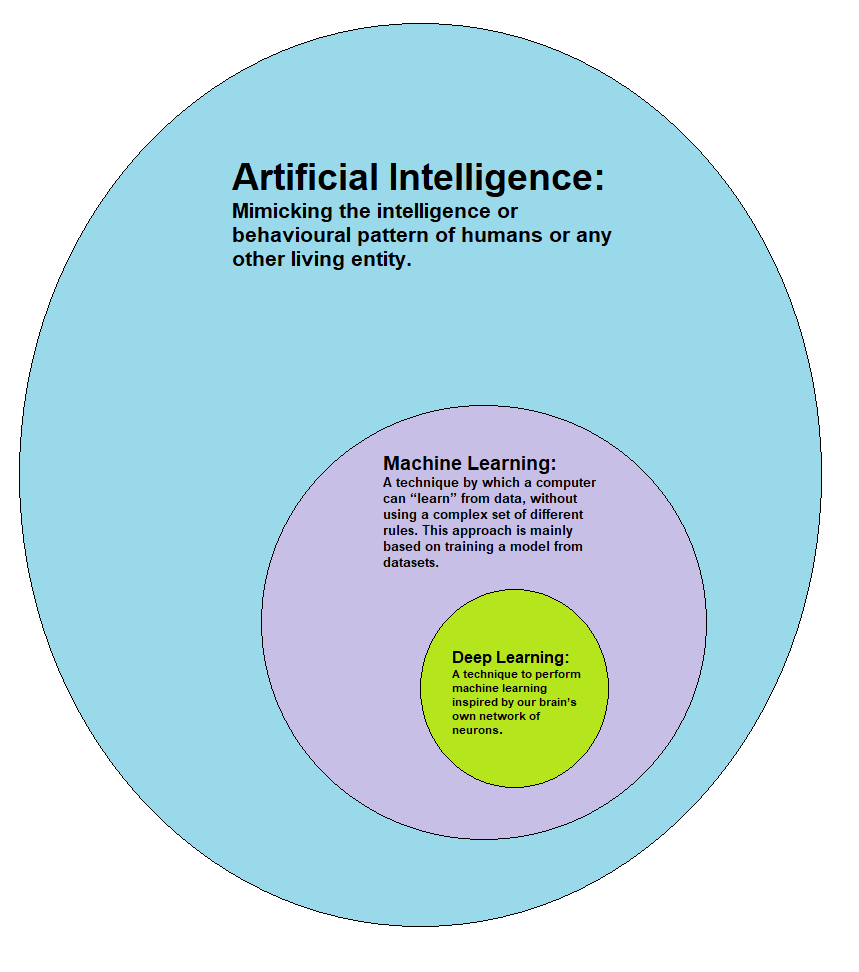
Machine learning is a way of teaching computers to learn from data. Instead of writing explicit, step-by-step instructions for every possible task, we create algorithms that allow a computer to find patterns and make decisions on its own. Think of it like this: you could tell a computer exactly how to identify a cat in a photo by programming rules for pointy ears, whiskers, and fur. Or, you could show it thousands of cat photos and let it figure out the patterns for itself. The second approach is machine learning.
This ability to learn without direct programming is what makes machine learning so powerful. It's the engine behind everything from spam filters in your email and recommendation engines on streaming services to medical diagnostics and self-driving cars.
A Quick Look Back
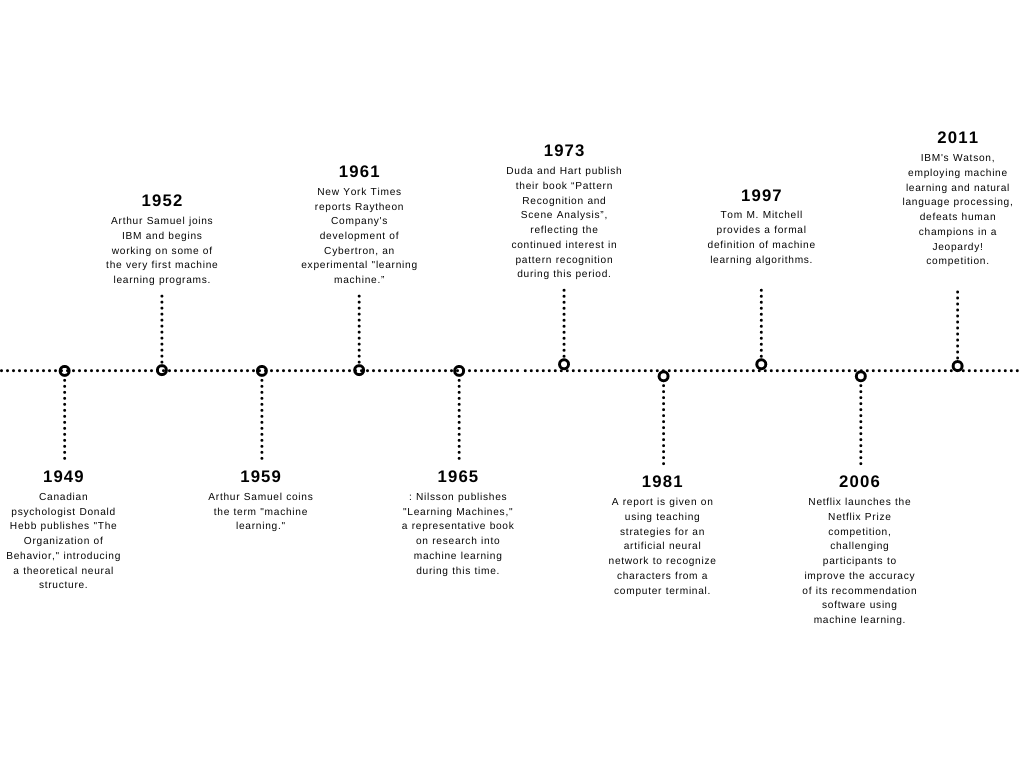
The idea isn't new. In the 1950s, a computer scientist named Arthur Samuel created a program that learned to play checkers. It improved by playing against itself thousands of times, eventually becoming better than Samuel himself. This was a landmark moment, proving a machine could learn from experience.
For decades, machine learning remained a niche academic field. The two key ingredients for its success were missing: massive amounts of data and powerful computers. With the rise of the internet and huge leaps in processing power, machine learning exploded. Suddenly, we had the data and the tools to make those early ideas a reality on a global scale.
Types of Learning
Machine learning isn't a single technique. It's a broad field with several different approaches, or 'learning paradigms'. The best one to use depends on the problem you're trying to solve and the kind of data you have.
The four main types are supervised, unsupervised, semi-supervised, and reinforcement learning.
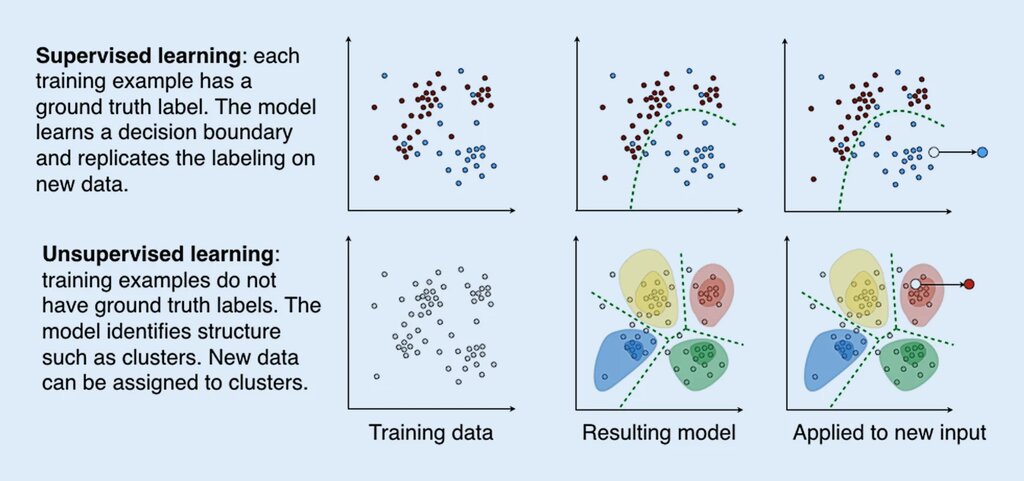
Supervised Learning This is like learning with a teacher. The algorithm is given a dataset where all the correct answers are already labeled. For example, you might feed it a million emails, each one labeled as either 'spam' or 'not spam'. The goal is for the model to learn the patterns that distinguish one from the other, so it can then accurately label new, unseen emails. This is useful for tasks involving prediction and classification.
Unsupervised Learning Here, the algorithm is on its own. It's given data with no labels and no correct answers. Its job is to find the hidden structure or patterns within the data. For instance, a company could use unsupervised learning to analyze customer purchase histories and discover different customer segments—like 'budget shoppers' or 'brand loyalists'—without knowing those categories in advance. This is great for data exploration and clustering.
Semi-Supervised Learning This approach is a middle ground between the first two. It uses a small amount of labeled data alongside a much larger amount of unlabeled data. Think of a photo app that asks you to identify a person in a few photos. Once you've labeled those few, the app can often find that same person in the rest of your unlabeled photo library. This is useful when labeling data is expensive or time-consuming.
Reinforcement Learning This type of learning is inspired by how we train pets: through trial and error with rewards and punishments. An algorithm, or 'agent', learns by interacting with an environment. It performs actions and receives feedback in the form of rewards (for good actions) or penalties (for bad ones). The agent's goal is to maximize its total reward over time. This is the technique used to train AIs to play complex games like Go or to control robotic arms.
Ready to check your understanding of these core concepts?
What is the fundamental idea behind machine learning?
A streaming service wants to group its users into different segments (e.g., 'action movie fans', 'documentary lovers') based on their viewing history. The service provides the algorithm with raw viewing data but does not pre-define the segments. What type of learning is best for this task?
Understanding these learning paradigms is the first step. They are the foundational building blocks upon which all of modern machine learning is built.