Machine Learning Fundamentals
Introduction to Machine Learning
Learning Without Instructions
At its heart, machine learning is about teaching computers to learn from experience, much like humans do. Instead of writing step-by-step instructions for every possible task, we create algorithms that allow a computer to find patterns in data and make decisions on its own. It's the difference between giving someone a fish and teaching them how to fish.
Imagine trying to teach a computer to recognize a cat. The old way was to program a long list of rules: "If it has pointy ears, whiskers, and a tail, it might be a cat." But this approach is brittle. What about a cat with folded ears, or one whose tail is hidden? Machine learning takes a different approach. We show the computer thousands of cat pictures and let it figure out for itself what makes a cat a cat. By analyzing all that data, it builds its own internal model for identifying cats.
This ability to learn from data without being explicitly programmed is what makes machine learning so powerful. It allows us to solve problems that are too complex or change too quickly for traditional programming.
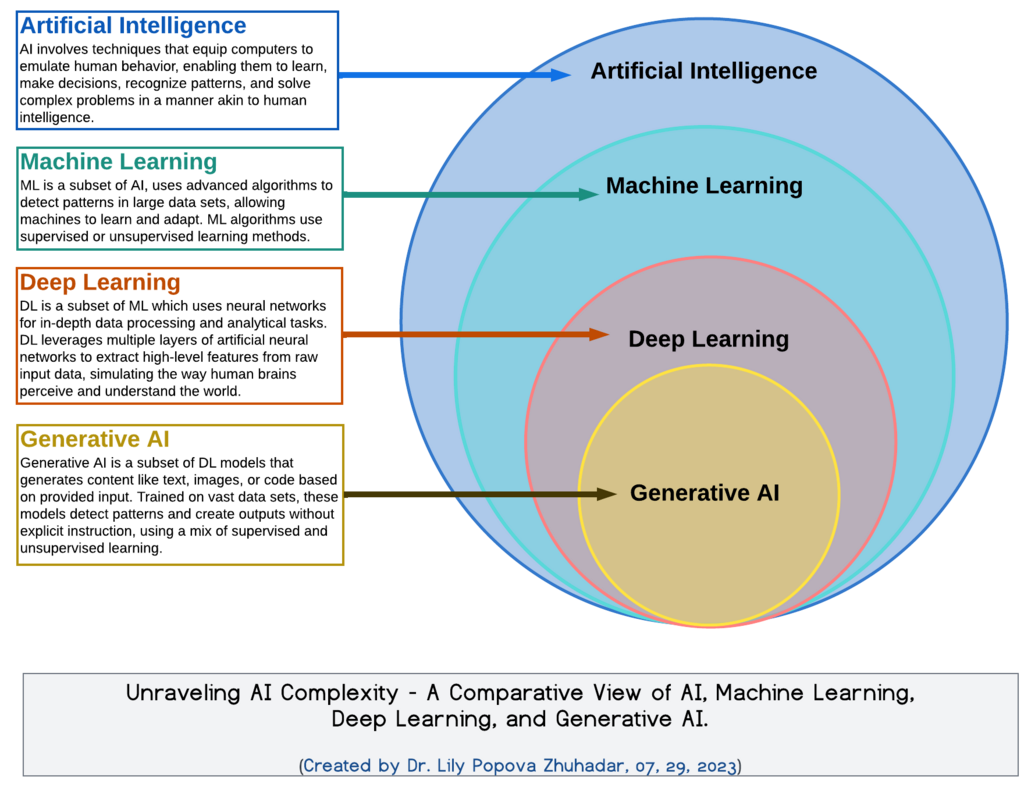
Three Ways Machines Learn
Just as people have different learning styles, machines can learn in a few different ways. The main approaches are supervised, unsupervised, and reinforcement learning. Each is suited for different kinds of tasks.
Supervised Learning
Think of this as learning with a teacher or an answer key. The machine learning model is given a dataset where each piece of data is labeled with the correct answer. The goal is to learn the relationship between the data and its label so it can make accurate predictions on new, unlabeled data.
For example, a supervised learning model for a bank might be fed historical loan data. Each past loan would be an input, labeled as either "defaulted" or "paid off." After training on thousands of these examples, the model learns to predict the likelihood that a new applicant will default on their loan.
Unsupervised Learning
This is like learning without a teacher. The model gets a dataset with no labels and has to find its own patterns and structures. It's a form of exploratory data analysis, where the goal is to discover hidden groupings or relationships.
Imagine an e-commerce company with millions of customers. Using unsupervised learning, they can analyze customer purchasing behavior to identify distinct groups, like "budget shoppers," "brand loyalists," or "weekend browsers." The company didn't know these groups existed beforehand; the algorithm found them. This allows for more targeted marketing.
Reinforcement Learning
Reinforcement learning is about learning through trial and error, like training a dog with treats. The algorithm, or "agent," learns by interacting with an environment. It receives rewards for actions that lead to a good outcome and penalties for those that don't. Over time, the agent learns a strategy, or "policy," that maximizes its cumulative reward.
This is the approach used to train computers to play complex games like Go or chess. The agent plays millions of games against itself, slowly learning which moves are most likely to lead to a win. It's also used in robotics, where a robot might learn to walk by being rewarded for moving forward without falling over.
Machine Learning in the Wild
Machine learning isn't just a futuristic concept; it's already a part of our daily lives.
| Application | How it Works (ML Type) |
|---|---|
| Email Spam Filtering | Analyzes email content and sender information to classify messages as spam or not. (Supervised) |
| Product Recommendations | Groups similar users or products together to suggest items you might like. (Unsupervised) |
| Medical Image Analysis | Trains on thousands of scans (like X-rays or MRIs) to identify anomalies like tumors. (Supervised) |
| Autonomous Driving | Learns to navigate roads and react to obstacles by maximizing rewards for safe driving. (Reinforcement) |
| Language Translation | Finds patterns in massive amounts of text to translate sentences between languages. (Supervised) |
From navigating traffic to picking your next movie, machine learning works behind the scenes to make sense of a complex world and provide useful, personalized experiences.
Let's check your understanding of these foundational ideas.
What is the core idea behind machine learning?
An email system is trained on a large dataset of emails that are already labeled as 'spam' or 'not spam'. What type of learning is this?
You now have a foundational understanding of what machine learning is, the primary ways it works, and how it's applied in the world. This sets the stage for exploring the specific algorithms that bring these concepts to life.