Machine Learning Fundamentals
Introduction to Machine Learning
What Is Machine Learning?
Machine learning gives computers the ability to learn without being explicitly programmed. Instead of writing a long list of rules for a computer to follow, we give it a large amount of data and let it figure out the patterns on its own.
Think about how you recognize a friend's face. You don't have a checklist in your head for their eye shape or nose length. You've seen their face so many times that your brain has learned its unique pattern. Machine learning works in a similar way. An algorithm is shown thousands of faces, and over time, it learns how to distinguish one from another.
The core idea is simple: machines learn from experience (data) to make predictions or decisions about new, unseen data.
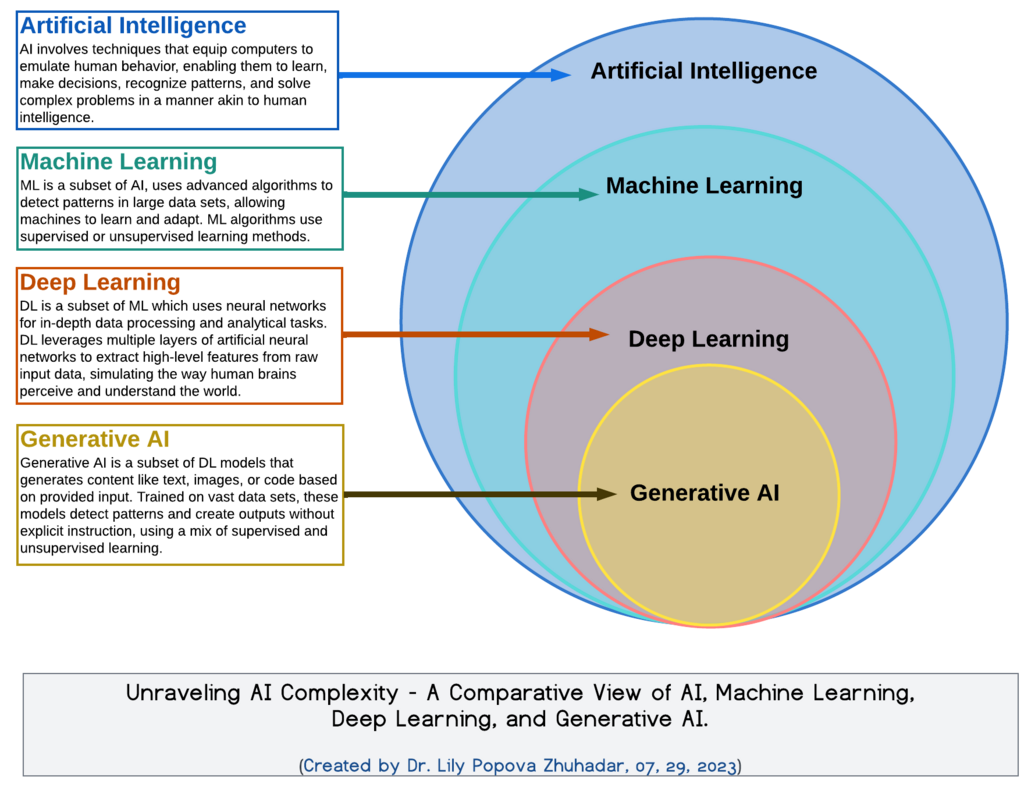
This ability is crucial because many modern problems are too complex for handwritten rules. Predicting the stock market, recommending your next favorite movie, or detecting fraudulent transactions involves countless variables. Machine learning models can analyze this complexity and find connections that a human programmer might miss. It's a field within the broader category of Artificial Intelligence (AI).
A Brief History
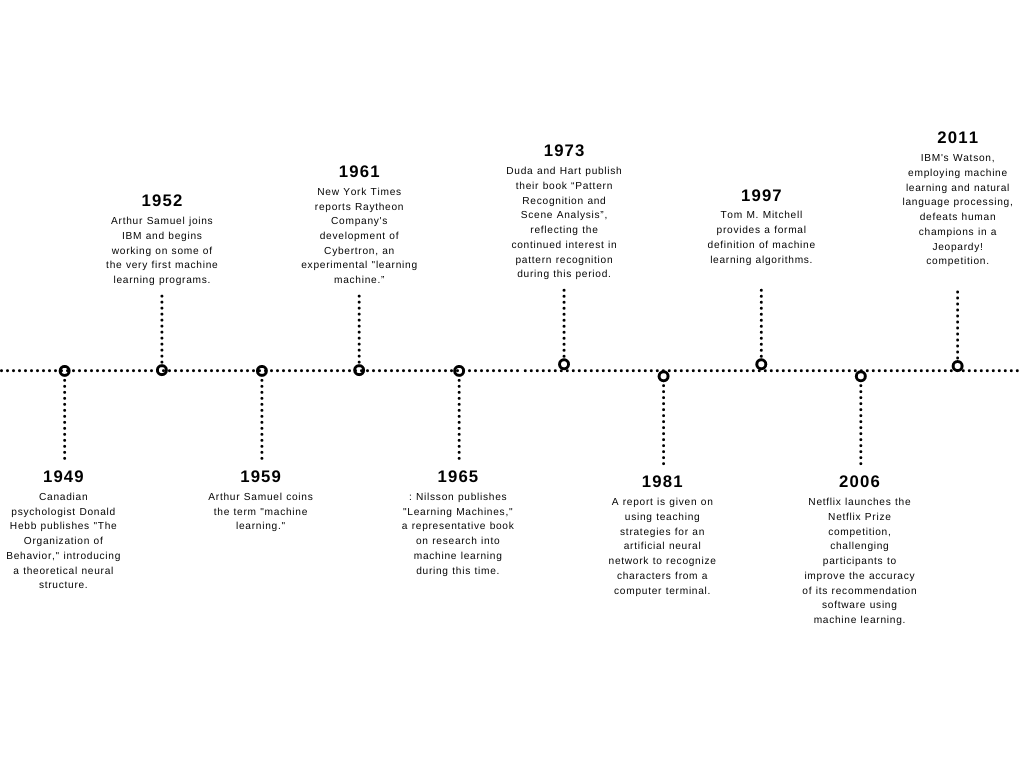
The idea isn't new. In 1959, an IBM researcher named Arthur Samuel created a program that learned to play checkers. It played against itself thousands of times, learning which moves led to a win. Eventually, it became better than Samuel himself. This was a groundbreaking moment. The program wasn't just executing pre-written strategies; it was generating its own through experience.
For decades, progress was slow due to limited computing power and a lack of large datasets. But with the rise of the internet and faster processors, machine learning exploded. The availability of massive amounts of data and the ability to process it quickly allowed algorithms to become incredibly powerful.
How Machines Learn
Machine learning isn't a single technique but a collection of different approaches, or paradigms. The right one depends on the problem you're trying to solve and the kind of data you have. There are four main types of learning.
| Learning Type | How It Works | Common Use Cases |
|---|---|---|
| Supervised | Learns from data that has been labeled with the correct answers. | Spam email detection, predicting house prices. |
| Unsupervised | Finds hidden patterns in unlabeled data. | Customer segmentation, finding similar articles. |
| Semi-supervised | Uses a small amount of labeled data and a large amount of unlabeled data. | Medical image analysis, facial recognition. |
| Reinforcement | Learns by trial and error, receiving rewards or punishments for its actions. | Game-playing AI, robotic navigation, resource management. |
Let's break these down.
Supervised learning is like studying with flashcards. You're given a problem (the front of the card) and the answer (the back of the card). A model is trained on thousands of examples, like emails labeled as "spam" or "not spam." After training, it can look at a new, unlabeled email and predict which category it belongs to.
Unsupervised learning is more like exploring a new city without a map. You wander around and start noticing that certain neighborhoods have similar types of buildings or that particular streets are always busy. The algorithm does the same with data, grouping similar items together without any pre-existing labels. For example, it might group customers based on their purchasing habits to identify different market segments.
Semi-supervised learning is a hybrid approach. Imagine you have a massive photo library, but you've only had time to label a few hundred pictures as "cat" or "dog." A semi-supervised model uses these labeled photos to get a head start, then uses the patterns it finds to help it classify the thousands of unlabeled ones.
Reinforcement learning is about learning from consequences. A model, often called an "agent," takes actions in an environment to maximize a reward. Think of training a dog. When it performs a trick correctly, it gets a treat (a reward). When it doesn't, it gets nothing. Over time, the agent learns which sequence of actions leads to the best outcome, just as an AI learns the best moves to win a game.
Real-World Impact
Machine learning is no longer a futuristic concept; it's woven into our daily lives. When you ask a voice assistant a question, machine learning is what transcribes your speech and finds the answer. The product recommendations you see on shopping sites are powered by algorithms that have learned your preferences. It helps doctors diagnose diseases earlier by analyzing medical images and personalizes the news and entertainment feeds on your phone.
From optimizing shipping routes to creating new art, machine learning is a powerful tool for solving problems and creating new possibilities. Understanding its basic principles is the first step to seeing the world in a new way.
Now, let's test your understanding of these foundational ideas.
What is the fundamental principle of machine learning?
Which type of machine learning is most like studying with flashcards, where you are given both the problem and the answer to learn from?
By grasping these core concepts, you've built a solid foundation for understanding the more advanced topics that follow.