Machine Learning Fundamentals
Introduction to Machine Learning
What Is Machine Learning?
Machine learning is a way for computers to learn from data and make decisions without being explicitly programmed for every scenario. Think of it like teaching a child. You don't write a rule for every single object they might see. Instead, you show them examples—this is a dog, that is a cat—and they start to recognize the patterns on their own.
Computers do the same thing, but with data. They analyze vast amounts of information to find patterns, make predictions, and improve their performance over time. This ability is what powers everything from your email's spam filter to the recommendation engine that suggests your next favorite movie.
At its core, machine learning gives computers the ability to learn without being explicitly programmed.
Three Flavors of Learning
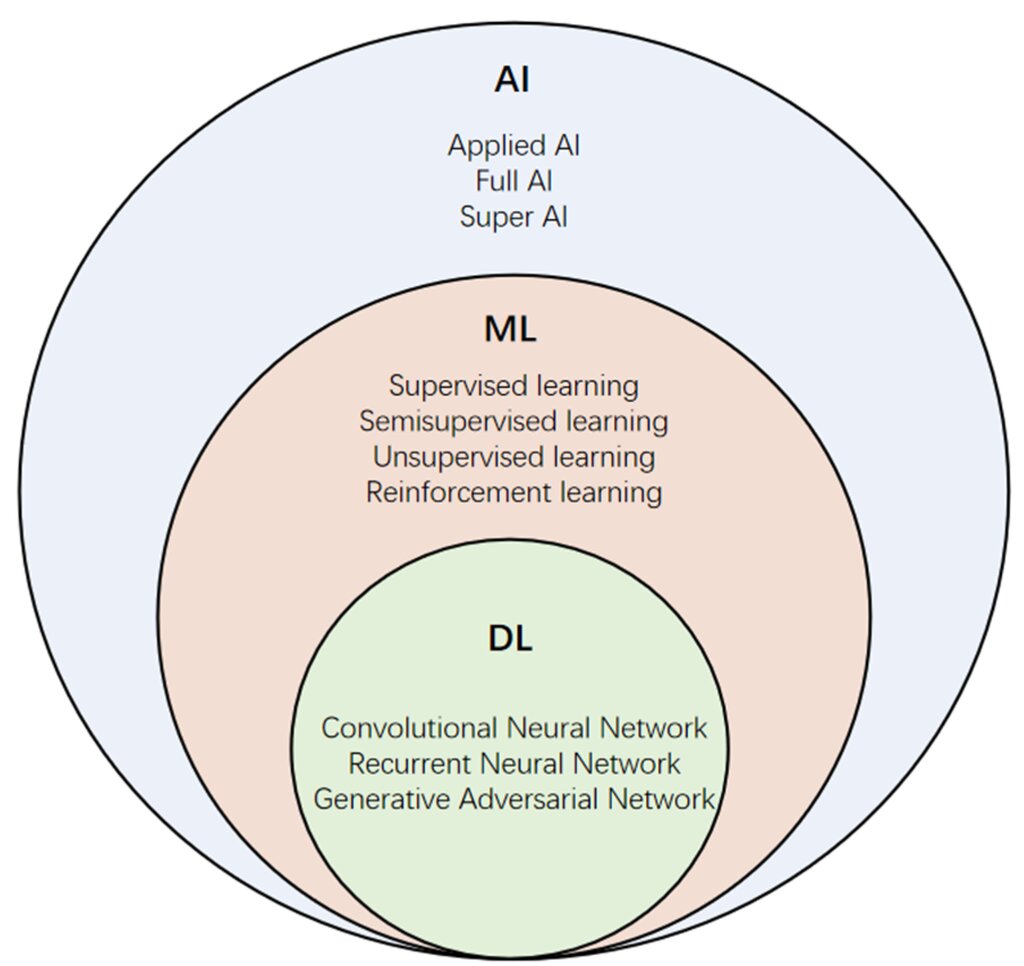
Machine learning isn't a single technique. It's a broad field with several different approaches. Most methods fall into one of three main categories: supervised, unsupervised, and reinforcement learning.
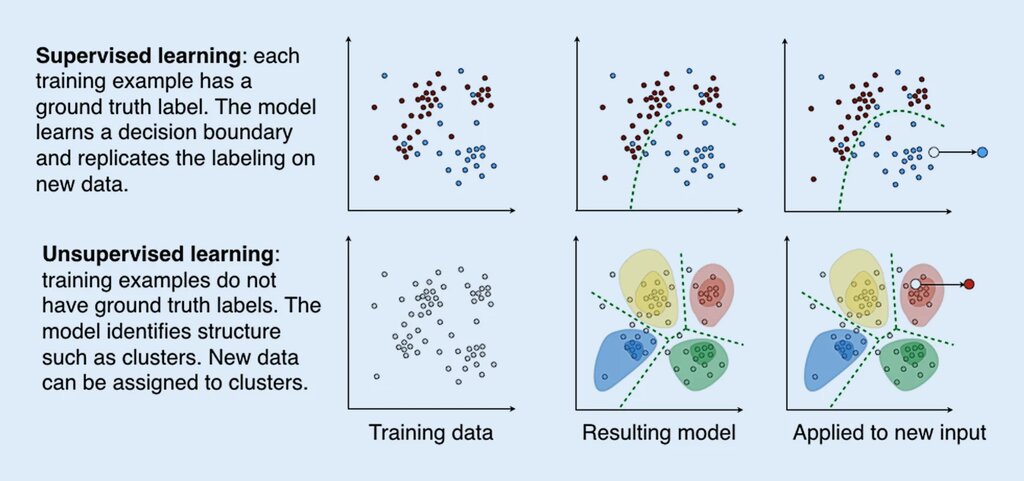
Supervised Learning This is the most common type of machine learning. In supervised learning, the computer is given a dataset where the "right answers" are already known. It's like studying for a test with a set of practice questions and an answer key.
The algorithm learns the relationship between the inputs and the correct outputs. For example, you could feed a model thousands of emails labeled as either "spam" or "not spam." The model would then learn to identify the characteristics of junk mail and apply that knowledge to new, incoming emails.
- Real-world example: Predicting house prices based on features like square footage, number of bedrooms, and location. The model is trained on a dataset of houses where the sale price is already known.
Unsupervised Learning With unsupervised learning, the data has no labels. The algorithm is on its own to find patterns, structures, or groupings within the information. It’s like being given a box of mixed-up photos and asked to sort them into piles without any instructions. You might group them by the people in them, the location, or the date they were taken.
- Real-world example: A company using customer purchase data to identify different segments of shoppers. The algorithm might discover a group of "frequent bargain hunters" and another of "high-end weekend shoppers," allowing the company to create targeted marketing campaigns.
Reinforcement Learning This type of learning is all about trial and error. An algorithm, often called an "agent," learns to make decisions by performing actions and seeing the results. Correct actions are rewarded, and incorrect ones are penalized. It’s similar to how you might train a pet with treats.
Over many attempts, the agent learns which sequence of actions leads to the best reward. This is useful for complex, dynamic situations where the optimal path isn't obvious.
- Real-world example: A self-driving car learning to navigate traffic. The agent gets positive rewards for obeying traffic laws and reaching its destination safely and efficiently, and negative feedback for things like getting too close to other cars.
The Machine Learning Workflow
Building a machine learning model isn't a single event. It's a cyclical process with several key steps. While the details can get complex, the general workflow is fairly standard.
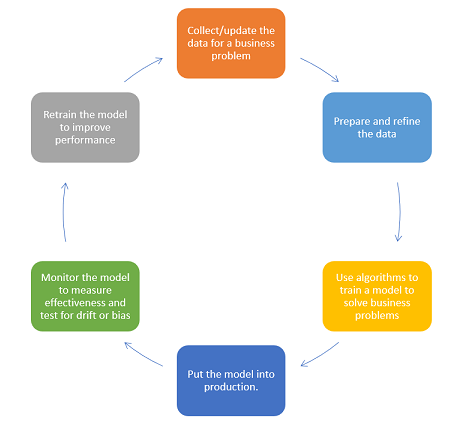
Here’s a simplified breakdown:
-
Data Collection: It all starts with data. This could be anything from customer transaction records to medical images or sensor readings. The quality and quantity of the data are crucial for building a good model.
-
Data Preparation: Raw data is often messy. It might have missing values, errors, or inconsistencies. This step involves cleaning the data and getting it into a format that the algorithm can understand. This is often the most time-consuming part of the process.
-
Model Training: This is where the learning happens. The prepared data is fed into the chosen algorithm. The algorithm adjusts its internal parameters to find patterns and learn the relationships within the data.
-
Model Evaluation: Once the model is trained, it needs to be tested. It is given new, unseen data to see how accurately it makes predictions. This step ensures the model works on data it hasn't encountered before and hasn't just memorized the training set.
-
Deployment & Monitoring: If the model performs well, it's put into a real-world application. The work doesn't stop there. The model's performance is continuously monitored to make sure it remains accurate over time.
Now, let's review some of the key terms we've covered.
Ready to check your understanding?
What is the primary goal of machine learning?
An email service provider wants to develop a new spam filter. They train an algorithm using a large dataset of emails that have already been correctly labeled as 'spam' or 'not spam'. Which type of machine learning is being used?
This foundation gives you a framework for understanding how machines can learn from experience, much like we do.