Machine Learning Fundamentals
Introduction to Machine Learning
What is Machine Learning?
Machine learning is a way of teaching computers to find patterns. Instead of writing step-by-step instructions for every possible situation, we give a machine a lot of data and let it figure out the rules for itself. It's like how a child learns to identify a dog. You don't list every single feature of a dog; you just show them lots of dogs. Eventually, they learn the general pattern and can spot a dog they've never seen before.
This process allows computer systems to perform tasks without being explicitly programmed for them. They learn from experience—the data—and improve their performance over time. This ability to adapt and make predictions is what makes machine learning so powerful.
Machine learning enables a system to learn from data rather than through explicit programming.
AI vs. Machine Learning
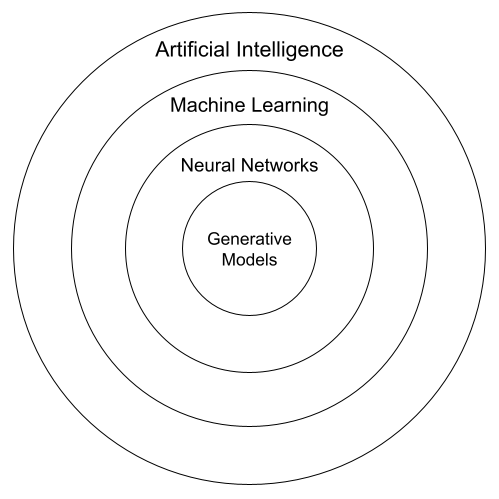
The terms Artificial Intelligence (AI) and Machine Learning (ML) are often used interchangeably, but they aren't the same thing. AI is the broader science of making machines intelligent. Machine learning is a specific subset of AI that focuses on systems that learn from data.
Think of AI as the entire field of study, and machine learning as one of its most important tools. Not all AI involves machine learning, but today, most of the AI we interact with is powered by it. Other areas of AI include things like robotics, rule-based systems, and knowledge representation.
This learning ability has applications everywhere. When your music app suggests a new song you might like, that's machine learning. When your bank flags a potentially fraudulent transaction, that's also machine learning. It's used in medical diagnoses, stock market predictions, and self-driving cars. The core idea is always the same: analyze past data to make smart predictions about the future.
Types of Machine Learning
Machine learning isn't a one-size-fits-all approach. The method a machine uses to learn depends on the type of data it's given and the problem it's trying to solve. There are four main categories of machine learning.
Supervised Learning
noun
The machine learns from data that is already labeled with the correct answers. It's like learning with a teacher or an answer key.
With supervised learning, the goal is to learn a mapping function that can predict the output for new, unseen data. For instance, you could feed a model thousands of pictures of cats and dogs, each labeled "cat" or "dog." After training, the model should be able to correctly label a new picture it has never encountered.
Unsupervised Learning
noun
The machine learns from unlabeled data, finding patterns and structures on its own without any guidance on what the 'right' answer is.
This is useful when you don't know what patterns to look for. The algorithm explores the data and draws its own conclusions. For example, a news website could use unsupervised learning to automatically group together articles about the same topic, without anyone pre-defining what those topics are.
Semi-Supervised Learning
noun
A mix of the first two types. The machine learns from a small amount of labeled data and a large amount of unlabeled data.
Imagine you have a massive database of family photos. You could manually label a few pictures of your sister. A semi-supervised algorithm could then use that information to find and suggest other photos of her in the rest of your unlabeled collection. It leverages the small, labeled set to make sense of the much larger, unlabeled set.
Reinforcement Learning
noun
The machine learns by interacting with an environment. It receives rewards for good actions and penalties for bad ones, learning the best strategy over time.
This is a trial-and-error process. Think of training a dog. You reward it for sitting but not for jumping. Over time, the dog learns that sitting leads to a treat. In the same way, a reinforcement learning model learns to maximize its rewards. This method is behind some of the most impressive AI feats, from mastering complex games to controlling robotic arms.
Which statement best describes the core principle of machine learning?
What is the correct relationship between Artificial Intelligence (AI) and Machine Learning (ML)?
These four types form the foundation of machine learning, each suited for different kinds of problems and data. Understanding their basic principles is the first step into this transformative field.