Machine Learning Fundamentals
Introduction to Machine Learning
What is Machine Learning?
Machine learning is a way of teaching computers to find patterns. Instead of writing explicit instructions for every single task, you give the computer a large amount of data and let it figure out the rules for itself. It's like learning from experience, but for a machine.
Think about your email's spam filter. In the early days, programmers would create long lists of rules to catch spam, like blocking emails with words like “free money” or “urgent offer.” But spammers quickly learned to get around these rules.
With machine learning, you show the computer thousands of emails that have already been marked as spam or not spam. The machine learning model learns the subtle characteristics of spam on its own. It might notice that spam emails often come from strange addresses, use a lot of exclamation points, or have unusual formatting. It learns these patterns from the data, not from a human programmer's rules. This allows it to adapt and catch new types of spam it has never seen before.
Machine learning is a branch of artificial intelligence (AI) that focuses on developing algorithms and statistical models which allow computers to perform tasks by learning from data, instead of following strictly programmed instructions, machine learning systems identify patterns and make decisions with minimal human intervention.
Three Flavors of Learning
Machine learning isn't a single technique. It's a broad field with several different approaches. The three main types are supervised, unsupervised, and reinforcement learning. Each is suited for different kinds of problems.
Supervised learning is like studying with flashcards. Each card has a question (the data) and an answer (the label). For example, you might have a dataset of thousands of animal photos, each labeled as either “cat” or “dog.” The algorithm learns the features of cats and dogs from these labeled examples. Once trained, it can predict whether a new, unlabeled photo is of a cat or a dog. Predicting house prices based on features like square footage and number of bedrooms is another common example.
Unsupervised learning is like being given a big box of mixed LEGO bricks and being asked to sort them. There are no instructions or labels. You have to find the patterns yourself. You might group the bricks by color, shape, or size. In the same way, an unsupervised algorithm sifts through unlabeled data to find hidden structures. A common use is customer segmentation, where a business groups its customers into different types based on purchasing behavior, helping them tailor their marketing.
Reinforcement learning is how you might train a pet. The algorithm, called an “agent,” learns by performing actions and receiving rewards or penalties. A good action gets a reward, and a bad one leads to a penalty. The agent’s goal is to maximize its total reward. This is the technology behind AIs that can master complex games like Chess or Go. It's also used in robotics, teaching a robot to walk, or in developing self-driving cars that learn the best actions to take on the road.
Data is the Fuel
No matter which type of learning you use, one thing is constant: machine learning needs data. A lot of it. Data is the raw material that models learn from. The quality and quantity of your data directly determine how well your model will perform.
This leads to a core principle in the field: “garbage in, garbage out.” If you train a model on inaccurate, biased, or incomplete data, you will get an inaccurate, biased, or useless model.
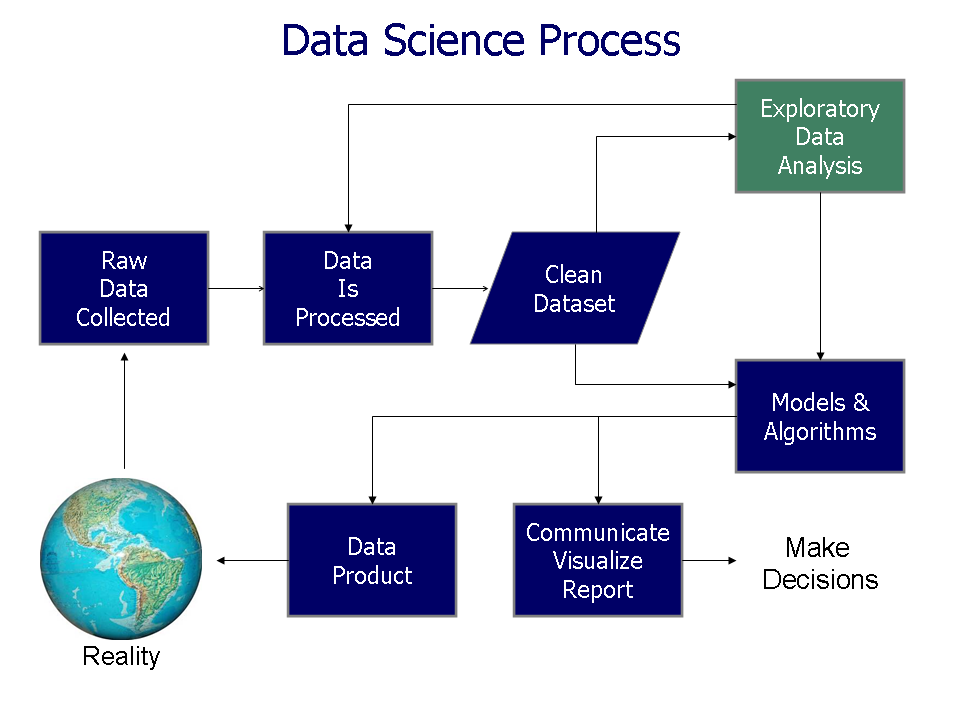
A huge part of any machine learning project involves collecting, cleaning, and preparing data. This process, often called data preprocessing, is crucial for building a successful model. An algorithm trained on a well-curated dataset will almost always outperform a more complex algorithm trained on messy data.
Machine Learning in the Wild
Machine learning isn't just an academic concept; it's already a part of our daily lives. It powers many of the services we use every day. Here are just a few examples from different industries.
| Industry | Application | What it does |
|---|---|---|
| Entertainment | Recommendation Engines | Suggests movies on Netflix or songs on Spotify based on your past activity. |
| Finance | Fraud Detection | Identifies unusual credit card transactions to prevent fraud. |
| Healthcare | Medical Imaging Analysis | Helps doctors detect diseases like cancer from X-rays and MRI scans. |
| Retail | Dynamic Pricing | Adjusts prices for products on sites like Amazon based on demand and competition. |
| Transportation | Route Optimization | Powers apps like Google Maps to find the fastest route, avoiding traffic. |
From personalized marketing to scientific discovery, machine learning is a powerful tool for solving complex problems across nearly every field.
What is the primary difference between machine learning and traditional programming?
You are building an email spam filter. You train a model using thousands of emails that have already been labeled as 'spam' or 'not spam'. What type of machine learning is this?
These core concepts—the definition of machine learning, the three main learning types, and the central role of data—are the foundation for understanding how AI is changing our world.