Machine Learning Fundamentals
Introduction to Machine Learning
What Is Machine Learning?
Machine learning is a way of teaching computers to find patterns. Instead of writing step-by-step instructions for every possible situation, we give the computer a large amount of data and let it figure things out for itself. It learns from experience, much like humans do.
Think about how you learned to identify a cat. No one gave you a strict set of rules like "if it has pointy ears, whiskers, and a long tail, it's a cat." You just saw many examples of cats, and eventually, you could recognize a new one you'd never seen before. Machine learning works in a similar way. It's a subfield of artificial intelligence that gives computers the ability to learn without being explicitly programmed.
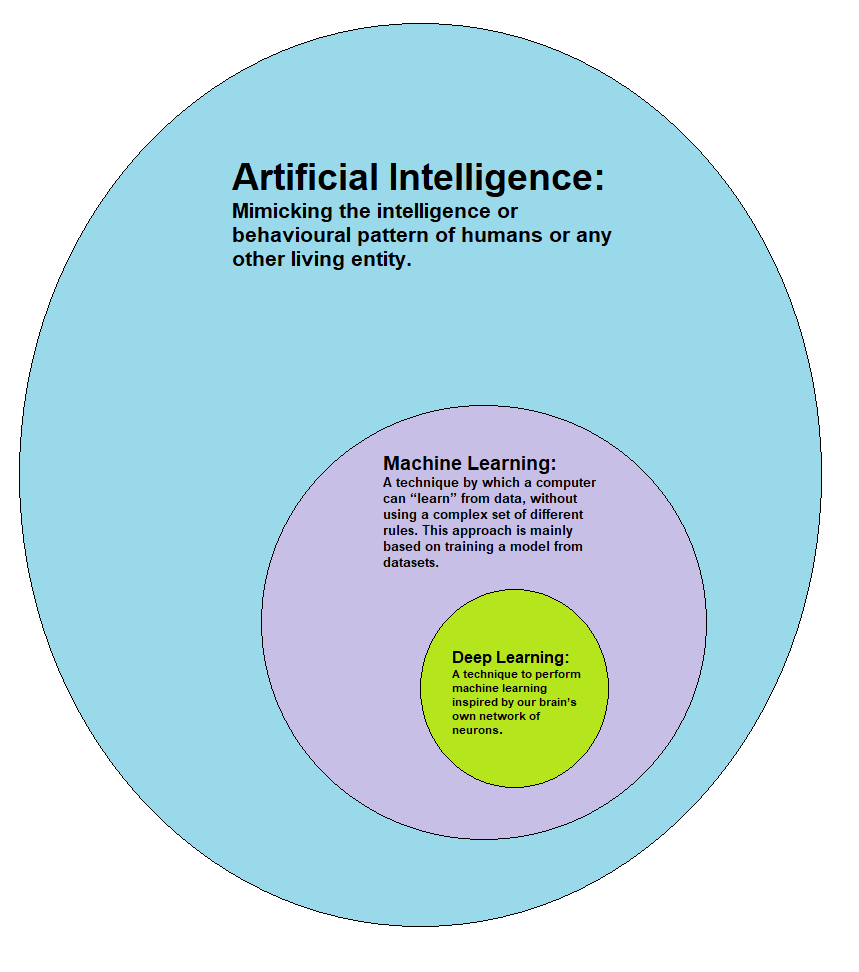
This ability to learn from data is what makes machine learning so powerful. It's used in everything from recommending movies you might like to helping doctors detect diseases earlier. By recognizing patterns in data, machine learning models can make predictions and decisions about new, unseen information.
How Machines Learn
Just as people have different ways of learning, machines do too. The approach depends on the type of data available and the goal of the task. There are four main paradigms, or styles, of machine learning.
Supervised Learning: Learning with an answer key.
In supervised learning, the machine is given a dataset where all the data points are labeled with the correct answer. The goal is for the model to learn the relationship between the data and its corresponding label, so it can predict the label for new, unlabeled data.
Imagine training an email spam filter. You would feed it thousands of emails, each one already labeled as either "spam" or "not spam." The algorithm analyzes these examples and learns the features that are common in spam emails (like certain keywords or sender patterns). After training, when a new email arrives, the model can predict whether it's spam or not based on what it learned.
Unsupervised Learning: Finding patterns on its own.
With unsupervised learning, the data has no labels. The machine's task is to explore the data and find any inherent structures or patterns without any guidance. It's like being given a box of mixed Lego bricks and asked to sort them into groups based on color, shape, or size.
A common application is customer segmentation. A company might have data about its customers' purchasing habits. An unsupervised learning algorithm can group customers into distinct segments—for example, "frequent shoppers," "bargain hunters," and "occasional buyers"—without being told these categories exist beforehand. This helps the company tailor its marketing.
Semi-Supervised Learning: A bit of both.
This is a middle ground between supervised and unsupervised learning. It uses a small amount of labeled data along with a large amount of unlabeled data. The idea is that the labeled data can give the learning process a helpful nudge in the right direction, making it more accurate than if it were completely unsupervised.
Consider a photo service like Google Photos. You might manually tag your best friend in a few pictures. A semi-supervised algorithm can use these few labeled examples to learn what your friend looks like, and then automatically find and suggest tags for them in the hundreds of other, unlabeled photos in your library.
Reinforcement Learning: Learning through trial and error.
Reinforcement learning is about training an agent to make a sequence of decisions. The agent learns by interacting with an environment. It receives rewards for performing correct actions and penalties for incorrect ones. The goal is to maximize the total reward over time.
This is how AI models have learned to master complex games like Chess and Go. The agent (the game player) tries different moves. It gets a positive reward for moves that lead to winning and a negative penalty for moves that lead to losing. Over millions of games, it learns a strategy that maximizes its chances of winning.
Machine Learning in Action
Machine learning is not a futuristic concept; it's already a part of our daily lives.
When Netflix suggests a new series you might love, it's using machine learning to analyze your viewing history and compare it to millions of other users. When you ask your smart speaker a question, natural language processing—a type of machine learning—helps it understand and respond.
In healthcare, machine learning algorithms analyze medical images like X-rays and MRIs to help doctors spot tumors or other anomalies that a human eye might miss. Financial institutions use it to detect fraudulent transactions in real-time. And self-driving cars use a complex combination of machine learning models to perceive their surroundings and navigate safely.
Now, let's test your understanding of these foundational ideas.
Which statement best describes the fundamental principle of machine learning?
You are tasked with building an email filter. You have a large dataset of emails, each one already labeled as 'spam' or 'not spam'. Which machine learning paradigm is most appropriate for this task?
These core concepts are the building blocks for creating intelligent systems that can learn, adapt, and make decisions, driving innovation across countless industries.