Machine Learning for Quantitative Finance
Introduction to Machine Learning
What is Machine Learning?
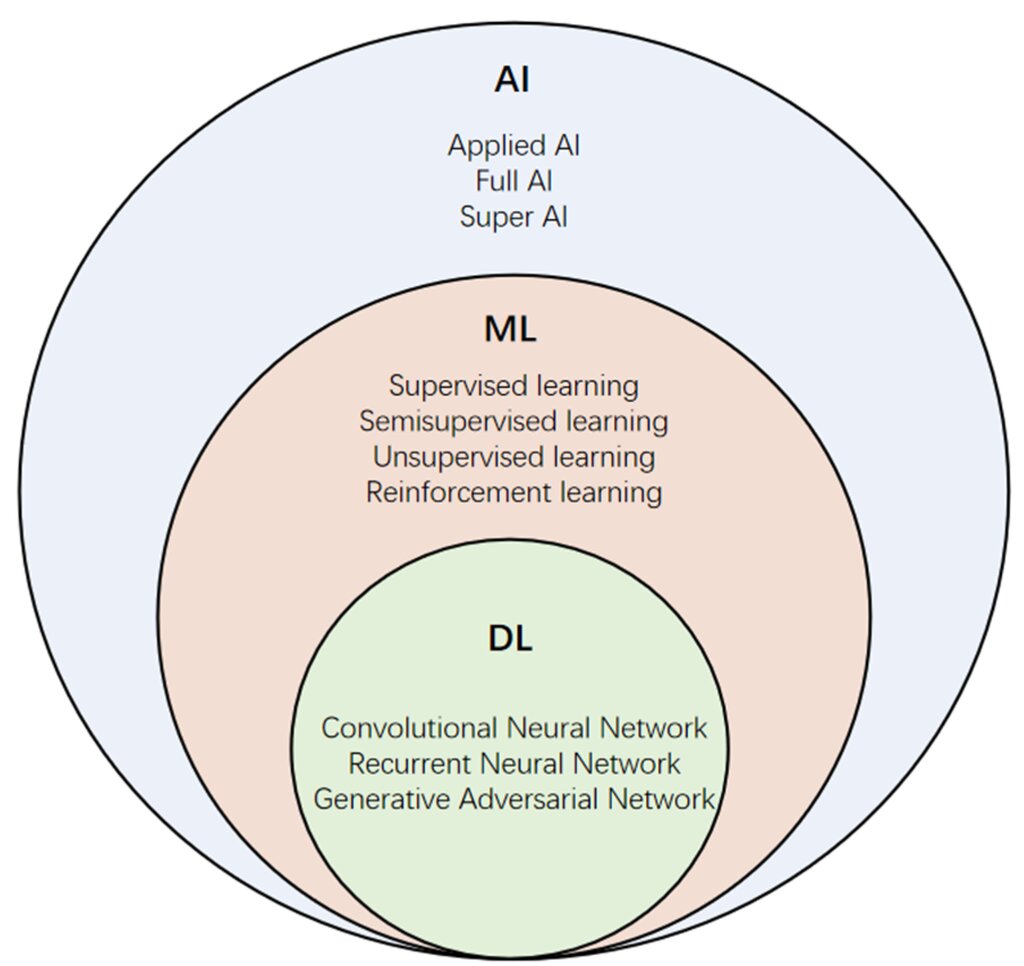
Machine learning lets computers find patterns in data and use those patterns to make predictions or decisions. Instead of a programmer writing exact, step-by-step instructions for every possible scenario, they build a system, called a model, that can learn from examples.
Machine Learning (ML) is a branch of Artificial Intelligence that enables computers to learn patterns from data and make predictions or decisions without being explicitly programmed.
Think about how you learned to identify a cat. No one gave you a strict set of rules like "it must have pointy ears of this exact size and fur of this exact texture." You just saw many examples of cats, and eventually, your brain figured out the general pattern of "cat-ness." Machine learning works in a similar way, but with data. It sifts through vast amounts of information to discover the underlying rules on its own. The primary goal is to create a model that can make accurate predictions on new, unseen data.
Types of Learning
Machine learning isn't a single technique; it's a field with several different approaches. The best approach depends on the problem you're trying to solve and the kind of data you have. The three main types are supervised, unsupervised, and reinforcement learning.
Supervised Learning
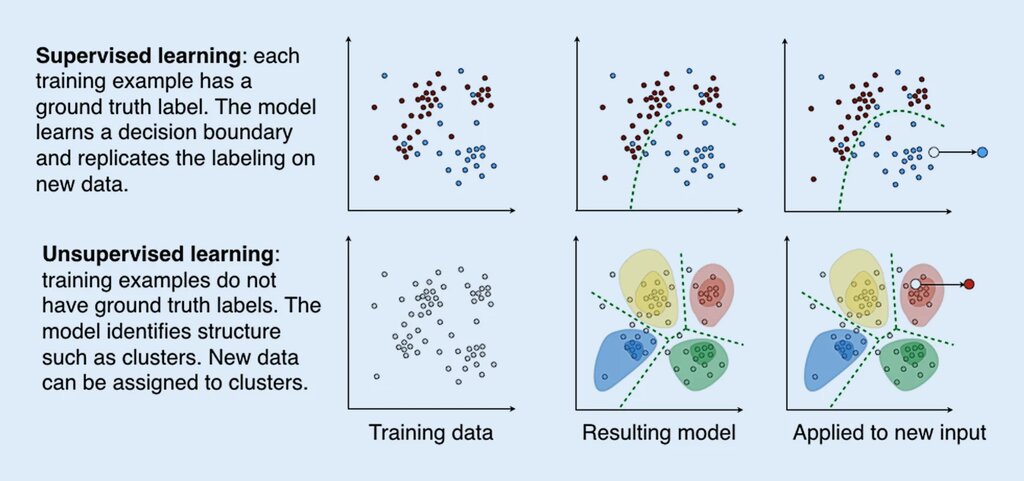
In supervised learning, the machine learns from data that has already been labeled with the correct answers. It's like a student learning with a set of flashcards that have both a question and its answer. The goal is for the model to learn the relationship between the input data (the question) and the output label (the answer) so it can predict the answer for new, unlabeled data.
For example, to train an email spam filter, you would feed it thousands of emails that have been manually labeled as either "spam" or "not spam." The model learns the features associated with spam (like certain keywords or sender patterns) and uses that knowledge to classify new, incoming emails.
Unsupervised Learning
What if you don't have labeled data? That's where unsupervised learning comes in. With this method, the model is given a dataset without any explicit answers and must find the hidden patterns or structure on its own. It’s like being given a box of mixed-up puzzle pieces and having to sort them into groups based on color or shape without seeing the final picture.
Customer segmentation is a common use case. An e-commerce company could use unsupervised learning to group its customers based on purchasing behavior. The model might identify a cluster of "frequent bargain hunters" and another of "high-end luxury buyers" without being told these categories existed beforehand.
Reinforcement Learning
Reinforcement learning is about learning through trial and error. An agent (the model) learns to make decisions by performing actions in an environment to achieve a goal. It receives rewards for good actions and penalties for bad ones. The objective is to learn the best strategy, or policy, that maximizes the total reward over time.
Think of training a dog. When it sits on command, you give it a treat (a reward). When it chews on the furniture, it gets a scolding (a penalty). Over time, the dog learns that sitting leads to positive outcomes. Self-driving cars and game-playing AIs often use reinforcement learning to navigate complex, dynamic environments.
A Few Key Algorithms
Algorithms are the engines that power machine learning. While there are hundreds of them, most are built on a few core concepts. Here are three foundational algorithms that illustrate different ways machines can learn.
- Linear Regression: This is one of the simplest supervised learning algorithms. It's used to predict a continuous value, like a price or temperature. It finds the best-fitting straight line that describes the relationship between an input variable and an output variable. For example, you could use it to predict a house's price based on its square footage.
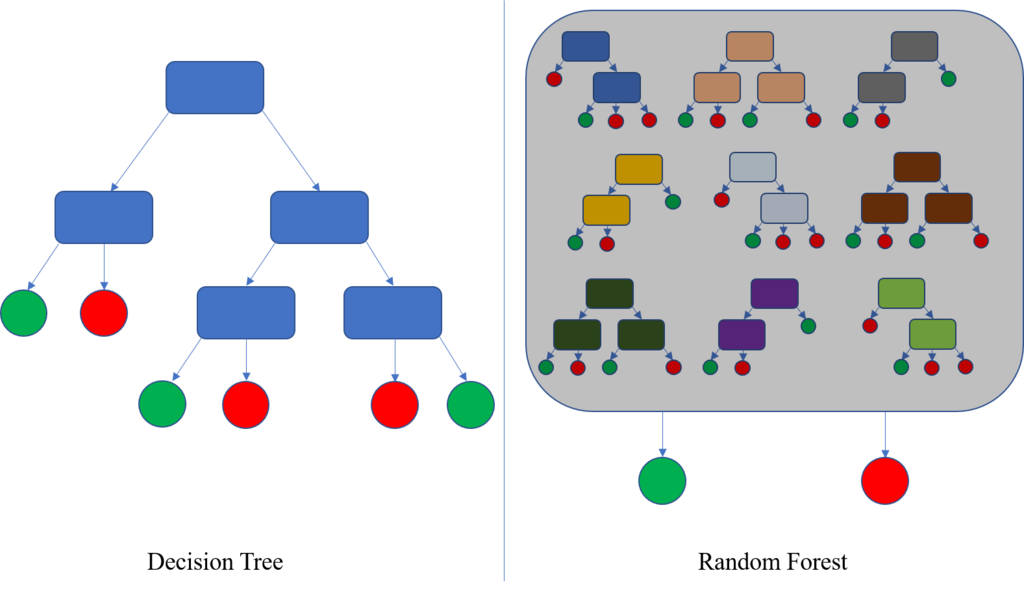
- Decision Trees: A decision tree is a supervised learning model that looks like a flowchart. It makes predictions by asking a series of simple yes/no questions about the data. Each internal node represents a question, each branch represents an answer, and each leaf node represents the final prediction. They are easy to understand and visualize, making them great for classification problems, like deciding if a loan application should be approved or denied.
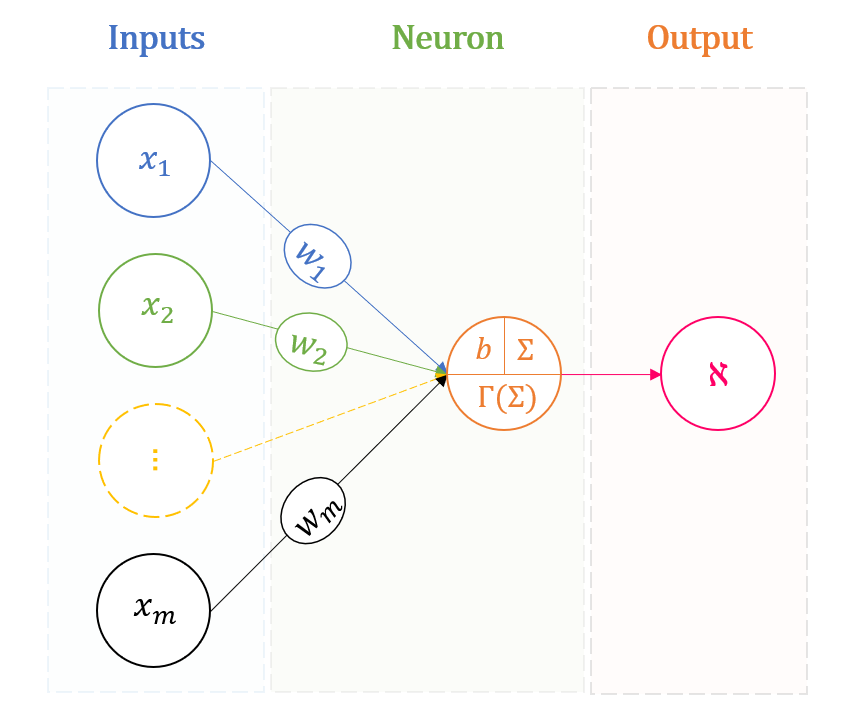
- Neural Networks: Inspired by the structure of the human brain, neural networks are more complex models that can learn intricate patterns. They are made of interconnected layers of "neurons," or nodes. Each neuron receives inputs, processes them, and passes the result to the next layer. By adjusting the connections between neurons during training, the network learns to recognize patterns in data. Neural networks are the foundation of deep learning and excel at tasks like image recognition and natural language processing.
These concepts are just the starting point. Machine learning is a vast and rapidly evolving field, but understanding these fundamentals—what it is, its main learning styles, and a few core algorithms—provides a solid base for exploring its more advanced applications.