Machine Learning for Finance
Introduction to Machine Learning
What Is Machine Learning?
Imagine teaching a toddler to recognize a cat. You wouldn't write a long list of rules like "it has pointy ears, whiskers, a long tail, and says meow." Instead, you'd show them pictures of cats and say, "This is a cat." After seeing enough examples, the toddler starts to recognize cats on their own.
Machine learning works in a similar way. It's a field of artificial intelligence where we give computers the ability to learn from data and experience, without being explicitly programmed with rules for every possible situation. Instead of a programmer writing code to identify spam emails, they 'train' a system by showing it thousands of examples of spam and not-spam emails. The system learns the patterns and can then make decisions about new, unseen emails.
The core idea is simple: find patterns in data. This allows us to solve complex problems where the rules are too complicated or numerous for a human to write out by hand.
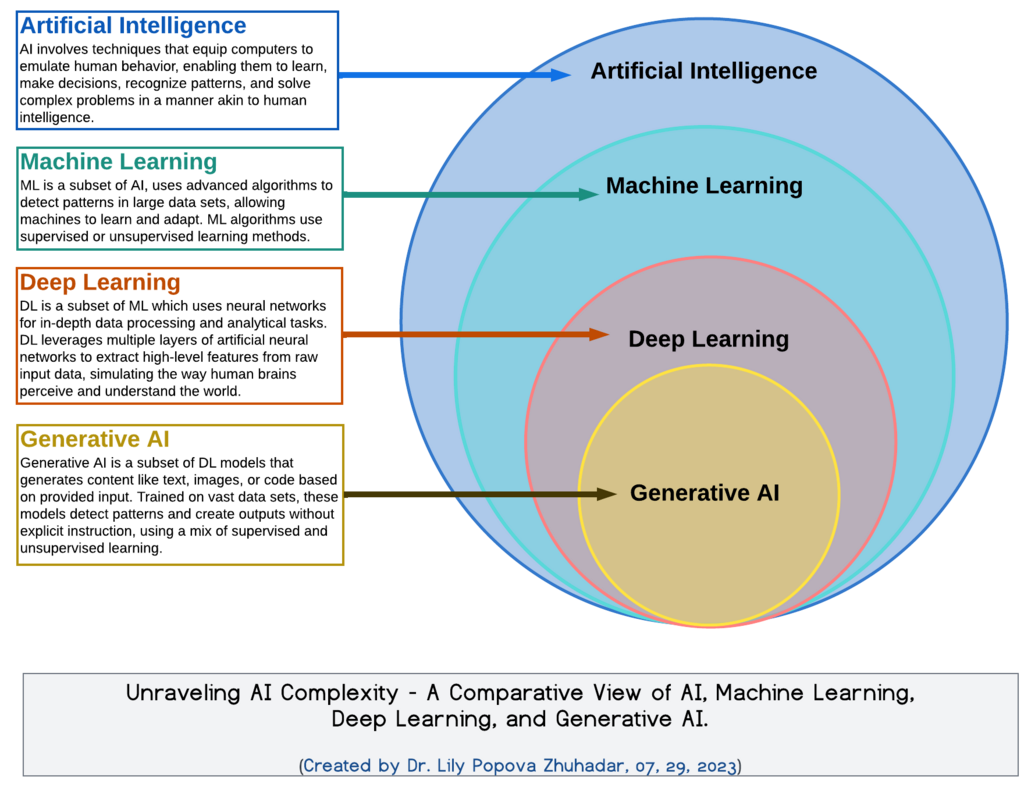
This ability to learn from data makes machine learning incredibly powerful. It’s the engine behind recommendation systems that suggest movies you might like, voice assistants that understand your commands, and navigation apps that predict traffic.
The Core Components
To understand how this process works, let's break down the key terminology you'll encounter.
Algorithm
noun
A process or set of rules followed by a computer to solve a problem. In machine learning, an algorithm is the method used to learn from data.
Think of an algorithm as a recipe. It provides the general steps for learning. For example, one type of algorithm might be good at drawing lines to separate data, while another might be good at grouping similar things together.
The result of an algorithm learning from data is a model. If the algorithm is the recipe, the model is the finished cake. It’s a specific set of patterns and rules the algorithm learned from your particular dataset. You can then use this model to make predictions on new data.
Algorithm (the process) + Data -> Model (the output)
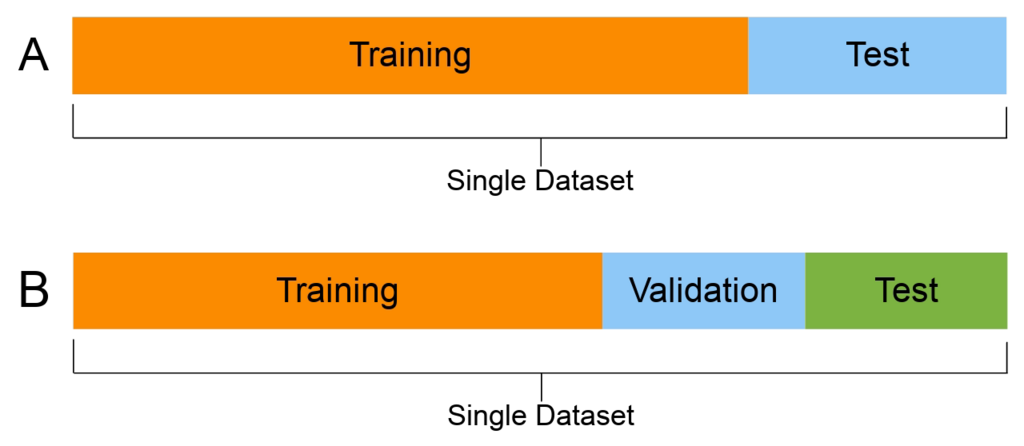
The process of feeding data to an algorithm to create a model is called training. During training, the algorithm adjusts its internal parameters to better represent the patterns in the data.
Finally, how do we know if the model is any good? That's where evaluation comes in. After training, we test the model on a separate set of data it has never seen before. This tells us how well it's likely to perform in the real world. If a model that predicts house prices is only off by $500 on average during evaluation, that's pretty good. If it's off by $50,000, it needs more work.
The Main Flavors of Learning
Machine learning isn't a single, monolithic thing. It's a broad field with several different approaches, each suited for different kinds of problems. The three main types are supervised, unsupervised, and reinforcement learning.
Supervised Learning
This is the most common type of machine learning. The 'supervised' part means the data we use for training is labeled with the correct answers. It’s like learning with an answer key.
For example, to train a model to identify pictures of cats, you'd feed it thousands of images, each one labeled as either 'cat' or 'not a cat'. The algorithm learns the relationship between the features of an image (shapes, colors, textures) and its label. After training, it can predict whether a new, unlabeled image contains a cat.
Supervised learning is great for two kinds of problems:
- Classification: Assigning an item to a category (e.g., Is this email spam or not spam?).
- Regression: Predicting a continuous value (e.g., What will the temperature be tomorrow?).
Unsupervised Learning
What if you don't have labeled data? That's where unsupervised learning comes in. Here, we give the algorithm a dataset and ask it to find hidden structures or patterns on its own, without any labels to guide it.
Imagine dumping a huge box of mixed LEGO bricks on the floor and asking a child to sort them. They might group them by color, by size, or by shape. They're finding the underlying structure in the data. Unsupervised learning does the same thing. A common use is clustering, which involves grouping similar data points together. For example, a company might use clustering to segment its customers into different groups based on their purchasing habits.
Reinforcement Learning
This type of learning is inspired by how animals learn from the consequences of their actions. It's all about trial and error.
In reinforcement learning, a software 'agent' learns to operate in an environment. The agent takes actions, and the environment provides feedback in the form of rewards or punishments. The agent's goal is to learn a strategy, or 'policy', that maximizes its cumulative reward over time.
Think of training a dog to sit. When it sits, you give it a treat (a reward). When it doesn't, it gets nothing. Over time, the dog learns that sitting leads to treats. Reinforcement learning is used to train computers to play complex games like Chess or Go, and it's also crucial for robotics, where a robot learns to navigate its surroundings by being rewarded for successful actions.
Ready to check your understanding?
What is the fundamental principle of machine learning?
In machine learning, a(n) ________ is like a recipe, and when it learns from data, the result is a(n) ________.
Understanding these core concepts—what machine learning is, its key components, and its main types—provides a strong foundation for exploring this fascinating field.