Machine Learning and AI for Beginners
Introduction to AI and ML
What is AI?
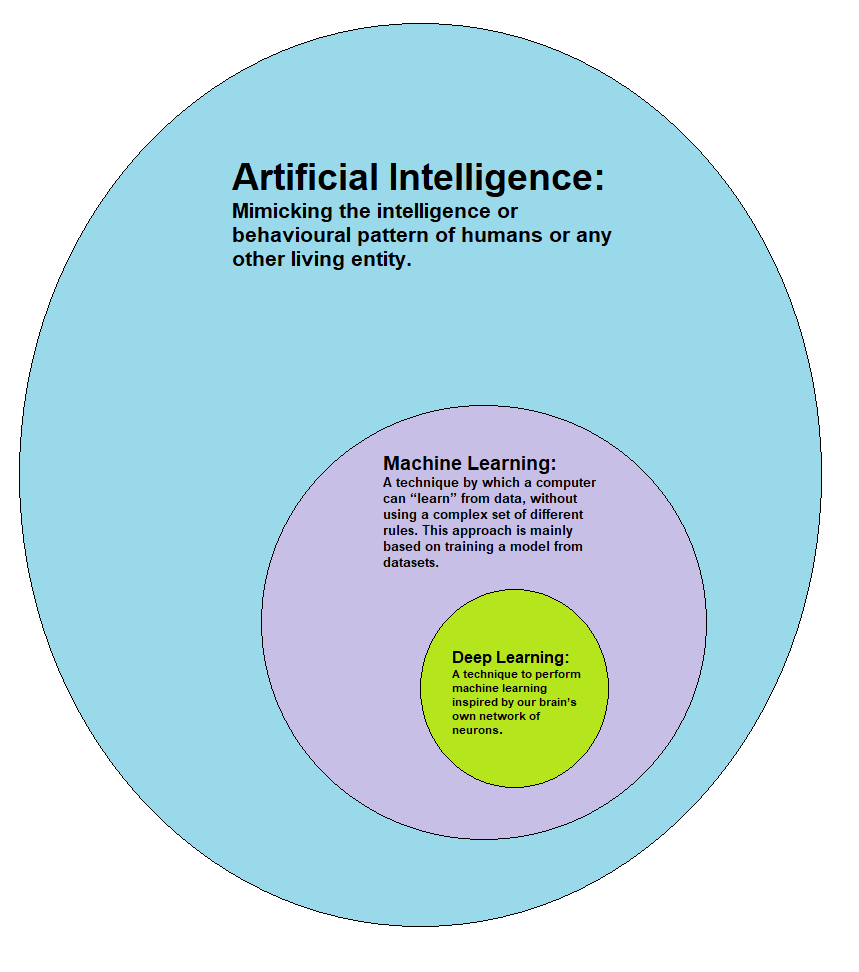
Artificial intelligence is the broad idea of making machines smart. The goal is to enable computers to perform tasks that typically require human intelligence, like understanding language, recognizing images, and making decisions.
Think of it this way: AI is the overarching quest to build a machine that can think or act like a person.
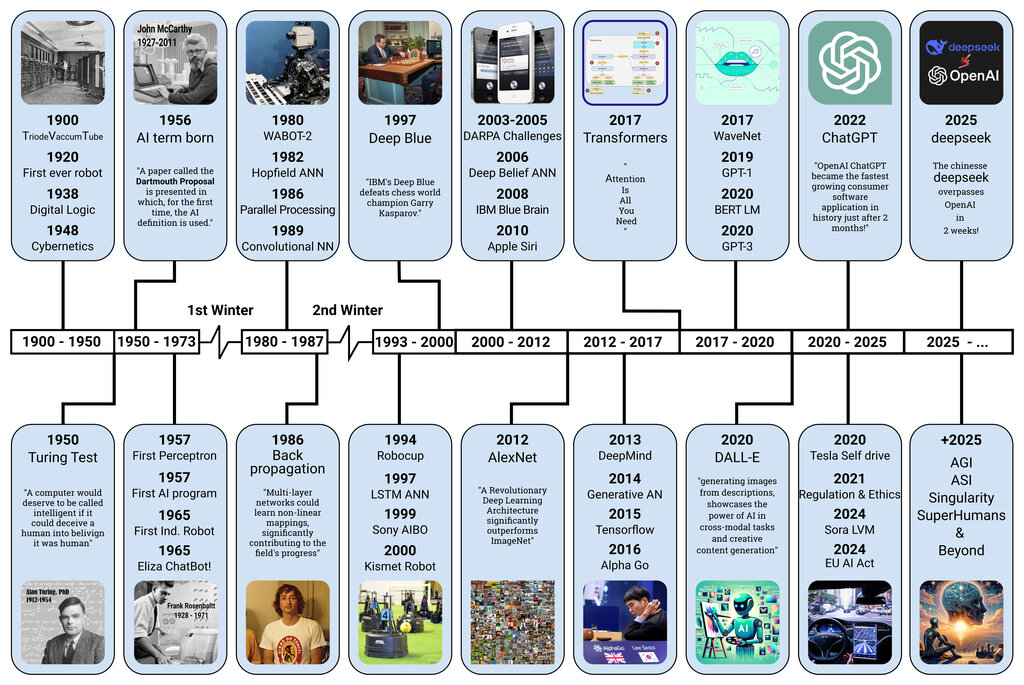
This dream isn't new. The term "artificial intelligence" was coined way back in 1956. Early efforts involved trying to write explicit, step-by-step rules for every possible situation. For simple tasks, this worked. But for complex problems, it quickly became impossibly complicated. Imagine trying to write a rule for every possible move in a game of chess. There are more possibilities than atoms in the universe.
Enter Machine Learning
Scientists needed a better approach. Instead of hand-crafting millions of rules, what if a computer could learn on its own? This idea is the heart of machine learning, or ML. Machine learning is a subfield of AI where computers learn patterns from data without being explicitly programmed for a specific task.
If AI is the goal (a smart machine), machine learning is one of the most powerful tools to get there.
Your email's spam filter is a classic example. Instead of a programmer creating a giant list of spam words, the system is shown thousands of emails that humans have already marked as "spam" or "not spam." The ML model learns the characteristics of junk mail on its own and can then predict whether a new email is spam.
How Machines Learn
Machine learning isn't just one thing; it's a collection of techniques. These methods generally fall into three main categories, based on how the machine is taught.
Supervised Learning
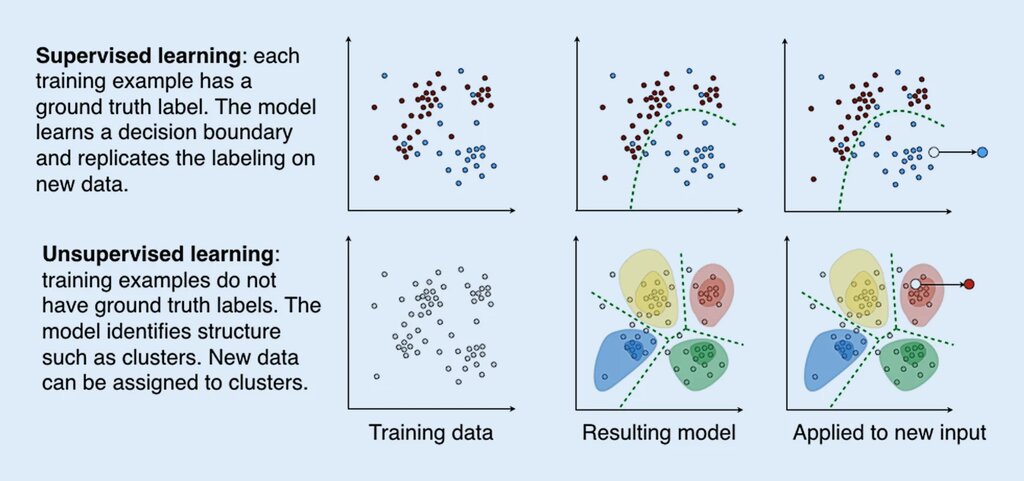
This is like studying with flashcards. You give the machine data that is already labeled with the correct answer. For example, you'd show it thousands of pictures of animals, each one labeled "cat," "dog," or "bird." The algorithm's job is to learn the relationship between the input (the image) and the output (the label). After enough training, it can correctly identify animals in new, unlabeled photos.
Unsupervised Learning
Here, the machine is given unlabeled data and must find patterns on its own. Imagine dumping a giant box of mixed Lego bricks on the floor and asking a computer to sort them. It might group them by color, size, or shape without you ever defining those categories. This is useful for tasks like customer segmentation, where a business might want to discover natural groupings within its customer base.
Reinforcement Learning
This approach is similar to how you might train a pet: with rewards and penalties. The algorithm, called an "agent," learns by interacting with an environment. It's rewarded for actions that get it closer to its goal and penalized for actions that don't. Over many trials, it learns the best strategy to maximize its reward. This is the technique used to train AIs to play complex games like chess or Go, and it's also used in robotics and self-driving cars.
| Learning Type | How it Works | Example |
|---|---|---|
| Supervised | Learns from labeled data | Predicting house prices based on historical sales data. |
| Unsupervised | Finds patterns in unlabeled data | Grouping news articles by topic automatically. |
| Reinforcement | Learns through trial and error with rewards | An AI learning to play a video game. |
AI's Impact Today
These concepts might sound abstract, but AI and machine learning are already integrated into our daily lives and transforming entire industries.
From personalized movie recommendations to medical diagnoses, ML is working behind the scenes to make processes faster, more accurate, and more efficient.
In healthcare, AI helps doctors detect diseases like cancer from medical scans with greater accuracy. In finance, it powers the real-time fraud detection systems that protect your credit card from unauthorized charges. And in retail, it's the engine behind the product recommendations you see on e-commerce sites, helping you discover items you might like.
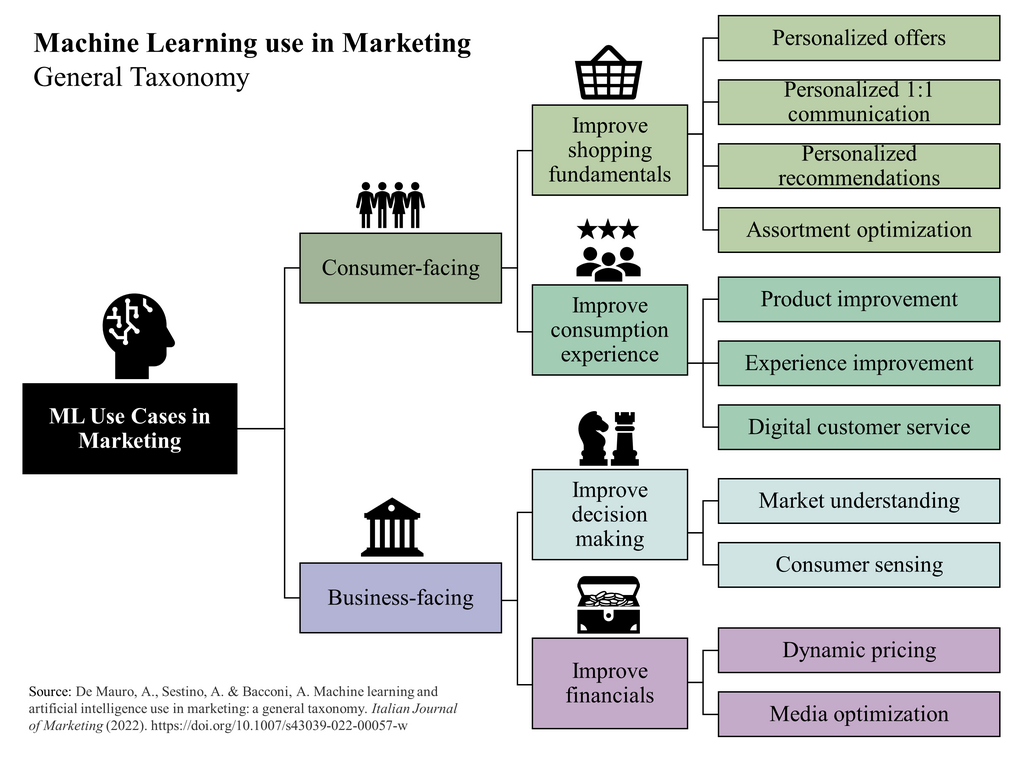
These applications are just the beginning. As the technology continues to evolve, AI and ML will become even more integral to how we work, live, and solve the world's biggest challenges.
Ready to test your knowledge?
What is the core idea that distinguishes machine learning (ML) from early, rule-based artificial intelligence (AI)?
An e-commerce website wants to group its customers into different segments based on their purchasing habits, but it doesn't have any predefined labels for these groups. Which type of machine learning would be most suitable for this task?
By understanding these fundamental ideas, you have a solid foundation for exploring the more advanced aspects of artificial intelligence.