Machine Learning Algorithms Deep Dive
Introduction to Machine Learning
What Is Machine Learning?
At its core, machine learning is about teaching computers to learn from experience, much like humans do. Instead of writing explicit, step-by-step instructions for every possible scenario, we give a computer a set of data and let it figure out the patterns on its own. It's the difference between giving someone a fish and teaching them how to fish.
Traditional programming uses data and rules to get answers. Machine learning uses data and answers to discover the rules.
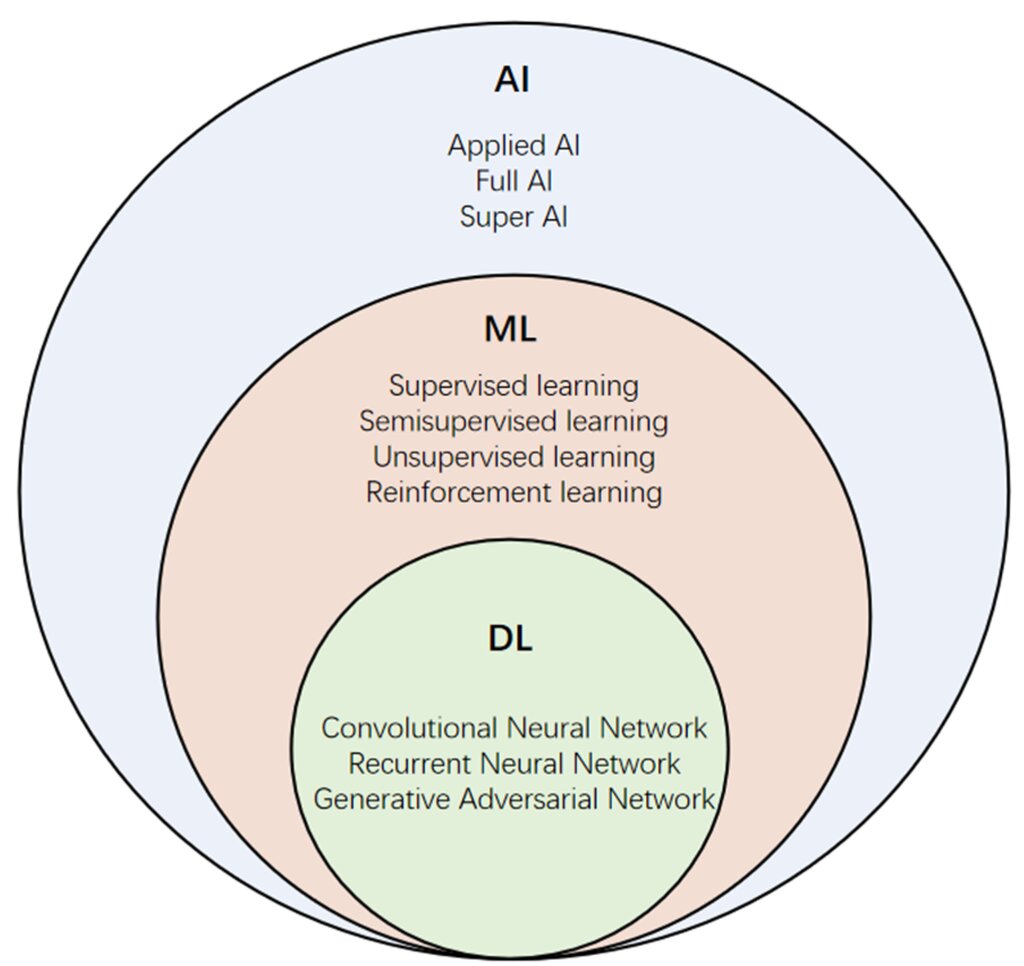
This ability to learn from data powers many things you use every day. When a streaming service recommends a movie you might like, or your email provider flags a message as spam, that's machine learning at work. It's a subfield of artificial intelligence focused on building systems that can learn and improve without being constantly reprogrammed.
The Two Main Learning Styles
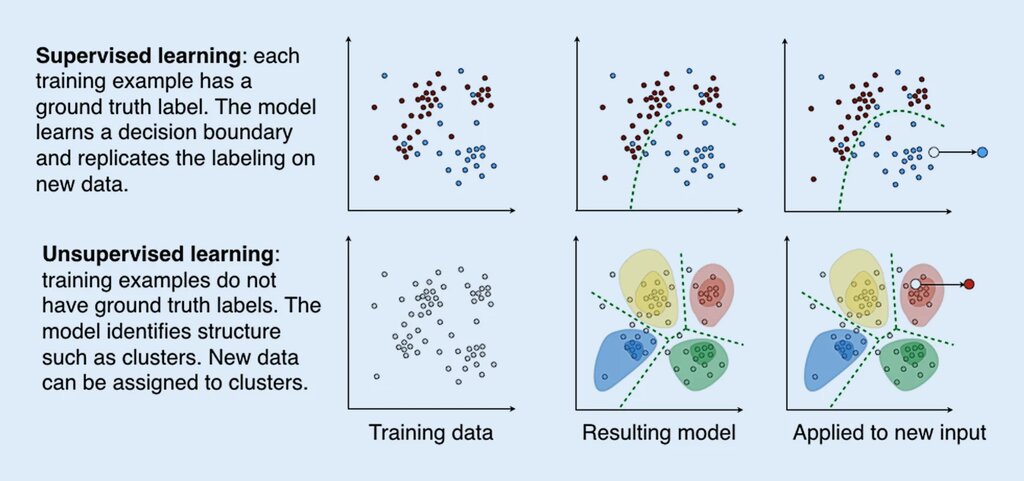
Just as people have different ways of learning, machine learning models have different training styles. The two most common are supervised and unsupervised learning.
Supervised learning is like studying with flashcards. You give the machine a set of questions (the data) and the correct answers (the labels). For example, you might feed it thousands of pictures of animals, each labeled as either a 'cat' or a 'dog'. After studying enough examples, the model learns to identify cats and dogs in new, unlabeled photos. This is used for tasks like predicting house prices based on features like size and location, or identifying fraudulent credit card transactions.
Unsupervised learning is more like being thrown into a new situation and asked to make sense of it. The data has no labels. The machine's job is to find hidden patterns or structures on its own. Imagine giving it a massive pile of customer data. An unsupervised model could automatically group customers into segments—like 'frequent shoppers,' 'bargain hunters,' and 'weekend visitors'—without being told what to look for. This is useful for market research, finding anomalies in a system, or organizing large datasets.
Data Is the Fuel
A machine learning model is only as good as the data it's trained on. Data is the textbook, the teacher, and the real-world experience all rolled into one. The more relevant and high-quality data you provide, the better the model becomes at its task.
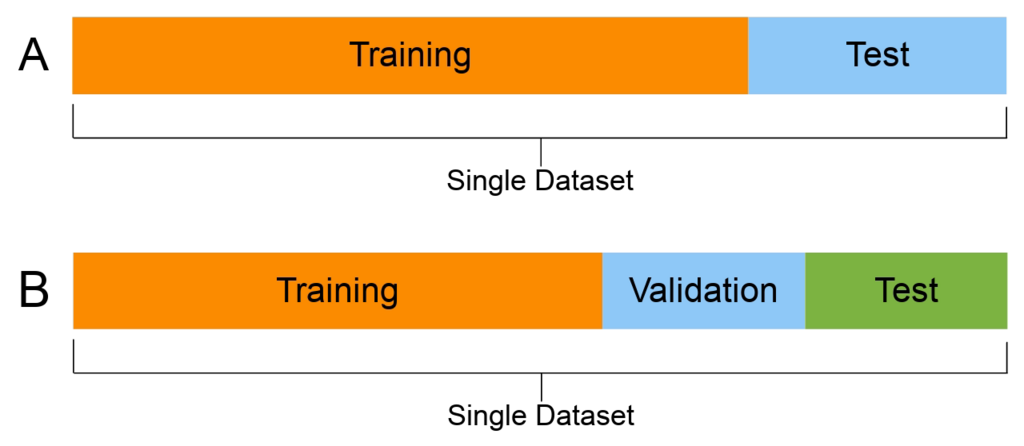
This leads to a simple but critical rule: garbage in, garbage out. If you train a model on biased, incomplete, or incorrect data, it will produce biased, incomplete, or incorrect results. That's why a huge part of any machine learning project involves collecting, cleaning, and preparing data. We typically split this data into a 'training set' to teach the model and a separate 'test set' to see how well it performs on new, unseen information.
A Toolbox of Methods
There isn't a single 'machine learning' button. Instead, there's a whole toolbox of different algorithms, each suited for a particular kind of problem. You wouldn't use a hammer to turn a screw, and you wouldn't use a clustering algorithm to predict tomorrow's stock price. Choosing the right algorithm is a key skill.
We don't need to dive into the math behind them, but it's helpful to know the main categories.
| Task Type | Goal | Common Use Case |
|---|---|---|
| Regression | Predict a continuous number | Forecasting sales, predicting temperature |
| Classification | Assign a category or label | Spam detection, image recognition |
| Clustering | Group similar items together | Customer segmentation, finding topics in text |
Is It Any Good?
After training a model, how do we know if it actually works? We can't just trust it blindly. This is where evaluation metrics come in. These are like grades on a test that tell us how well our model is performing.
The specific metric depends on the task. For a classification model trying to detect spam, a key metric is accuracy: what percentage of emails did it classify correctly? For a regression model predicting house prices, we might use mean absolute error to measure, on average, how far off its price predictions are from the actual sale prices.
Metrics turn a model's performance into a concrete number, allowing us to compare different models and track improvement over time.
These basic concepts are the foundation of machine learning. By understanding what it is, how it learns, what it needs, and how we measure it, you can begin to see its potential to solve problems in almost every field.