Machine Customers Explained
Introduction to Machine Customers
What Are Machine Customers?
Imagine your printer running low on ink. Instead of you noticing the faded pages and placing an order, the printer itself detects its low supply, connects to the internet, and buys a new cartridge. In this scenario, your printer has become a machine customer.
A machine customer is a non-human economic actor. It's a device or system that can autonomously purchase goods or services. Think of them as smart objects that have been given a wallet and the authority to spend from it. They don't just send you a notification; they take direct action.
Machine Customer
noun
A non-human economic actor that can autonomously obtain goods and/or services in exchange for payment.
This isn't just about convenience. It represents a fundamental shift in how commerce works. For decades, businesses have focused on selling to people. Now, they must also learn how to market and sell to machines.
The Rise of the Machines
The idea of a machine customer isn't entirely new. Vending machines have been reordering their own stock for years. What's changed is the scale and sophistication, driven by two key technologies: the Internet of Things (IoT) and Artificial Intelligence (AI).
The Internet of Things connects everyday objects to the internet, giving them the ability to send and receive data. Your smart thermostat, your car, and industrial sensors on a factory floor are all part of the IoT. This constant stream of data provides the raw information a machine needs to know when it needs something.
Artificial Intelligence provides the brain. AI algorithms analyze the data from IoT sensors to make decisions. An AI can predict when a part will fail, determine the best time to reorder supplies based on usage patterns, or even negotiate prices with different vendors. Together, IoT and AI give machines the senses and the intelligence to act as customers.
As more devices come online and AI becomes more powerful, the number of machine customers is set to explode. They are moving from a niche concept to a mainstream economic force.
Machine Customers in the Wild
You can already find machine customers operating in various industries. While some examples are simple, others are highly complex.
In our homes, smart refrigerators can track food inventory and automatically add items to a grocery order. In the office, connected printers monitor toner levels and order replacements before they run out.
Modern cars are also becoming machine customers. A vehicle can detect that its tire pressure is low, locate the nearest service station with the right equipment, schedule an appointment, and even pay for the service, all without direct human input.
In industrial settings, the impact is even greater. Factory machines can monitor their own health, predict part failures, and order replacements to prevent downtime. This predictive maintenance saves companies millions by avoiding costly shutdowns.
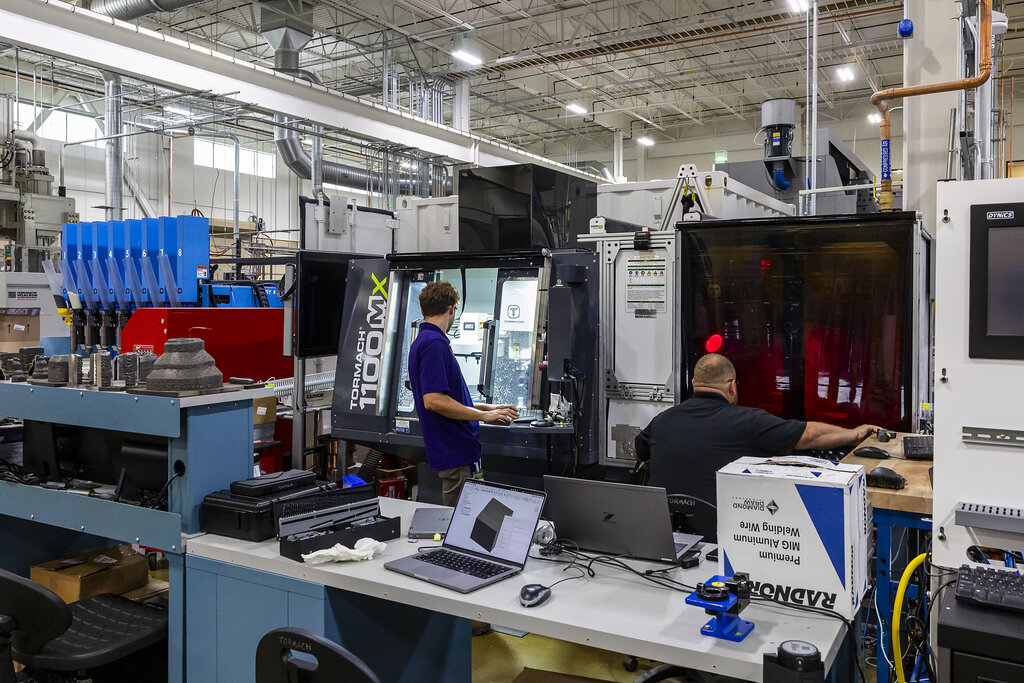
These examples show that machine customers aren't a futuristic fantasy. They are a real and growing part of our economy, quietly changing the rules of commerce.
What is the defining characteristic of a machine customer?
Which two technologies are described as the primary drivers behind the increasing scale and sophistication of machine customers?
The rise of machine customers marks a significant evolution in how buying and selling happens, driven by the powerful combination of connected devices and intelligent software.