Macbeth for GCSE
Introduction to Macbeth
A Tale of Ambition and Blood
William Shakespeare's Macbeth is one of his most famous tragedies. It's a dark, fast-paced story about a Scottish general whose ambition leads him down a path of murder and madness. Filled with supernatural elements, intense psychological drama, and some of the most powerful language in English literature, the play explores what happens when a good man gives in to his darkest desires.
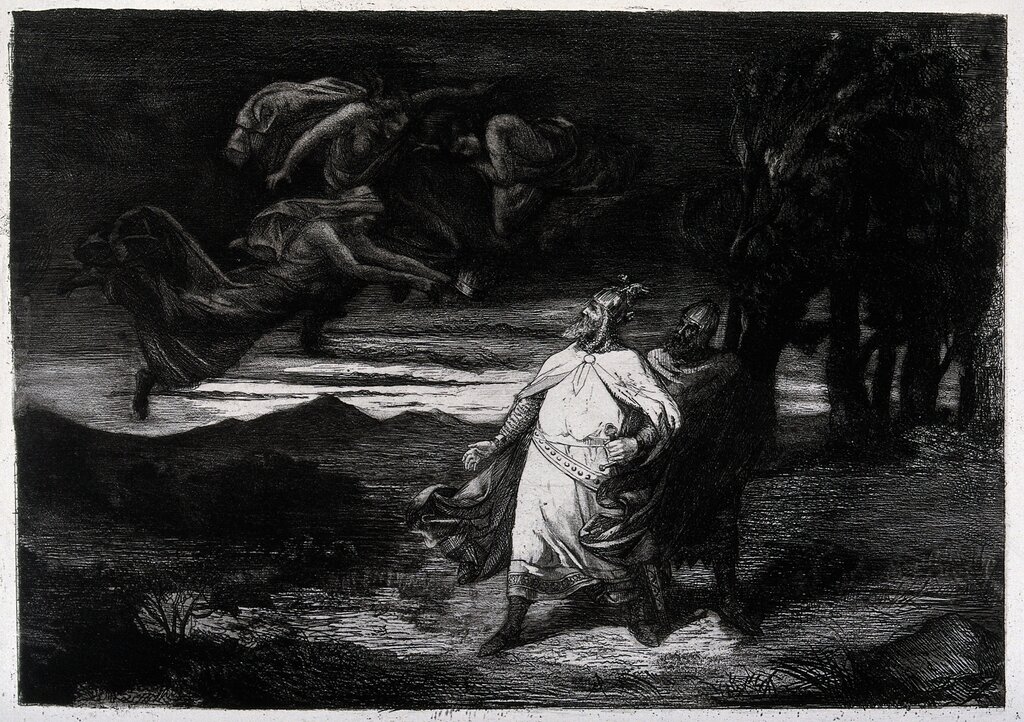
The story is a gripping thriller that questions the nature of power, fate, and free will.
The Path to the Throne
The plot kicks off when Macbeth and his friend Banquo, returning from a victorious battle, stumble upon three mysterious witches. These witches deliver a startling prophecy: Macbeth will become Thane of Cawdor and then King of Scotland. They also tell Banquo that his descendants will be kings.
Soon after, King Duncan names Macbeth the new Thane of Cawdor, fulfilling the first part of the prophecy. This taste of truth ignites Macbeth's ambition. Encouraged by his equally ambitious wife, Lady Macbeth, he decides to take fate into his own hands. He murders King Duncan in his sleep and seizes the throne.
This single act of violence sets off a chain reaction. To protect his crown, Macbeth becomes a tyrant, murdering anyone he sees as a threat, including his friend Banquo. His reign is built on fear and paranoia.
As the kingdom suffers under his rule, those who have fled his tyranny gather forces to challenge him. Plagued by guilt and haunted by the ghosts of his victims, Macbeth finds himself isolated and descending into madness. The play culminates in a final, bloody battle to unseat him from the throne.
Scotland in the Shadows
The play is set in medieval Scotland during the 11th century, a rugged and violent world of warring clans and power struggles. The setting is consistently dark and gloomy, filled with misty heaths, shadowy castles, and stormy nights. This atmosphere reflects the moral darkness of the story.
Shakespeare wrote Macbeth around 1606, during the reign of King James I of England, who was formerly King James VI of Scotland. The historical context is key. King James had a deep interest in witchcraft and even wrote a book on the subject called Daemonologie. He also believed he was a descendant of the real-life Banquo. By including witches and portraying Banquo as a noble figure, Shakespeare was likely appealing directly to his royal patron.
Big Ideas at Play
While we'll dive deeper into the play's themes later, it's helpful to know the main ideas from the start. These are the engines that drive the story.
The main theme of Macbeth—the destruction wrought when ambition goes unchecked by moral constraints—finds its most powerful expression in the play’s two main characters.
The most prominent theme is ambition. The play serves as a cautionary tale about what can happen when ambition is not tempered by a moral compass.
Another key theme is the conflict between appearance and reality. Characters often hide their true intentions behind false words and smiles. The famous line, "Fair is foul, and foul is fair," spoken by the witches at the very beginning, sets the stage for a world where nothing is quite what it seems.
Finally, the play constantly explores the themes of guilt and conscience. Macbeth and Lady Macbeth are both tormented by their actions, leading to hallucinations, sleepwalking, and psychological unraveling. Their story is a powerful examination of the mental price of crime.
Now that you have a basic understanding of the plot, setting, and major themes, you're ready to explore the world of Macbeth in more detail.