Macbeth and the Architecture of Ambition
Jacobean Political Context
A Play for a King
When Queen Elizabeth I died childless in 1603, the Tudor dynasty ended. The throne passed to her cousin, James VI of Scotland, who became King James I of England. This transition to the Stuart dynasty brought a new political climate, new anxieties, and a new royal patron for Shakespeare’s acting company, now called the King's Men. Macbeth, written around 1606, is a product of this specific moment. It’s a dark, Scottish play tailor-made to capture the attention and address the obsessions of a very particular monarch.
Treason in the Air
The early years of James's reign were fraught with tension. In 1605, a group of provincial English Catholics plotted to blow up the House of Lords during the State Opening of Parliament, an event that would have killed the King, his family, and most of the Protestant aristocracy. The failed, but it sent shockwaves through the country, creating a national obsession with treason, assassination, and the security of the monarch. Macbeth taps directly into this fear. It is a story about the ultimate act of treason: regicide, the murder of a king.
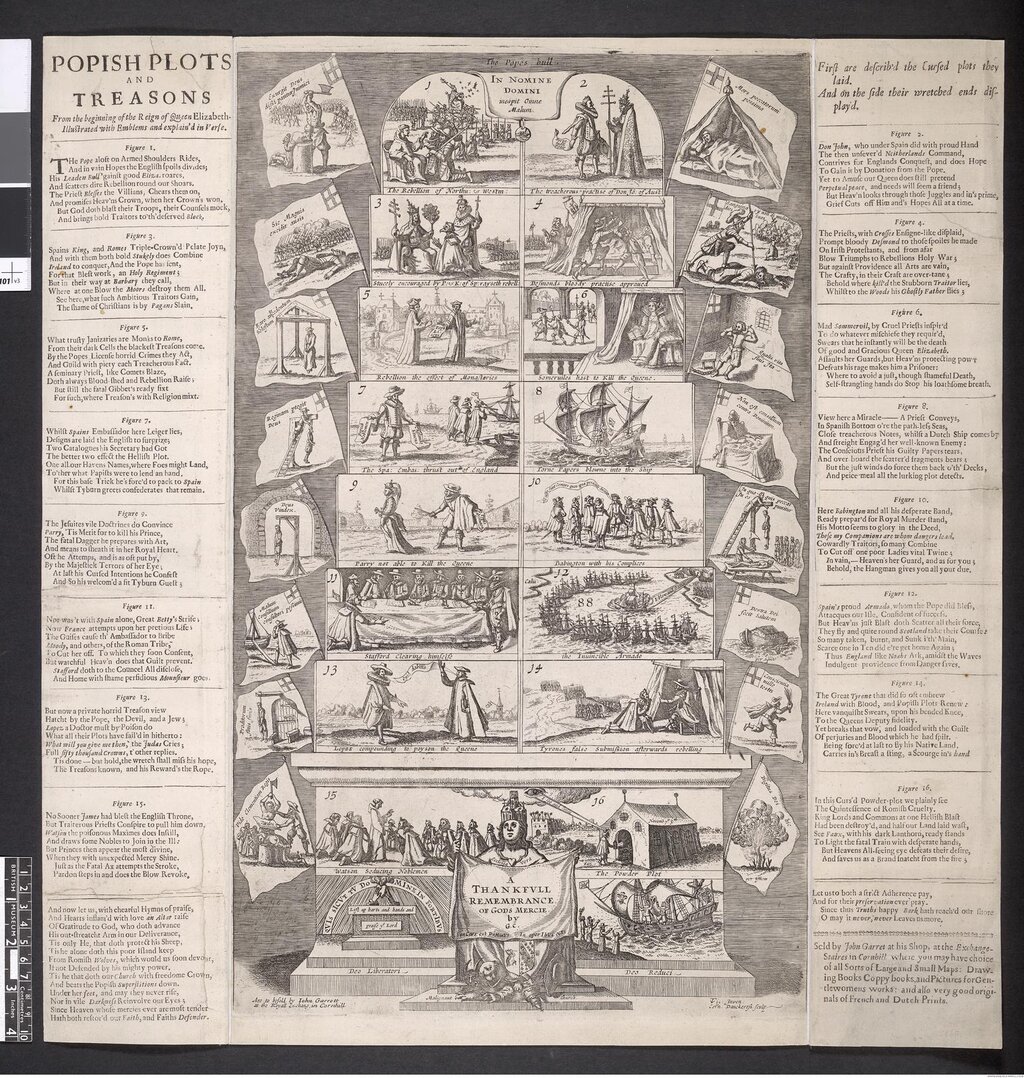
The plot's aftermath also popularised a specific concept: equivocation This was the idea of using ambiguous language to avoid self-incrimination without technically lying, a practice the captured conspirators were accused of. The Porter in Macbeth directly references an "equivocator... who could swear in both the scales against either scale; who committed treason enough for God's sake, yet could not equivocate to heaven." This is a clear, topical reference his Jacobean audience would have immediately recognised, linking Macbeth's own deceptions to the most infamous traitors of the day.
The King's Two Books
King James I was a scholar, and he had strong opinions about the nature of power, which he outlined in his 1599 book, Basilikon Doron ('The Kingly Gift'). In it, he argued for the the belief that a monarch is not subject to any earthly authority, deriving the right to rule directly from the will of God. A king was God's chosen representative on Earth. Therefore, to attack the king was to attack God himself.
Shakespeare warns a Jacobean audience that attacking rightful kingship wrecks the moral and cosmic order.
James's other significant work was Daemonologie (1597), a study of witchcraft and black magic. James was deeply concerned about the threat posed by witches, even presiding over the North Berwick witch trials in Scotland. The prominent role of the Three Witches in Macbeth is a direct appeal to the King's personal interests. Their prophecies act as the catalyst for the entire tragedy, playing on Macbeth's ambition and showcasing the demonic temptations that James had written about extensively.
An Unnatural Order
For a Jacobean audience, the universe was a divinely ordered place. This concept was known as the a vast, hierarchical structure that placed everything in its proper rank. God was at the top, followed by angels, humans (with kings above all others), animals, plants, and finally minerals. When Macbeth murders Duncan, he doesn't just kill a man; he shatters this chain.
The play shows the consequences of this cosmic disorder. Once Duncan is dead, nature itself rebels. We hear of horses eating each other, a falcon killed by an owl, and skies that remain dark during the day. This isn't just pathetic fallacy; it's a literal depiction of a world thrown into chaos because the rightful king has been unlawfully removed. For Shakespeare's audience, the message was clear: disrupting the divine order has catastrophic results.
The unnatural act of regicide leads to an unnatural world.
Finally, Shakespeare pays tribute to his king by validating the Stuart lineage. In the play, the witches show Macbeth a line of eight kings descended from Banquo, with the last holding a mirror that reflects even more. This was a direct nod to James I, who traced his ancestry back to a historical Banquo. By presenting Banquo as a noble and virtuous character whose descendants will rightfully rule, Shakespeare flatters his patron and legitimises the Stuart claim to the throne, contrasting it with Macbeth's bloody and illegitimate reign.
Which historical event, occurring in 1605, is considered a major influence on Macbeth's themes of treason and regicide?
King James I wrote a book called Daemonologie which directly relates to which element of Macbeth?
Understanding this political backdrop is key to seeing Macbeth not just as a timeless tragedy, but as a deeply topical work of art crafted for a specific king in a specific historical moment.