Lunar Cycles and Wildlife Activity
Lunar Illumination Patterns
The Light on the Forest Floor
You know the moon phases, but the percentage of illumination listed on a calendar doesn't tell the whole story. For nocturnal animals like whitetail deer, coyotes, and foxes, what truly matters is the actual amount of light reaching the ground. This is lunar luminosity, and it dictates how and when these animals move through the forests of the Blue Ridge and Appalachians.
An animal's sense of security is tied directly to its ability to see—and be seen. have excellent night vision, thanks to a high concentration of rods and a reflective layer called the tapetum lucidum. This allows them to gather and process faint light far better than humans. However, this sensitivity is a double-edged sword. Under a bright, unobstructed full moon, a deer standing in an open field is highly visible to predators like coyotes and foxes, which also have keen night sight. Consequently, high luminosity often pushes deer to stay within the dense cover of timber, where shadows break up their outline.
Low light favors the prey. High light can favor the patient predator.
Nature's Dimmer Switches
Two main factors act as dimmer switches for the moon: cloud cover and forest canopy. A 100% full moon on a heavily overcast night might provide less usable light than a 50% quarter moon on a clear one. For wildlife, thick cloud cover can create a 'false new moon' environment, drastically reducing visibility and emboldening animals to move in areas they would otherwise avoid.
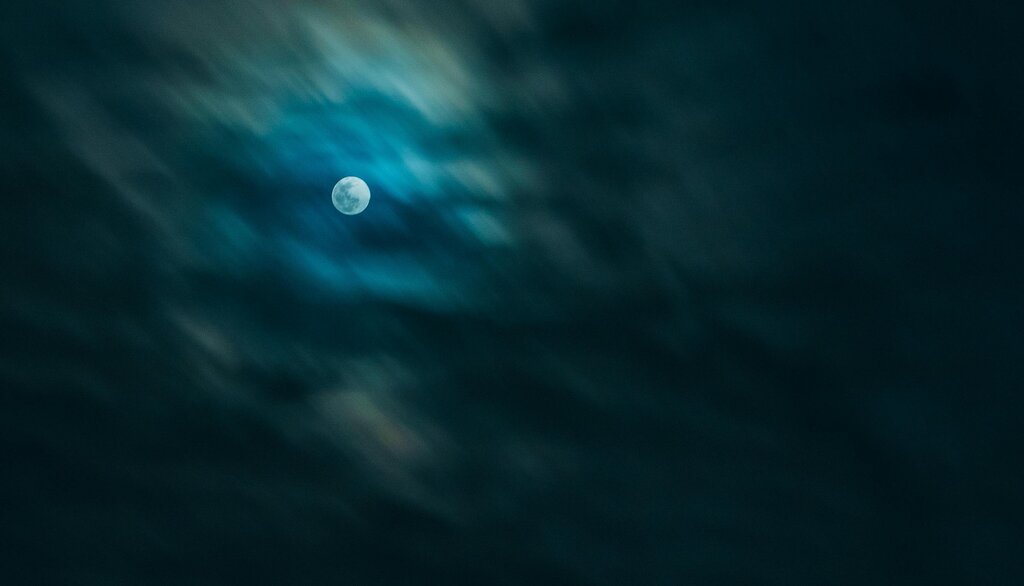
The forest itself is the second critical light filter. The canopy's density determines how much moonlight penetrates to the ground. In the Northeast, a dense stand of Eastern Hemlock can block over 90% of direct light, creating deep shadows even under a full moon. In contrast, a mature hardwood forest in late fall, after the leaves have dropped, allows significantly more light to pass through. This variation in creates a mosaic of bright zones and dark pockets across the landscape.
Animals instinctively understand this. A coyote might use a brightly lit logging road to travel efficiently on a clear night, while deer will cross that same road only at its narrowest point, minimizing their exposure time. Understanding the interplay between moon phase, weather, and canopy is key to predicting these movements.
Predicting Nocturnal Activity
By combining these factors, you can make educated guesses about animal behavior. The goal is to assess the effective illumination on the ground. A full moon during a winter storm in a thick pine forest creates near-total darkness. A first-quarter moon on a clear autumn night in an open oak stand might offer just enough light for confident movement.
| Moon Phase | Cloud Cover | Canopy Type | Effective Light | Likely Deer Behavior |
|---|---|---|---|---|
| Full Moon | Clear | Open Hardwoods | High | Stick to dense cover; limited field movement. |
| Full Moon | Heavy | Any | Very Low | Move freely, similar to a new moon. |
| Quarter Moon | Clear | Dense Hemlock | Very Low | Move freely within and outside cover. |
| Quarter Moon | Light/Patchy | Open Hardwoods | Moderate | Cautious movement in open areas. |
| New Moon | Any | Any | Very Low | High confidence; movement throughout all terrain. |
This framework moves beyond simple phase tracking. It encourages a more holistic view of the nocturnal environment, allowing for more accurate predictions of when and where you are most likely to encounter wildlife. It’s not just about looking up at the moon, but understanding how its light is manipulated before it ever touches the forest floor.
What is the most critical factor for predicting the nocturnal movements of animals like whitetail deer, according to the provided text?
Under which of the following conditions would a whitetail deer feel most exposed and likely to stay in dense cover?