Lower Your Stress and Cortisol Naturally
Understanding Stress and Cortisol
What Is Stress?
Stress is your body's way of responding to any kind of demand or threat. When you sense danger, whether it's real or imagined, the body's defenses kick into high gear in a rapid, automatic process known as the "fight-or-flight" reaction.
Stress is a natural physiological and psychological reaction to demands or threats.
This response is designed to protect you. In an emergency, stress can save your life by giving you extra strength to defend yourself or spurring you to slam on the brakes to avoid an accident. But not all stress is the same.
Acute stress is short-term. It's the kind you feel when you have a close call on the highway or give a big presentation. It comes on quickly and, once the threat has passed, your body returns to its normal state.
Chronic stress is long-term. This is the stress of a difficult job, financial worries, or an unhappy relationship. It can last for weeks, months, or even years. When stress sticks around, your body stays in a heightened state, which can lead to serious health problems.
The Body's Alarm System
When you encounter a perceived threat, a tiny region at the base of your brain, the hypothalamus, sets off an alarm system. This system prompts your adrenal glands, located on top of your kidneys, to release a surge of hormones, including adrenaline and cortisol.
cortisol
noun
A steroid hormone produced by the adrenal glands that is released in response to stress and low blood-glucose concentration. It is often referred to as the "stress hormone."
Adrenaline increases your heart rate, elevates your blood pressure, and boosts energy supplies. Cortisol, the body's primary stress hormone, increases sugars (glucose) in the bloodstream, enhances your brain's use of glucose, and increases the availability of substances that repair tissues.
Often called the “stress hormone,” cortisol is a key part of the body’s natural stress management response, as it’s released in short bursts to give your body a boost of energy.
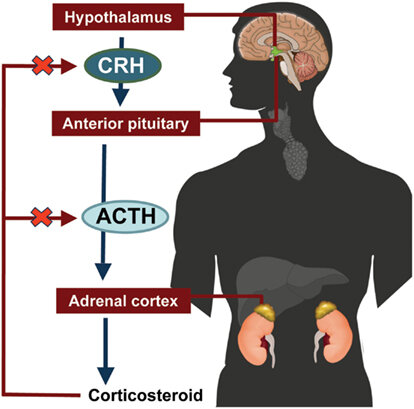
This whole process is managed by the Hypothalamic-Pituitary-Adrenal (HPA) axis. The hypothalamus signals the pituitary gland, which in turn signals the adrenal glands to produce cortisol. In a balanced system, the body can turn this response off once the threat passes.
When Stress Sticks Around
The body’s stress-response system is usually self-limiting. Once a perceived threat has passed, hormone levels return to normal. As adrenaline and cortisol levels drop, your heart rate and blood pressure return to baseline levels, and other systems resume their regular activities.
But when stressors are always present and you constantly feel under attack, that fight-or-flight reaction stays turned on. This is chronic stress, and the long-term activation of the stress-response system can disrupt almost all your body's processes. The overexposure to cortisol and other stress hormones can have serious consequences.
Chronic exposure to stress, from workplace pressures to personal challenges, can persistently elevate cortisol levels, disrupting the body's most basic functions and leading to long-term health consequences.
Consistently high cortisol levels can lead to a number of health problems, including:
- Anxiety and depression
- Headaches
- Heart disease
- Memory and concentration problems
- Digestive issues
- Sleep problems
- Weight gain

Your brain is particularly vulnerable. Chronic stress can actually change your brain's structure and function. It can lead to a decrease in the size of the prefrontal cortex, which is responsible for memory and learning, and an increase in the size of the amygdala, the brain's fear center, making you more receptive to stress.
Disruptions to cortisol — the hormone associated with stress — may negatively affect mood, memory, and concentration over time.
Understanding how your body reacts to stress is the first step. It highlights why managing your response to life's demands is not just about feeling better, but about protecting your long-term health. Now let's test your knowledge.
What is the primary purpose of the "fight-or-flight" reaction?
Which of the following best describes chronic stress?