Long-Term Stock Investing for Beginners
Investment Basics
The Building Blocks of Investing
Investing is about putting your money to work, giving it the potential to grow over time. Instead of just sitting in a bank account, your money can be used to buy assets — things that have value and can generate income or appreciate. For beginners, it's helpful to start with three basic building blocks, also known as asset classes.
Stock
noun
A share of ownership in a single public company. When you buy a stock, you become a part-owner of that business, hoping its value will increase.
Think of stocks as the high-potential players on your team. They can offer significant growth, but their value can also go up and down quite a bit.
Bond
noun
A loan you make to a company or government. In return, the issuer promises to pay you back with interest over a set period.
Bonds are generally more stable and predictable than stocks. They provide a steady stream of income through interest payments, acting as a defensive player in your portfolio.
The third major asset class is cash and its equivalents, like high-yield savings accounts or money market funds. It's the safest option, but offers the least potential for growth.
The Risk-Return Tradeoff
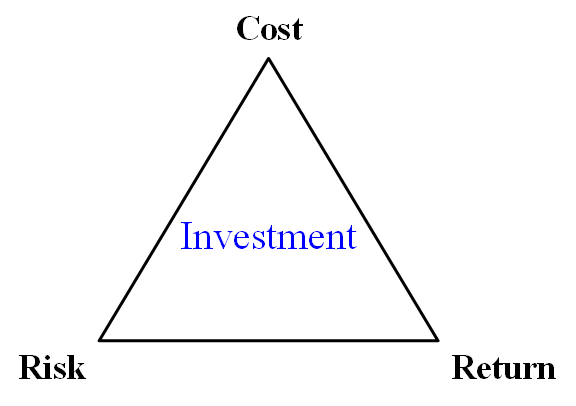
In investing, there’s a fundamental relationship between risk and return. To get a higher potential return, you generally have to accept a higher level of risk. Risk, in this context, is the chance that your investment could lose value.
It’s a bit like choosing a mode of transportation. Walking is very low-risk, but it’s also slow (low return). Driving a race car is high-risk, but you can travel very fast (high return). Your investment choices exist on a similar spectrum.
As the diagram shows, cash is the least risky but offers the lowest returns. Bonds sit in the middle, offering more return potential than cash for a bit more risk. Stocks carry the most risk but also have the highest potential for growth over the long term.
Know Your Destination and Your Timeline
Before you invest a single dollar, you need to know why you're investing. Are you saving for retirement in 30 years? A down payment on a house in five years? Your child's college education in 15? These are your financial goals.
Setting clear goals is the first step. The second is understanding your time horizon—the length of time you have until you need to reach your goal.
Your goals determine your destination; your time horizon tells you how long you have to get there.
Your time horizon is critical because it dictates how much risk you can afford to take. If you're investing for retirement decades away, you have plenty of time to recover from market downturns. This longer time horizon allows you to take on more risk, like investing more heavily in stocks, in pursuit of higher returns.
Conversely, if you need the money soon—say, for a home down payment in two years—you can't afford a major loss. Your shorter time horizon means you should stick to lower-risk investments like bonds and cash, even if the returns are lower.
The Impact of Inflation
There's one more key concept every investor needs to understand: inflation. It’s the slow and steady increase in the price of goods and services over time. The coffee that cost $1.00 twenty years ago might cost $3.00 today. That's inflation at work.
Inflation
noun
The rate at which the general level of prices for goods and services is rising, which causes a decrease in the purchasing power of currency.
Inflation is like a silent tax on your money. If you keep all your savings in cash, its purchasing power will erode every year. To truly grow your wealth, your investments need to generate a return that is higher than the rate of inflation.
This is the primary reason people invest. While savings accounts are safe, they rarely keep pace with inflation over the long run. Investing in assets like stocks and bonds gives your money a fighting chance to grow faster than rising costs, increasing your real wealth over time.
Let's review these foundational concepts.
What is the primary role of stocks in an investment portfolio?
To achieve a higher potential return on an investment, what must you generally accept?
With these basics in mind, you're ready to build upon your knowledge and start thinking about how to construct a portfolio that fits your personal situation.