Long Range Precision Ballistics
External Ballistics Fundamentals
Beyond the Muzzle
Once a projectile leaves the barrel, its journey has only just begun. This is the realm of external ballistics: the study of a bullet's flight through the air. You already know how to send a round downrange, but hitting a target consistently at distance requires understanding the forces that immediately start working against your shot. The first and most critical variable you control is (MV). While a higher MV seems inherently better, consistency is king. A 10 foot-per-second variation in MV might not matter at 100 metres, but at 1000 metres, it can be the difference between a hit and a miss. This is because the time of flight is longer, giving small initial inconsistencies more time to create a large deviation.
The Enemies of Flight: Drag and Gravity
Two forces conspire to ruin a perfect shot: gravity and air resistance. Gravity pulls the bullet towards the Earth at a constant rate of acceleration. Air resistance, or drag, pushes against the bullet, slowing it down. The combination of these two forces creates the bullet's curved path, known as its trajectory.
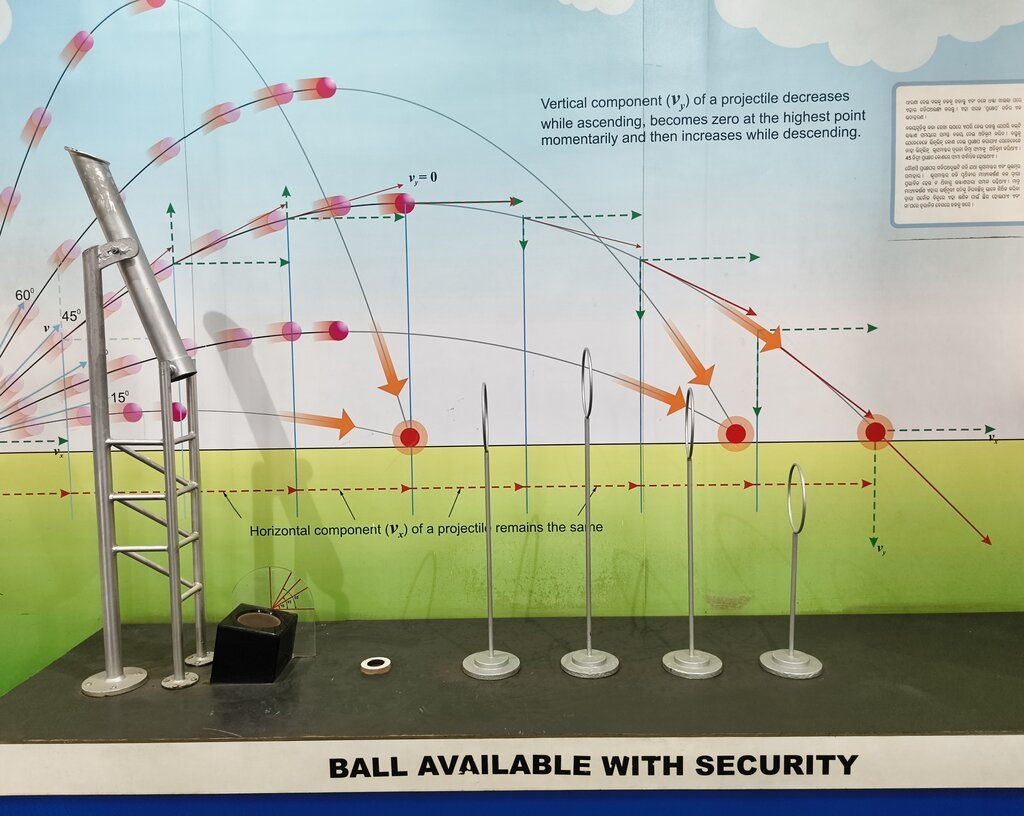
While gravity is predictable, drag is far more complex. It depends on the bullet's shape, its speed, and the density of the air. To account for this, we use a concept called the Ballistic Coefficient (BC). A bullet's BC is a measure of its ability to overcome air resistance in flight. The higher the BC value, the more efficiently the bullet cuts through the air, retaining its velocity for longer and being less affected by crosswinds. This efficiency is why a heavy, sleek bullet can outperform a lighter, faster one over long distances.
Modelling the Drag
Because bullet shapes vary, we need different drag models to accurately predict their performance. These models are based on standard projectile shapes. The two most common are the G1 and G7 models.
The G1 drag model is the older standard and is based on a flat-based, blunt-nosed projectile. Many traditional hunting and pistol bullets fit this profile reasonably well. However, it's less accurate for the long, sleek, boat-tailed bullets common in modern long-range shooting.
The G7 drag model is based on a
very-low-drag (VLD), boat-tailed projectile shape, which is a much better match for modern long-range bullets. When a manufacturer provides a G7 BC, it's generally a more reliable predictor of a bullet's actual flight path than a G1 BC, especially at extended ranges. A G1 value will always be higher than a G7 value for the same bullet, which can be misleading if you don't know which model is being used. Always check.
Choosing Your Projectile
This brings us to a fundamental trade-off in ammunition selection. Do you choose a lighter bullet with a very high muzzle velocity, or a heavier bullet with a high BC?
A lightweight, high-velocity round will have a very flat trajectory at shorter distances. Gravity simply has less time to act on it. However, because of its lower BC, it sheds velocity quickly due to air resistance. It will slow down and eventually go subsonic at a shorter range than its heavier counterpart.
A heavier, high-BC bullet starts slower but holds its velocity much more effectively. It resists drag better and is less susceptible to wind drift. Though its initial trajectory is more curved, it will remain supersonic for longer, leading to more predictable performance and greater energy on target at extended ranges. For long-range shooting, maintaining supersonic speed is crucial, as the transition to subsonic flight can destabilise the bullet and ruin accuracy.
Time to see how these concepts fit together. Let's test your understanding.
Why is a small variation in muzzle velocity (e.g., 10 feet-per-second) more critical at 1000 metres than at 100 metres?
Which of the following best describes a bullet with a high Ballistic Coefficient (BC)?
Understanding these principles of external ballistics is the foundation for making accurate adjustments for distance, wind, and atmospheric conditions. It transforms shooting from guesswork into a science.