Long Range Ballistics Mastery
Drag Models
The Unseen Force of Drag
Once a bullet leaves the barrel, gravity starts pulling it down. But another, more complex force is also at play: aerodynamic drag. This is the resistance the air exerts on the bullet as it flies. Unlike gravity, which is constant, drag changes dramatically with speed. It's the primary reason a bullet slows down.
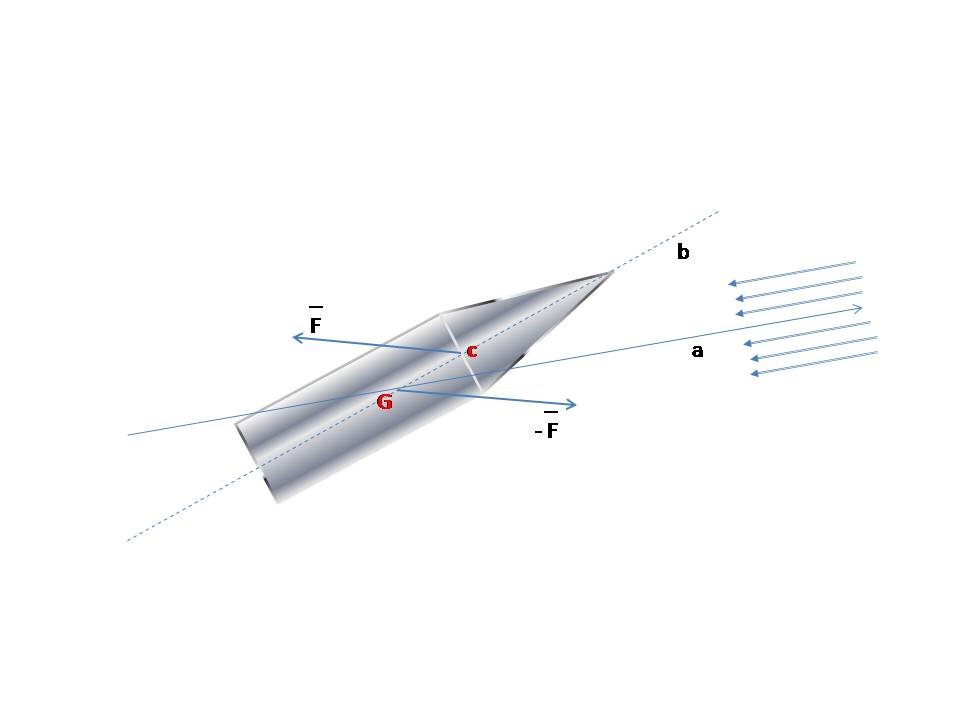
A bullet's flight can be broken down into three speed regimes: supersonic (faster than sound), transonic (approaching the speed of sound), and subsonic (slower than sound). The amount of drag a bullet experiences isn't linear. As a bullet slows and approaches the sound barrier, it enters the transonic region, a zone of turbulent airflow and rapidly increasing drag. This instability can significantly affect its trajectory, making long-range predictions tricky. Accurately modelling this changing drag is the key to precision shooting.
Standardising Drag
Measuring the exact drag characteristics for every bullet ever made would be an impossible task. Instead, ballisticians use a clever shortcut. They compare a real bullet's performance against a set of standard projectiles, known as G-models. Each G-model has a precisely defined shape and a known drag curve, which plots how its drag changes with velocity.
The two most common models are G1 and G7. The G1 standard is an old design: a simple, flat-based projectile. For many years, it was the only standard, so you'll see G1 values listed for almost every bullet, even modern ones. The G7 model is based on a much more aerodynamic, long-range bullet design with a distinctively tapered base, known as a boat-tail.
For modern, long-range bullets, the G7 model provides a much more accurate prediction of the flight path. Using a G1 value for a G7-shaped bullet can lead to significant errors in trajectory calculations, especially at distances where the bullet drops into the transonic speed range. The rule of thumb is simple: match the drag model to the bullet shape.
The Ballistic Coefficient
This brings us to the Ballistic Coefficient, or BC. A bullet's BC is a number that represents how well it overcomes air resistance compared to one of the standard projectiles. A higher BC means the bullet is more aerodynamic. It will slow down less, be less affected by crosswinds, and have a flatter trajectory.
The BC isn't just one number; it's tied to a specific drag model. A bullet will have a G1 BC and a G7 BC, and these numbers are not interchangeable. The G7 BC is the more relevant metric for modern precision rifle bullets.
A bullet's BC is calculated from two key properties: its Sectional Density (SD) and its form factor (i).
Sectional Density is a ratio of the bullet's mass to its diameter squared. A long, heavy-for-calibre bullet will have a high SD, giving it more momentum to push through the air. The form factor compares the drag of your specific bullet to the drag of the standard projectile (G1 or G7). A form factor of 1.0 means your bullet is exactly as aerodynamic as the standard. A form factor less than 1.0 means it's even more streamlined.
By understanding these drag models and the concept of Ballistic Coefficient, shooters can move from simple estimations to highly accurate predictions. For long-range shooting, choosing the correct drag model (usually G7) and using an accurate BC are fundamental for hitting the target.
What is the primary force that causes a bullet to slow down once it has left the barrel?
A bullet with a high Ballistic Coefficient (BC) will...
Mastering these concepts is the first step towards true long-range precision.