Logistics and Supply Chain Mastery
Introduction to Supply Chain Management
What Is a Supply Chain?
Think about the smartphone in your pocket or the coffee you drank this morning. Neither just appeared. The phone’s journey started as minerals in the ground and components in factories across the globe. The coffee began as a bean on a farm, possibly thousands of miles away. The complex network that brings a product from its rawest form to you, the final customer, is a supply chain.
Supply Chain Management spans all movement and storage of raw materials, work-in-process inventory, and finished goods from point of origin to point of consumption.
Supply Chain Management, or SCM, is the active management of this entire flow. The goal is to make the journey as efficient, fast, and cost-effective as possible. When done well, SCM ensures products are available when and where customers want them, without costing the company a fortune in storage or shipping. It's the behind-the-scenes engine that drives modern commerce.
The Core Components
A supply chain is made up of several key functions that must work together seamlessly. While the specifics vary by industry, most supply chains include four core components: procurement, production, logistics, and distribution.
Procurement is about acquiring the raw materials and components needed to create a product. This isn't just shopping. It involves finding reliable suppliers, negotiating prices, and ensuring the quality of the materials. For a car company, procurement means sourcing everything from steel and rubber to microchips and leather.
Production, also known as manufacturing, is the process of transforming raw materials into a finished product. This is the stage where the steel is shaped into a car body, the engine is assembled, and the vehicle is painted. Efficiency here is key to keeping costs down and meeting demand.
Logistics covers the movement and storage of goods throughout the supply chain. This includes managing warehouses (inventory), packing goods for transit, and handling transportation. When a finished car rolls off the assembly line, logistics takes over, moving it from the factory to a storage facility or directly into the distribution network. This stage is a complex puzzle of timing and coordination.
Distribution is the final step: getting the finished product into the hands of the customer. This can involve shipping goods to retailers, delivering them to wholesalers, or sending them directly to consumers who ordered online. It’s the last mile of the product's journey.
Why Integration Matters
None of these components operate in a vacuum. A delay in procurement can halt production. An issue in logistics can disrupt distribution and lead to empty store shelves. This is where integration and coordination come in.
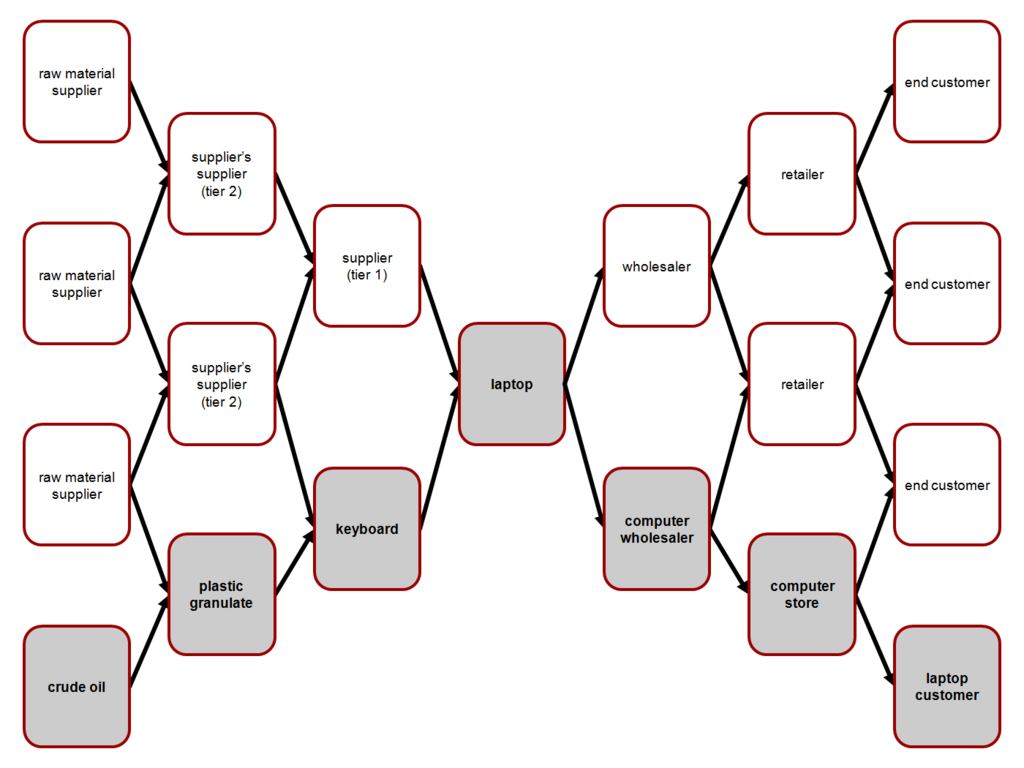
Effective supply chain management connects these different stages through a constant flow of information. The distribution team shares sales data with the production team so they know how much to build. The production team tells the procurement team what raw materials they need and when. This coordination helps companies avoid producing too much (which leads to costly storage) or too little (which leads to lost sales).
By integrating these functions, businesses can respond faster to changes in customer demand, reduce waste, and operate more efficiently. A well-managed supply chain is a major competitive advantage, directly impacting a company's profitability and customer satisfaction.
Let's review the core concepts we've just covered.
Now, test your understanding of these foundational ideas.
What is the primary goal of Supply Chain Management (SCM)?
A coffee company negotiating contracts with bean farmers to ensure a steady supply for its roasteries is an example of which supply chain function?
Understanding these basics sets the stage for exploring the more complex strategies and technologies that shape modern supply chains.