Logistics and Supply Chain Fundamentals
Introduction to Supply Chain Management
The Journey of a Product
Think about the t-shirt you're wearing. Where did it come from? The cotton was likely grown in one country, spun into thread in another, and woven into fabric in a third. Then, it was cut and sewn in a factory, possibly on a different continent, before being shipped to a warehouse, then to a store, and finally, to you.
This entire network of organizations, people, activities, information, and resources is a supply chain. It’s the complete journey a product takes, from raw materials to the final customer.
Supply Chain Management
noun
The active management of supply chain activities to maximize customer value and achieve a sustainable competitive advantage. It represents a conscious effort by the supply chain firms to develop and run supply chains in the most effective and efficient ways possible.
Supply Chain Management, or SCM, is the art and science of coordinating this complex journey. The main goals are to make the process smooth, efficient, and cost-effective. When done right, SCM lowers costs, improves product quality, and keeps customers happy by ensuring products are available when they want them.
Supply Chain Management (SCM) encompasses the coordinated management of resources, materials, information, and finances as a product or service moves from supplier to manufacturer to wholesaler to retailer to consumer.
The Core Components
Every supply chain, whether for a car or a carton of milk, involves three fundamental components: procurement, production, and distribution.
Procurement is about acquiring the raw materials and components needed. For our t-shirt, this means sourcing cotton, dyes, and thread. It involves finding reliable suppliers, negotiating prices, and ensuring the quality of the materials.
Production is the process of transforming those raw materials into a finished product. This is the manufacturing stage where the fabric is cut, sewn, and dyed to create the t-shirt.
Distribution covers everything needed to get the final product to the customer. This includes warehousing, inventory management, transportation, and order fulfillment. It’s the final leg of the journey from the factory to your closet.
Evolution of the Supply Chain
Supply chains aren't a new concept. For centuries, merchants moved goods along trade routes like the Silk Road. However, the idea of managing them as a single, integrated system is much more recent. Before the 1980s, most companies managed procurement, production, and distribution as separate, siloed functions.
The real shift began with two major forces: globalization and technology.
Globalization opened up new markets for both sourcing materials and selling products. A company could now get parts from dozens of countries to assemble a product sold worldwide. This made supply chains more complex but also more cost-effective.
Technology, especially the internet, revolutionized everything. Barcodes, GPS tracking, and management software gave companies unprecedented visibility into their operations. They could track a shipment in real-time or instantly share sales data with a supplier halfway around the world. This connectivity made it possible to manage global supply chains efficiently.
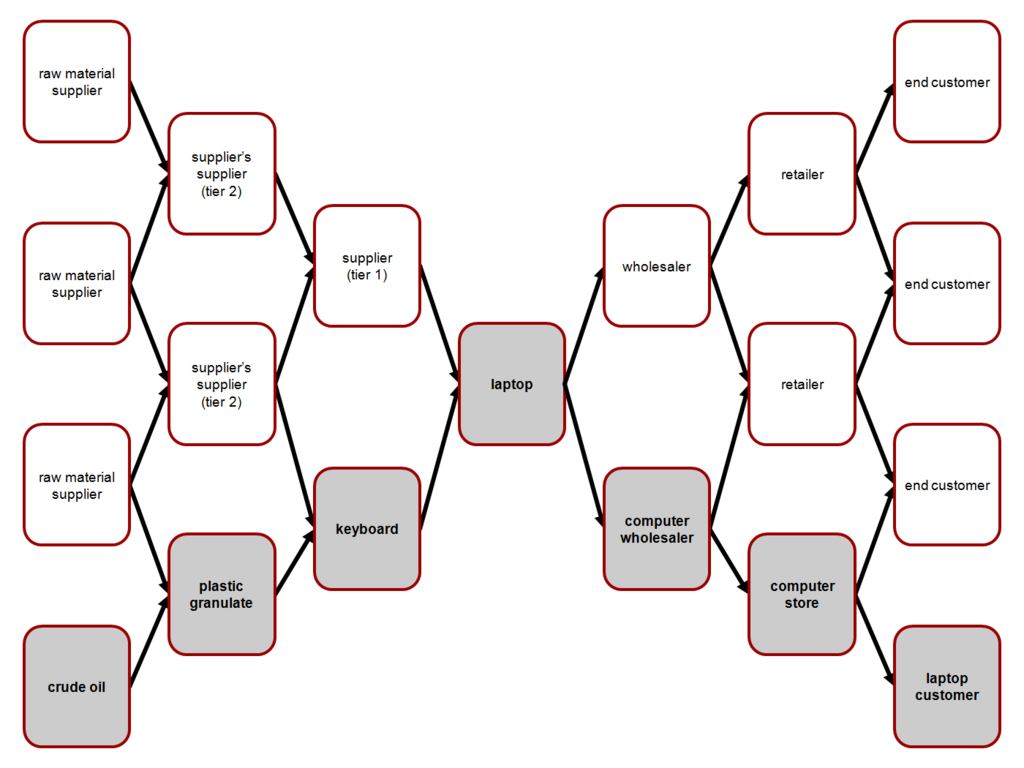
This brings us to logistics. While people often use "supply chain" and "logistics" interchangeably, they aren't the same. Logistics is a part of supply chain management.
Logistics focuses on the movement and storage of goods within the supply chain. SCM is the bigger picture: the strategic coordination of all the components, including logistics, from end to end.
Think of it this way: logistics is about making sure the truck arrives on time. Supply chain management is about deciding how many trucks are needed, where they should go, what they should carry, and how this all fits into the company's overall strategy.
Time to check your understanding of these core concepts.
What is the primary definition of a supply chain?
The stage of the supply chain focused on acquiring raw materials and components from suppliers is known as __________.
Understanding these foundations is the first step. A well-managed supply chain is the backbone of a successful business, ensuring that the products we rely on every day make their journey from an idea to our hands.