Local Multimodal AI with WebGPU
Introduction to WebGPU
The Next Generation of Web Graphics
Web browsers have evolved far beyond simple document viewers. They are now powerful platforms capable of running complex 3D games, intricate data visualizations, and even artificial intelligence models. To do this, web applications need a way to tap into the raw power of a computer's hardware, especially the Graphics Processing Unit (GPU).
For years, the primary tool for this job was WebGL (Web Graphics Library). Based on a much older standard, WebGL gave developers direct access to the GPU, enabling a new class of interactive web content. But as hardware and software evolved, the limitations of WebGL became more apparent. It was time for a successor.
From WebGL to WebGPU
Enter WebGPU. It’s a new, modern API designed from the ground up to provide efficient, low-level access to the GPU. Unlike WebGL, which was a direct port of an older mobile graphics API, WebGPU is designed to work seamlessly with modern graphics technologies like Vulkan, Metal, and DirectX 12.
Think of it this way: WebGL is like an old country road. It gets you where you need to go, but it wasn't built for high-speed traffic. WebGPU is a modern superhighway, designed for today’s powerful hardware. It allows for much more efficient communication between the browser and the GPU, reducing bottlenecks and boosting performance.
| Feature | WebGL | WebGPU |
|---|---|---|
| Foundation | Based on OpenGL ES 2.0 (2007) | Based on modern APIs (Vulkan, Metal, D3D12) |
| Performance | Higher CPU overhead, less efficient | Lower overhead, closer to native performance |
| Capabilities | Primarily for graphics rendering | Graphics and general-purpose GPU computing |
| Concurrency | Single-threaded design | Designed for multi-threaded use |
| API Style | More verbose and stateful | More explicit and object-oriented |
Why WebGPU Matters
The biggest advantage of WebGPU is its ability to handle general-purpose computations on the GPU, often called GPGPU. This is about more than just drawing triangles and textures on a screen.
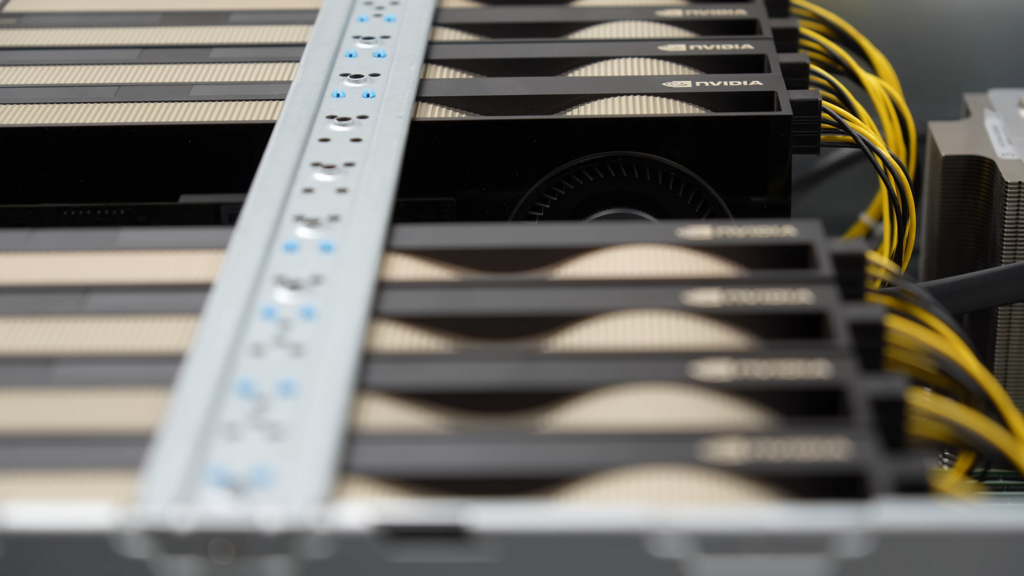
GPU parallel computing involves using graphics processing units (GPUs) to run many computation tasks simultaneously.
This parallel processing power is exactly what's needed for demanding tasks like machine learning. With WebGPU, developers can run complex AI models directly in the user's browser, without needing to send data to a remote server. This improves privacy, reduces latency, and lowers server costs.
WebGPU is already supported in the latest versions of major browsers like Chrome, Edge, and Firefox. As it becomes more widely adopted, it will unlock a new generation of powerful, responsive, and private web applications.
What is the primary advantage of WebGPU that enables tasks like running AI models directly in a browser?
The relationship between WebGL and WebGPU is described using an analogy of:
This new API is a significant step forward for the web, bringing native-level performance to the browser.