Local Agentic AI Product Development
Introduction to Agentic AI
Beyond the Chatbot
Most AI we interact with is reactive. We give a prompt, and it gives a response. ChatGPT, for example, waits for you to ask a question before it generates an answer. This is incredibly useful, but it’s only one side of the AI coin.
Enter agentic AI. These systems don't just respond; they act. They are designed to be proactive, autonomous problem-solvers. You give an agentic AI a goal, and it figures out the steps to get there on its own, interacting with its environment and using various tools along the way.
Agentic AI represents a fundamental paradigm shift in artificial intelligence, moving from passive, prompt-driven systems to autonomous, goal-oriented agents that can plan, learn, and execute complex tasks with minimal human intervention.
Imagine telling an AI, “Book me a weekend trip to San Francisco for next month.” A simple chatbot might give you a list of flights and hotels. An agentic AI would check your calendar for free dates, find flights that fit your budget, book a well-reviewed hotel near attractions you might like, reserve a rental car, and then add all the confirmations to your calendar. It takes a high-level goal and executes a series of tasks to achieve it, all without you needing to guide each step. That's the power of agency.
An Agent's Mind
To operate so independently, an agentic AI relies on several core components working together. It’s not just one smart program, but a system of interconnected capabilities that allow it to understand, plan, and act.
Perception: This is how the agent takes in information about its environment. For a software agent, the "environment" could be the internet, a database, a set of files on a computer, or user input. It perceives its world through data.
Reasoning: Once the agent has data, it needs to make sense of it. The reasoning engine is the agent's "brain." It analyzes the information, understands the context, evaluates different possibilities, and decides what the information means in relation to its goal.
Planning: With a clear understanding, the agent creates a strategy. It breaks down the main goal into smaller, manageable sub-tasks. For our trip-booking example, the plan might look like: 1. Check calendar. 2. Search for flights. 3. Filter flights by price. 4. Book best flight. 5. Find hotel... and so on.
Action Execution: This is where the agent interacts with the world. It uses tools to carry out its plan. These "tools" are often APIs (Application Programming Interfaces) that allow it to connect to other software, like a flight booking website, a calendar app, or an online store.
Learning: A truly smart agent learns from its experiences. After executing a plan, it analyzes the outcome. Did it succeed? Were there errors? Could it have been more efficient? This feedback loop allows the agent to update its knowledge and improve its performance for future tasks.
Agents in the Wild
The concept of agentic AI isn't just theoretical. These systems are already being used in a variety of fields to automate complex tasks and augment human capabilities. The primary benefit is efficiency—agents can handle tedious, multi-step processes much faster than a person can.
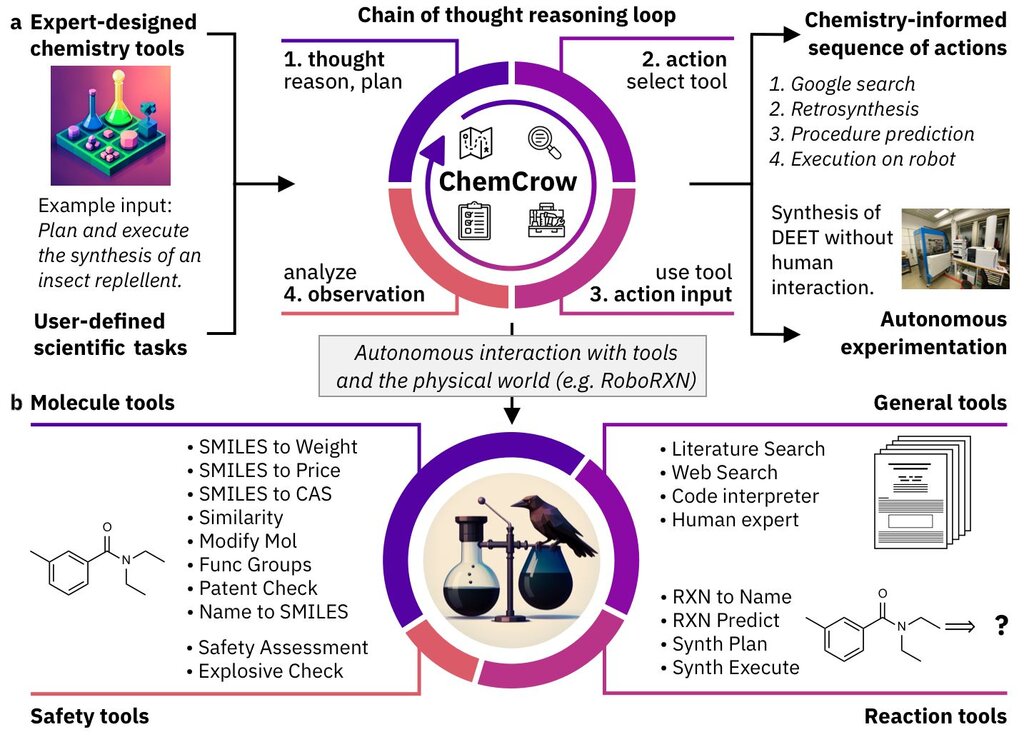
By offloading complex workflows to autonomous agents, people are freed up to focus on strategy, creativity, and high-level decision-making. Here are just a few examples of where agentic AI is making an impact.
| Application Area | Example Use Case | Key Benefit |
|---|---|---|
| Customer Service | An agent handles a customer return by creating a shipping label, processing the refund, and updating inventory automatically. | 24/7 availability and instant resolution of complex requests. |
| Software Development | An agent writes, tests, and debugs its own code to build a simple application based on a developer's specifications. | Accelerated development cycles and reduced manual coding. |
| Scientific Research | An agent sifts through thousands of research papers to find relevant data, formulates a hypothesis, and designs an experiment to test it. | Drastically speeds up the discovery process in complex fields. |
| Personal Productivity | An agent manages your email inbox by sorting messages, drafting replies to common questions, and scheduling meetings. | Frees up significant time and mental energy for focused work. |
These systems represent a significant step toward AI that functions less like a tool and more like a capable partner, able to understand our goals and work independently to help us achieve them.