LLMs Attention and Tokens Explained
Introduction to Large Language Models
What Are Large Language Models?
A Large Language Model, or LLM, is a type of artificial intelligence designed to understand, generate, and interact with human language. Think of it as an incredibly advanced autocomplete. Instead of just guessing the next word, it predicts a plausible sequence of words to form entire sentences and paragraphs that are coherent and contextually relevant.
At their core, these models work with something called tokens. An LLM doesn't see words the way we do. Instead, it breaks text down into smaller pieces—tokens—which can be whole words, parts of words, or even punctuation marks. For example, the phrase "language models" might be broken into two tokens: language and models.
token
noun
A fundamental unit of text that a large language model processes. It can be a word, a part of a word, or punctuation.
By analyzing the statistical relationships between billions of these tokens from vast amounts of text data, LLMs learn grammar, facts, reasoning abilities, and different styles of writing. This allows them to perform a wide range of tasks, from translating languages to writing computer code.
A Brief History
The idea of teaching machines language isn't new. Early attempts relied on statistical methods, like counting how often one word followed another. Later, Recurrent Neural Networks (RNNs) introduced a form of memory, allowing them to process sequences of words in order. However, they struggled with long-term dependencies; understanding the connection between the beginning and end of a long paragraph was a major challenge.
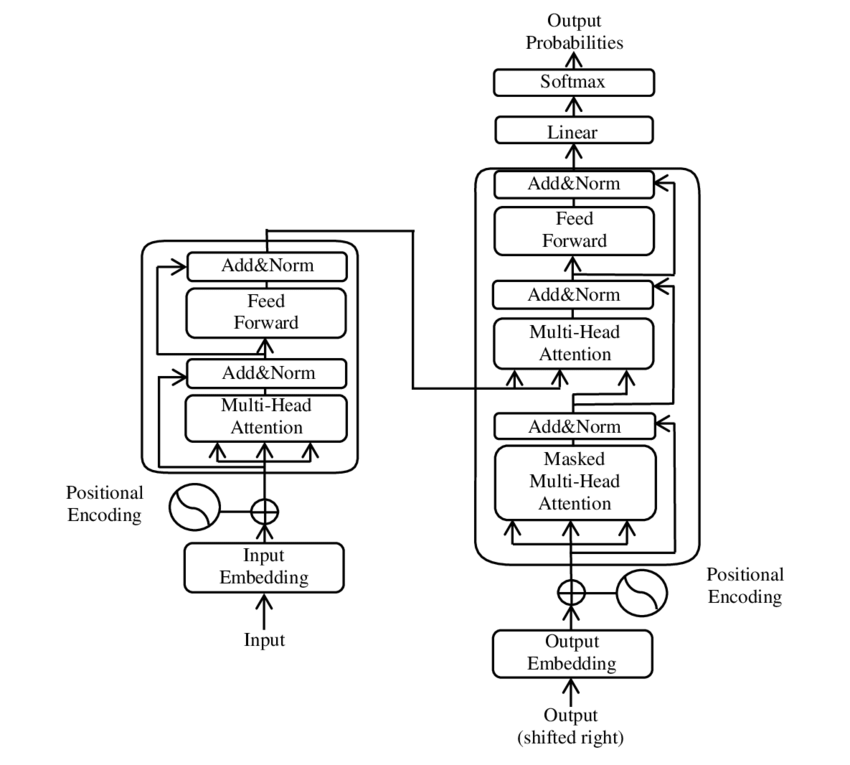
The real breakthrough came in 2017 with the introduction of the Transformer architecture. Unlike its predecessors, the Transformer could process all the tokens in a sequence simultaneously. This was made possible by a key innovation: the attention mechanism.
The attention mechanism allows a model to weigh the importance of different tokens in the input text when producing an output. It helps the model focus on the most relevant parts of the input to make accurate predictions.
For instance, in the sentence, "The delivery driver handed the customer a package, and he smiled," the attention mechanism helps the model determine that "he" most likely refers to the "customer," not the "driver." This ability to understand context across an entire text was a game-changer, paving the way for the powerful LLMs we use today.
How They Learn
Training an LLM is a massive undertaking, typically involving two main phases: pre-training and fine-tuning.
Pre-training is the foundational stage. The model is fed enormous quantities of text data—essentially, a large portion of the public internet, digital books, and other sources. During this phase, its primary task is self-supervised learning. It learns by trying to predict the next token in a sequence or by filling in masked (hidden) tokens within a sentence. Through this process, which can take months and requires immense computational power, the model builds a general understanding of language, facts, and reasoning.
After pre-training, the general model can be adapted for specific tasks through fine-tuning. In this stage, the model is trained on a smaller, curated dataset tailored to a particular application, such as customer support, medical text analysis, or creative writing. This refines the model's abilities and aligns its responses with the desired behavior or style.
Large language models (LLMs) are AI systems that understand and create human language, doing tasks like summarizing articles, answering questions, writing code, and more.
A crucial concept in how LLMs operate is the context window. This refers to the maximum number of tokens the model can consider at one time when processing input and generating output. A larger context window allows the model to handle longer documents and maintain coherence over extended conversations. If a conversation or text exceeds the context window, the model starts to "forget" the earliest parts of the information.
What Are LLMs Used For?
The capabilities of LLMs have led to their integration into a vast array of applications across many different fields.
| Domain | Example Application |
|---|---|
| Content Creation | Drafting emails, writing articles, generating marketing copy, and creating scripts. |
| Software Development | Writing code snippets, debugging, explaining code, and converting code between languages. |
| Customer Service | Powering chatbots and virtual assistants to answer user questions and resolve issues. |
| Education | Providing personalized tutoring, summarizing complex topics, and creating learning materials. |
| Healthcare | Summarizing patient records, analyzing medical research, and assisting with diagnostics. |
| Entertainment | Generating dialogue for video game characters, creating interactive stories, and writing lyrics. |
From helping scientists sift through research papers to enabling artists to explore new creative frontiers, LLMs are becoming a versatile tool for augmenting human abilities.
What is the fundamental unit of text that a Large Language Model processes?
Which architectural innovation, introduced in 2017, was a major breakthrough for LLMs by allowing them to process all tokens in a sequence simultaneously?
These models represent a major step forward in artificial intelligence, changing how we interact with information and technology.