LLMs and AI Agents Explained
Introduction to Large Language Models
What Are Large Language Models?
At its core, a large language model (LLM) is an AI designed to understand and generate human-like text. Think of it as an incredibly advanced version of the autocomplete on your phone. While your phone might suggest the next word, an LLM can write entire paragraphs, answer complex questions, and even translate languages.
These models are called "large" for a reason. They are built on massive neural networks with billions of parameters, which are like the knobs and dials the model adjusts during learning. And they learn by processing enormous amounts of text data from the internet, books, and other sources.
A large language model (LLM) is an AI model trained on massive amounts of text data that can understand and generate human-like text, recognize patterns in language, and perform a wide variety of language tasks without task-specific training.
The primary purpose of an LLM is to process and predict language. By analyzing how words and sentences are structured, it learns the statistical relationships between them. This allows it to perform a variety of natural language processing (NLP) tasks.
How an LLM Learns
An LLM isn't explicitly taught grammar rules or definitions. Instead, it learns through a process called self-supervised learning on a gigantic dataset, often called a corpus. This training data is a huge collection of text from the internet, including websites like Wikipedia, digitized books, and articles.
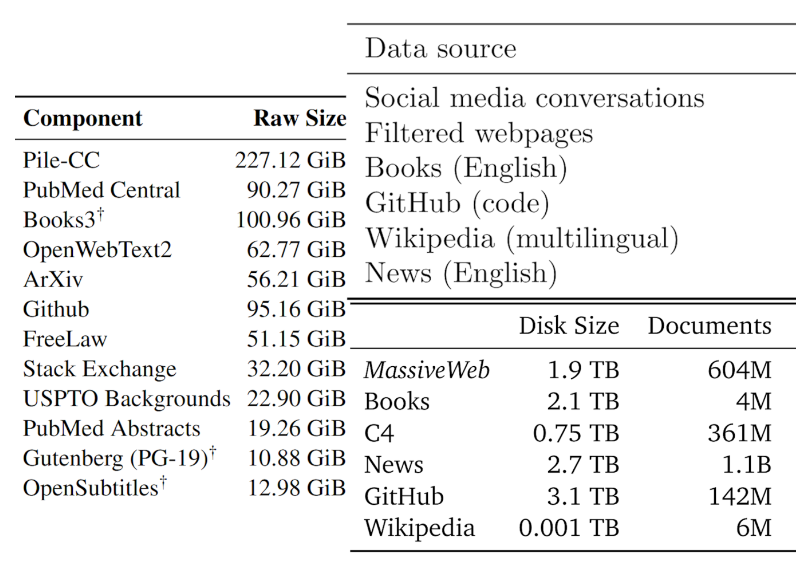
The fundamental training task is simple: predict the next word. The model is given a sequence of words and has to guess what comes next. For example, if it sees "The sun rises in the...", it should predict "east".
It makes a prediction, compares it to the actual word in the text, and then adjusts its internal parameters to make a better guess next time. By repeating this process billions of times with different sentences, the model builds a complex, probabilistic understanding of how language works.
Through this massive game of "fill-in-the-blank," the LLM learns grammar, facts, reasoning abilities, and even style—all from statistical patterns in the text.
This training enables LLMs to perform several core functions:
- Text Generation: Creating new text that is coherent and contextually relevant.
- Summarization: Condensing a long document into a short summary.
- Translation: Translating text from one language to another.
The Transformer Breakthrough
The development of modern LLMs was made possible by a specific neural network architecture called the Transformer, introduced in 2017. Before the Transformer, models struggled to keep track of context in long sentences.
The key innovation of the Transformer is the attention mechanism. This allows the model to weigh the importance of different words in the input text when processing language. It helps the model understand that even words far apart in a sentence can be related.
Thanks to this architecture, models can handle much longer sequences of text and better grasp the nuances of context. This capability was a crucial step in the evolution of LLMs, leading to powerful models like OpenAI's GPT (Generative Pre-trained Transformer) series. Each new version in the GPT series, and similar models from other organizations, has grown larger and more capable, transforming the field of artificial intelligence.
Now, let's test your knowledge on these foundational concepts.
What is the primary purpose of a Large Language Model (LLM)?
What is the fundamental training task for an LLM during its self-supervised learning phase?